

Audio By Carbonatix
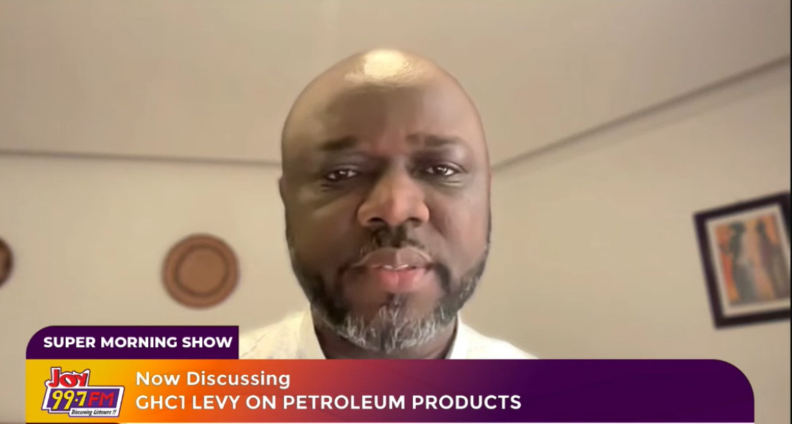
The Executive Director of the Africa Centre for Energy Policy (ACEP), Benjamin Boakye, has expressed concern over the newly introduced GH¢1 levy on petroleum products, saying it places an unfair burden on consumers without offering a complete solution to the challenges in the energy sector.
Speaking on Joy FM’s Super Morning Show, Mr Boakye questioned the effectiveness of the levy, pointing out that while the energy sector clearly needs funding, the current approach might not be the best.
“My immediate reaction was that… we all know the problems in the energy sector, but I’m not sure a GH¢1 imposition on the consumer at this point really is an effective way of addressing the problem,” he said.
He explained that although the cedi has appreciated recently, this does not translate into real value gains for ordinary consumers.
“I heard the Minister said we’ve made some gains. Of course we’ve seen a reduction in cedi terms, but the fact that this is essentially on the account of the appreciation of the cedi, it tells you that the value of the currency is still the same. So it’s not a gain to the consumer, unless you are trading in currencies,” he added.
According to Mr Boakye, any real benefit from the currency’s performance is likely to be felt more by the energy sector itself rather than the general public.
“If you are paying your dollar bills and you still keep those cedis and the cedi has appreciated to that extent, what it means is that what you could do with the 98 pesewas that we were collecting in the past window, you could actually do more with that,” he said.
He described the new levy as an extra load on already struggling consumers.
“To slap an additional 1 cedi on the consumer, I thought it was really on the high side. If you model that, essentially what you are doing is that for every time you fill your car, just to support the energy sector you are paying almost 200 cedis for the inefficiencies that we keep paying for years. That, for me, is a bit of a load on the consumer,” he stated.
Mr Boakye warned that businesses, particularly those with large fleets, will face significant costs. “If you look at businesses that have fleets, that have a lot of cars, they would have to cough up several hundreds of thousands in a month to accommodate this adjustment. It’s not going to be an easy relief,” he cautioned.
He also highlighted the confusion many people still face in understanding the impact of the cedi's appreciation on their livelihoods.
“People are still struggling to calibrate this whole appreciation of the cedi into their scheme of things,” he said. “The average person on the street might see the cedi drop from 16 to about 10, which can be celebrated, but others are still struggling to calibrate that because of the trade regime they operate in.”
While he acknowledged the expected revenue from the levy being significant, he insisted that it falls short of fully solving the energy sector’s long-standing problems.
“This is just one of the problems in the energy sector. If you are getting about 5 billion from this new imposition, it is good money, but it is not going to address the problem of the energy sector in totality.”
Read also: Parliament approves new GH¢1 fuel levy after minority walkout
Latest Stories
-
NPP must aim for decisive 2028 parliamentary Majority — Minority Leader
17 minutes -
Ghana not afraid of Germany like a few years ago – Kurt Okraku
21 minutes -
UNESCO-Ghana, Manhyia Palace Museum seal partnership as 2026 Otumfuo Art Awards launched
46 minutes -
Ibrahim Mahama faces Police board as assault probe continues
54 minutes -
UK–Ghana study tour strengthens partnership on roads and future transport systems
55 minutes -
Renting out your Accra apartment: Should you short-let or long-let in 2026?
1 hour -
Government communication alone won’t fix tomato shortage – Dr Charles Nyaaba
1 hour -
Ghanaian community in Switzerland champions inclusive governance at Diaspora Dialogue Series
2 hours -
UN slavery resolution isn’t binding, but revives calls for reparations – Prof Appiagyei-Atua
2 hours -
Ablakwa expresses deep gratitude to UN member states for backing Ghana’s slavery resolution
2 hours -
Gender Minister engages management, introduces new Chief Director at MoGCSP
2 hours -
Last Gallop: The rise, fall and fight for Horse Racing in Ghana
2 hours -
Communications Minister launches Ghana Climate Atlas to strengthen planning and climate resilience
2 hours -
Maintain credibility, reduce commentary — NDC elections director advises Mussa Dankwah
2 hours -
NDPC urges time discipline and stronger systems to accelerate Ghana’s development
2 hours