

Audio By Carbonatix
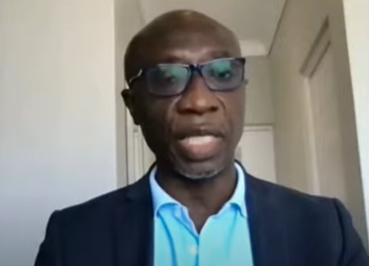
Professor of International Law and Human Rights at the University of Ghana School of Law, Kwadwo Appiagyei-Atua, says the recent United Nations resolution on slavery, though not legally binding, has revived global calls for reparations.
Speaking on Joy FM’s Super Morning Show on Thursday, March 26, Prof Appiagyei-Atua described the resolution as an important step in bringing renewed attention to the historical injustices of slavery and its lasting impact.
This comes after the United Nations General Assembly has approved a landmark resolution, spearheaded by Ghana, that formally declares slavery and the transatlantic slave trade as one of the greatest injustices against humanity and calls for reparations
Read also: UN approves Ghana-led resolution declaring slavery a crime against humanity, demands reparations
He said the move has helped return the issue to the global stage. “Yes, it is very significant in the sense that this crime of such abominable proportions that was committed against our forebears has been raised back to the banner,” he said.
According to him, the renewed prominence ensures that the history of slavery is not forgotten or ignored. “That prominence… has ensured that that story has resurfaced, and for us to be able to realise that that crime that was committed cannot be buried,” he explained.
Prof Appiagyei-Atua said that this renewed attention should lead to deeper conversations about justice.
“There is a need to talk about it and find ways to ensure that reparations are given to those who deserve it or their victims and their forebears,” he said.
However, he pointed out that the resolution does not compel countries to act, especially those expected to provide compensation.
“They will not cooperate because it is not legally binding on them,” he stated when asked about the likelihood of compliance by major powers.
He added that even where international agreements carry legal weight, enforcement remains a challenge.
“Even if it is legally binding, international law is difficult to implement. If they refuse to comply, there is nothing you can do against them because of the power they hold on the international plane,” he said.
Beyond state actors, Prof Appiagyei-Atua said any serious push for reparations must also consider the role played by private institutions and other bodies in the history of slavery.
“Let’s remind ourselves that it’s not only colonial countries. There are companies and institutions that were involved… some banks, insurance companies, because human beings were treated as objects,” he explained.
He also pointed to the historical role of religious institutions, particularly the Catholic Church, in shaping ideas that were used to justify slavery.
He said doctrines such as “terra nullius” and conquest were used to claim lands and subjugate people, often under the guise of spreading Christianity.
Despite the challenges, he believes the resolution can serve as a useful basis for further action, especially if African countries work more closely with others affected by slavery.
“What I think we need to do is the AU, working with the Caribbean countries, working with people in the diaspora… to have a joint project where they look at reparations in a critical way,” he said.
He suggested that a more practical approach would involve identifying the key actors involved in slavery and linking reparations discussions to modern economic engagements.
For instance, he proposed that such considerations could form part of trade negotiations.
“If we want to enter into trade agreements… we say that we need to connect that to some reparation or some compensation,” he said.
Prof Appiagyei-Atua said that while the UN resolution may not carry legal force, it has helped to renew global focus on slavery and the need for justice.
“Like I said, it is not binding… but it brings the issue back and gives us a basis to continue pushing,” he added.
Latest Stories
-
Vibes The Movie: Big Ghun’s Ghanaian film earns five nominations at 2026 REFFA
13 minutes -
MamaCare CEO warns unresolved conflicts among health workers could undermine maternal and neonatal care
37 minutes -
Health professionals urged to translate medical knowledge into practice to save mothers
43 minutes -
Conflicts among care providers linked to maternal, neonatal deaths – Expert
2 hours -
GIS marks 10th TIME conference, champions improved teaching practices
2 hours -
BRICS Or Balance? What Ghana’s bid really means
3 hours -
GPRTU wants full TRAFFITECH-GH implementation to start in 2027
3 hours -
Mahama announces plans to import electric wheelchairs for PWDs
3 hours -
KGL U17 Colts 2026: Western beat Prempeh Elite Academy to set up final final with Greater Accra Region
4 hours -
Late Solanke strike salvages 10-man Spurs draw at Man United
4 hours -
Gender Ministry to monitor welfare of Nana Akua Addo’s children amid domestic violence case
4 hours -
Benedict Okyere Yeboah: Ghana’s football problem goes beyond sacking a coach
4 hours -
GPL 2026/27: Darkwah Wiafe’s winner sees All Blacks beat Kotoko
4 hours -
ITF World Tour : Patel Wins Boys’ Singles Final at J100 Accra
4 hours -
Ghana must pursue BRICS partnership if it brings economic benefits – Kpebu
4 hours