

Audio By Carbonatix
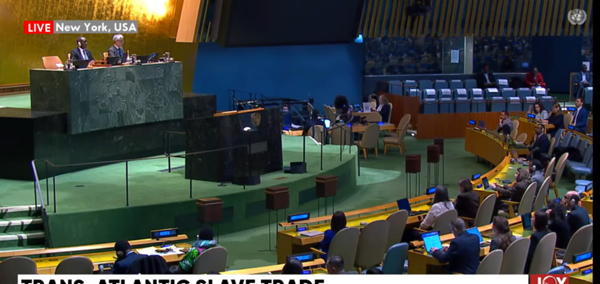
The United Nations General Assembly has approved a landmark resolution, spearheaded by Ghana, that formally declares slavery and the transatlantic slave trade as one of the greatest injustices against humanity and calls for reparations.
The resolution, which passed during a vote concluded on Wednesday, marks a diplomatic victory for Ghana and reflects growing global momentum toward addressing the historical atrocities of the slave trade and their enduring legacies.
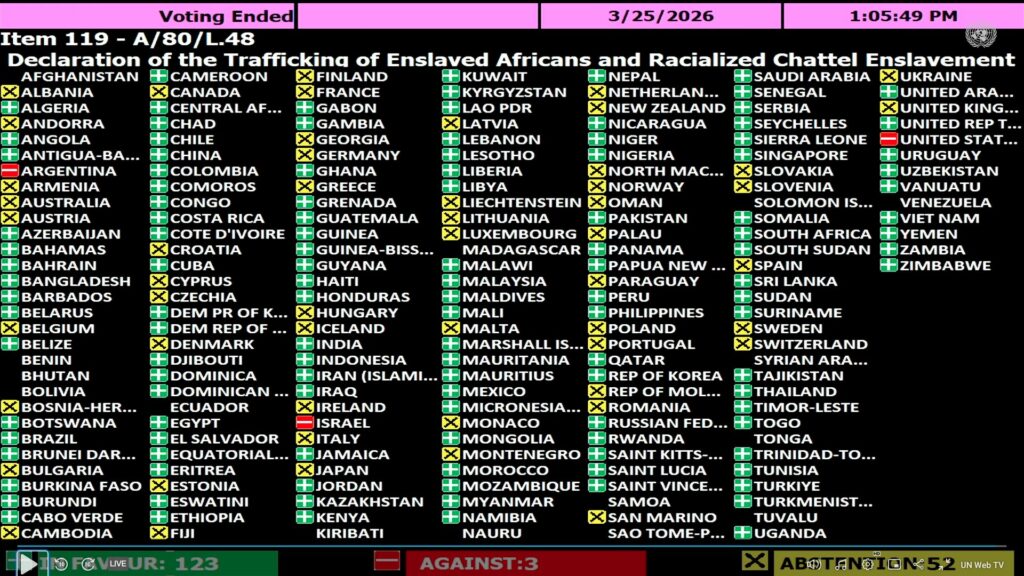
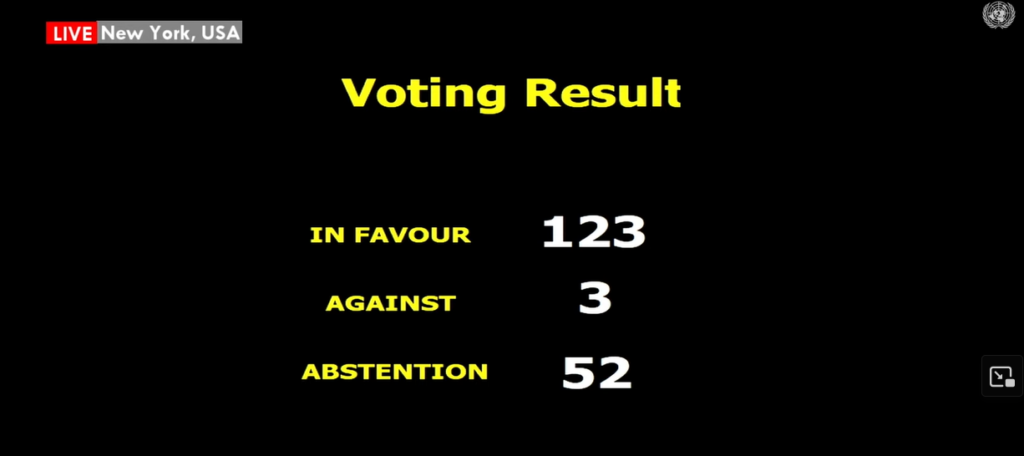
The resolution passed with 123 member states voting in favour, 3 against, and 53 abstentions.
The text of the resolution recognizes the transatlantic slave trade as a horrific tragedy that inflicted centuries of suffering, violence, and economic exploitation on millions of Africans and people of African descent.
It further acknowledges that the legacy of slavery continues to manifest in systemic inequalities, racial discrimination, and developmental deficits affecting African nations and diaspora communities today.
In a key provision, the resolution demands reparatory justice, calling on former slave-trading nations to engage in meaningful dialogue with African states and the African Union to address historical wrongs.
While the resolution does not specify a particular mechanism for reparations, it urges member states to take concrete steps toward atonement, which may include financial compensation, debt cancellation, development assistance, and the return of looted cultural artifacts.
Ghana’s delegation spearheaded by President John Mahama, which led the diplomatic push for the resolution, described the outcome as a historic step in the long struggle for recognition and justice.
Officials emphasised that the resolution establishes a clear moral and political imperative for former colonial and slave-trading powers to reckon with the past.
Speaking at a press briefing on the sidelines of the voting in New York, Ghana’s Foreign Minister, Samuel Okudzeto Ablakwa, hailed the resolution as a moment of truth for the international community.
"Through this resolution, the world has spoken the truth," Ablakwa said.
"We can't change history, but we can change how it is told going forward," he added.
The resolution garnered broad support from across the African continent, the Caribbean, and other regions with significant populations of African descent. Caribbean nations, many of which have long championed the cause of reparations, joined Ghana in rallying support for the measure.
Following the vote, representatives from several African and Caribbean nations celebrated the outcome, framing it as a turning point in the global conversation on reparations.
Proponents argued that the resolution shifts the debate from abstract acknowledgment to actionable demands for justice.
Latest Stories
-
84 suspected drug offenders in custody as NACOC freezes nearly 73 assets – Muntaka
34 seconds -
Immediate reconciliation key to building united NPP — COKA
3 minutes -
MPs, CSOs push for dedicated budget line for malaria
4 minutes -
Jeffrey Nortey’s viral Kanayo O. Kanayo bar gets the legend’s attention, leads to a meet-up
6 minutes -
Bagre Dam’s Annual Floods: Scientists seek a lasting solution as Northern Ghana’s farmers count the cost
6 minutes -
Why Corporate Communications Professionals Must Be Marketing-Oriented: The strategic advantage and the professional mileage
17 minutes -
DVLA hands 357 suspected cloned vehicles to GRA over customs duties
17 minutes -
Appeals will not end strike, FWSC must negotiate – GAUA General Secretary
24 minutes -
Haruna Iddrisu hails Ghana’s academic calendar as best in a decade
25 minutes -
Silent Football: A team, a dream, a $24,000 debt – the struggles of Ghana’s deaf footballers
25 minutes -
Education Minister Haruna Iddrisu demands merit-based admissions, appointments at Defence University
27 minutes -
National Defence University to strengthen Ghana’s response to emerging security threats – Haruna Iddrisu
31 minutes -
Pupil arrested after two teachers shot at French school
37 minutes -
Lamisi takes ‘Let Us Clap’ tour across five countries and 18 dates
55 minutes -
DVLA cuts roadworthy contract cost from $155.4m to GH¢2m – CEO
57 minutes