

Audio By Carbonatix
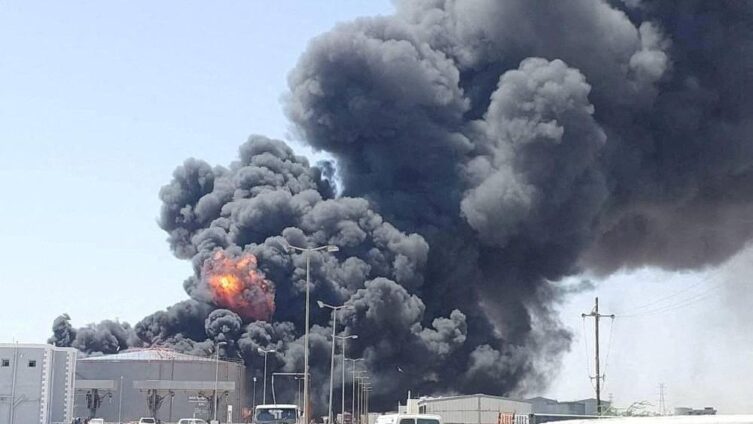
Drone strikes caused more than 80% of all conflict-related civilian deaths in Sudan during the first four months of 2026, claiming at least 880 lives. Data from the Office of the United Nations High Commissioner for Human Rights (OHCHR) indicates that these remote-controlled weapons have become the primary threat to non-combatants as the war enters a devastating new stage. UN High Commissioner for Human Rights Volker Türk has strongly condemned the escalating use of these weapons in the brutal struggle between the Sudanese Armed Forces (SAF) and the paramilitary Rapid Support Forces (RSF).
A Lethal Evolution in Conflict Dynamics
The war has entered its fourth year with a newfound mechanical intensity. Volker Türk noted that "armed drones have now become by far and away the leading cause of civilian deaths." This technological shift allows for the continuation of violence despite environmental hurdles. Türk observed that "this increasing reliance on drones allows hostilities to continue unabated in the approaching rainy season, which in the past has brought about a lull in ground operations."
Kordofan Becomes the Epicentre of Aerial Violence
While the conflict is widespread, the Kordofan region has suffered the highest concentration of drone-related casualties. A strike on May 8 underscored this trend, killing 26 civilians in South and North Kordofan. The violence frequently spills into markets and residential areas. "The international community is on notice that, unless action is taken without delay, this conflict is on the cusp of entering yet another new, even deadlier phase," Türk warned.
Targeted Destruction of Vital Infrastructure
The warring parties have repeatedly directed drone strikes at essential civilian infrastructure. Data shows that health facilities were hit at least 12 times in just four months. These attacks have forced many clinics to close, leaving thousands without medical care. Markets have also been frequent targets, with at least 28 recorded strikes resulting in casualties. Additionally, the destruction of fuel stores and supply routes has crippled the movement of basic goods across the country.
Expansion of the Theatre of War
The use of drones is rapidly expanding beyond the initial hotspots of Kordofan and Darfur to Blue Nile, White Nile, and the capital city of Khartoum. An attack on Khartoum International Airport on May 4 halted all flight operations. Türk stated that "the intensity of these attacks has shattered the relative calm that has prevailed in recent months, as increasing numbers of civilians have returned to the capital - and triggered fears of a return of hostilities to Khartoum."
Humanitarian Operations Under Threat
The escalation of drone warfare poses a direct threat to aid delivery and food security. Kordofan and other regions now face a heightened risk of famine, a situation exacerbated by expected delays or shortages of fertiliser as a result of the Gulf crisis. Türk emphasised that "this must not be allowed to happen." He called for immediate global intervention to halt the flow of advanced weaponry. "Drone attacks against civilians and civilian objects will only worsen if they are met with utter impunity, with this violence being increasingly normalised as a go-to tactic by both parties," the UN human rights chief added.
Urgent Calls for Civilian Protection
The United Nations continues to demand that all parties prioritise the safety of the Sudanese people, including safe movement from areas of active hostilities. Türk reminded the warring factions that the population must be protected from "reprisals, including summary executions, sexual violence, arbitrary detention and abductions."
The Global Challenge of Arms Proliferation
The proliferation of advanced unmanned systems in Sudan highlights a critical failure in international arms embargoes. As both the SAF and RSF secure sophisticated technology from external sponsors, the conflict has transformed into a high-tech proxy war. Only by reversing the flow of weapons can the international community provide the Sudanese people a realistic path toward peace.
Continental Consequences and the African Response
For nations across Africa, including Ghana, the normalisation of drone warfare in Sudan signals a shift in regional security stability. The African Union (AU) Peace and Security Council has voiced increasing alarm over the "regionalisation" of the conflict, as cross-border strikes now impact neighbouring states like Chad. This technological escalation threatens to export a new model of asymmetric warfare to other volatile zones on the continent. Furthermore, the resulting mass displacement—estimated at over 13 million people—places immense pressure on the humanitarian frameworks of the entire African Union.
A Call for African Solidarity and Vigilance
The conflict’s impact extends to West African markets, where the disruption of trade and agricultural output in East Africa contributes to continental food price volatility. Experts warn that the "atrocities laboratory" in Sudan could embolden armed groups elsewhere to adopt similar remote tactics. In response, African leaders are being urged to strengthen the AU’s monitoring of arms smuggling and to advocate for a unified "Silence the Guns" initiative that specifically addresses unmanned aerial technology.
Latest Stories
-
President Mahama ends Resetting Ghana tour of Ahafo Region
22 minutes -
African negotiators seek delivery of climate commitments at COP31
24 minutes -
BoG develops AI rules for financial sector
26 minutes -
‘Big Push’: Government assures contractors of prompt payments
30 minutes -
Court fines miner for breaking into gold buying shop
40 minutes -
Tarkwa court jails labourer for three years over GH¢123,000 theft
2 hours -
GAEC must retain nuclear scientists for Ghana’s nuclear ambitions – Minister
2 hours -
Man reportedly mistaken for game and shot by hunter dead in forest
2 hours -
19-year-old mason jailed 15 years for defiling seven-year-old pupil
2 hours -
Ghana’s banking sector assets rise 20.47% to GH¢500.2bn – BoG Governor
2 hours -
22 injured as Sprinter bus overturns at Sege after tyre burst
2 hours -
UN housing expert urges Ghana to strengthen Rent Control Department amid housing affordability concerns
2 hours -
Delta-BCI partnership reaches 166,000 people with breast cancer education
3 hours -
Power restoration fault suspected in Kumasi Central Market fire
8 hours -
The 7-foot giant of Ngleshie Amanfro: Seven-foot Ghanaian Ephraim Saawa dreams of joining the national basketball team
8 hours