

Audio By Carbonatix
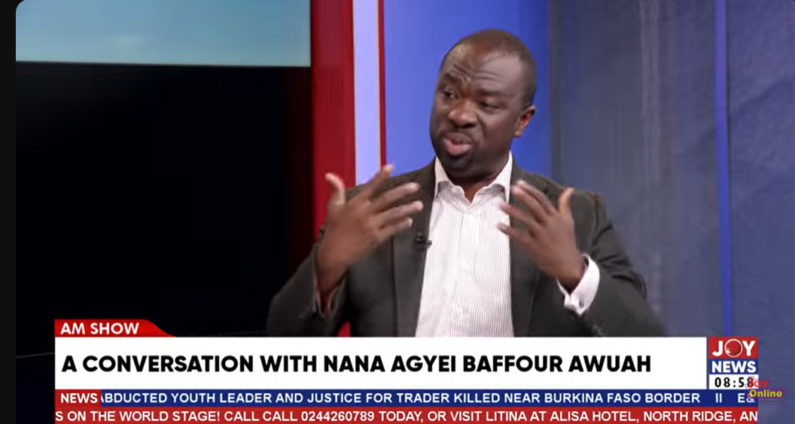
The Member of Parliament for Manhyia South, Nana Agyei Baffour Awuah, has urged Ghana and African leaders to translate discussions on the transatlantic slave trade into tangible national development initiatives.
Speaking on News Desk on Thursday, March 26, Nana Awuah reflected on the recent United Nations vote on a draft resolution recognising the transatlantic slave trade and the racialised enslavement of Africans as one of the gravest crimes against humanity.
The initiative, led by Ghana’s Minister for Foreign Affairs, Samuel Okudzeto Ablakwa, was scheduled for debate on March 25, coinciding with the International Day of Remembrance for Victims of the Transatlantic Slave Trade.
The proposal, championed by President John Dramani Mahama in his role as African Union Champion for Reparations, aims to move global discourse beyond symbolic recognition towards legal accountability and reparative justice.
Nana Awuah criticised what he described as a “talkshop” approach to historical injustices, emphasising the need for practical action:
“We seem to like a lot of talkshop and we prefer to be talking at different occasions and different times, but that is not what drives development. It was unfortunate—the slave trade was unfortunate, colonialism was unfortunate—but there is always a silver lining in every misfortune,” he said.
He encouraged leaders and citizens alike to focus on harnessing the country’s resources and opportunities:
“Let’s explore that as a country. Let’s roll our sleeves, let our leaders roll their sleeves, wear their boots, get to the ground and work. Let’s see what we can make of everything God has given us in this country. Every legacy from colonial rule—what value are they? They may potentially give us more than what we are looking for by way of reparation,” he added.
Commenting on the UN vote, Nana Awuah observed that countries which opposed or abstained were consistent with their historical positions on reparations:
“Argentina, Brazil, and others have their own issues with the slave trade. Looking at the countries that voted against it and those who abstained, they are being consistent. They are telling us that they still stand by what they have said historically—that they are not going to pay any reparations. And we know that voting to support this is the beginning of the demand for reparations,” he concluded.
Latest Stories
-
Hawa Koomson pledges experienced and mature leadership of NPP women’s wing
31 minutes -
Young woman found dead at Kasoa Peace Town
1 hour -
Playback: The Law examined lawful arrest in Ghana
1 hour -
Mahama urges African governments to treat healthcare as an investment, not budget cost
2 hours -
Bawumia congratulates John Boadu and new NPP executives, pledges support ahead of 2028
2 hours -
‘No talent should be left out’ – Bawumia pledges inclusive NPP campaign for 2028
2 hours -
Prof. Mike Oquaye recounts how he blocked the Special Prosecutor’s attempt to arrest Bawku Central MP
2 hours -
Make health sovereignty a priority for Africa – Mahama
3 hours -
Dorimon Naa, Wa West DCE lead massive clean-up exercise; threaten sanctions against recalcitrant residents
3 hours -
Photos from Adom FM Y2K Jam
3 hours -
Praye Tiatia steals the show at Adom FM Y2K Jam [Watch]
3 hours -
Boakye Agyarko congratulates John Boadu, pledges support for NPP leadership
3 hours -
Antwi HiMight thrills fans with Antwi ne Antwi hits at Adom FM’s Y2K Jam [Video]
4 hours -
Amb. Edward Boateng congratulates Boadu, Kodua on election wins
4 hours -
John Boadu pledges to rebuild NPP from grassroots and restore ‘winning machinery’
4 hours