

Audio By Carbonatix
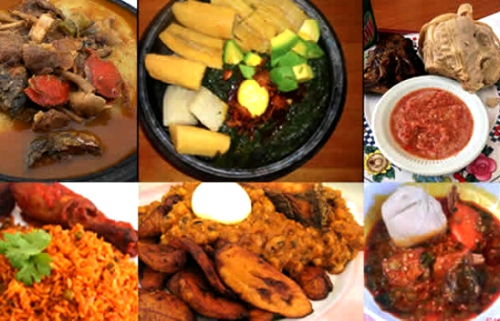
A Senior Lecturer in the Department of Hospitality and Tourism at the University of Cape Coast, Dr Mrs Alberta Bondzi-Simpson, has warned that Ghana is at risk of losing a large part of its traditional cuisine, especially in urban areas.
Speaking on Joy FM’s Super Morning Show as part of Ghana Month Celebration, discussing ‘The endangered menu: Ghanaian dishes we’re forgetting how to cook,’ she said the country’s food heritage is not yet gone, but the signs are worrying.
“I will not say outright that we are losing our heritage. I would probably cautiously say that we are at risk of losing our heritage when it comes to food,” she said.
"Because generally, the Ghanaian embraces other cultures so easily. It is amazing that a number of foods have survived as long as they have. But if we are not careful, especially in the urban centres, we may lose a lot of our food," she added.
According to her, the biggest threat comes from the way modern lifestyles are changing how people eat. Many Ghanaians, particularly in cities, now rely heavily on food bought outside the home.
“In the urban centres in particular, a lot of people are now not cooking at home and eating at least two meals away from home,” she explained. “Which means that people are buying a lot.”
She stressed that this shift has serious consequences for traditional dishes that are not commercially available, especially within the hospitality industry.
“So the aspect of our food that is at risk is the foods that do not find themselves in the hospitality space,” she said.
“Either as street food, as restaurant food, as a local bar, a food bar, what we normally call a chop bar. So if the food does not find itself in the commercial space, then we are at risk of losing it.”
Dr Bondzi-Simpson’s research showed that most of these menu decision makers in the economic space or the hospitality space consider difficulty in production, and they think that it is more difficult to produce and serve certain Ghanaian dishes.
She documented about 200 Ghanaian dishes across 13 ethnic groups, but says only about 12 commonly appear on menus.
She added that even within families, knowledge of traditional cooking is declining over time.
“If your grandmother knew how to cook 20 Ghanaian dishes, your mother probably knows how to cook 15. The daughter now knows how to cook about 10,” she said.
She stated that the situation is worsened by changing social structures, noting that with more women working and children spending long periods in school or boarding houses, fewer opportunities exist for cooking skills to be passed down.
"So gradually, even in the home, it is dwindling. Because most of these now also find themselves in the working space. They don't have time to train and experiment as their forebearers did. And so we are losing the dishes."
“I have a number of university students who don’t know how to cook anything at all, let alone some Ghanaian dishes,” she revealed.
Beyond availability, she pointed to convenience as another major factor driving the decline of local dishes.
“Another major reason why we are losing the dishes is that we are not making it easy. For want of a better word, we are not making it more convenient for people to use,” she said.
She explained that while some progress has been made, much more needs to be done to simplify the preparation of traditional meals.
“I am happy to know that right now people do not have to go and buy palm nuts, pound it, take out the nuts, mix it with hot water and drain it before they can use it,” she said.
“They can just go and buy the base, palm nut soup base from the market in a tin and just come and pour it in a pot of light soup, and they have their palm nut soup.”
Dr Bondzi-Simpson called for greater innovation in food processing to preserve Ghanaian cuisine.
“So we have to continuously make it easier, make it more convenient for people to use the ingredients,” she said.
“In other words, we need manufacturing companies that will look at the number of Ghanaian dishes that we have, the basic ingredients and the processes that we pass the ingredients through.”
She suggested practical solutions, including ready-to-use traditional ingredients.
“By now we should have okra or okro as we call it, grated or sliced and cooked in a tin or something. That people can just go and buy the tin and pour it into a soup and make okro soup. Why do I have to go through the whole process?”
Dr Bondzi-Simpson believes the trend is national, not limited to one ethnic group.
“I think it’s a general national pattern, because all the urbanised areas are losing it,” she said.
"In the typical villages, you may have some of these dishes preserved. But when you come to the urban centres, we are losing it. And as we keep developing and as we keep increasing the urban space, we will continuously lose it," she added.
While some dishes remain preserved in rural communities, she warned that continued urbanisation could accelerate the loss.
“We may not see it now, but in the next 50 to 70 years, we will start realising that we are losing. Because just some years back, you wouldn't have found any ethnic restaurants in Ghana. You didn't find Italian restaurants, you didn't find Indian restaurants, you didn't find Chinese restaurants.
"But now, everywhere you pass, these new cuisines are popping up. And so if we don't protect our own, we will lose them to different tastes, new tastes," she cautioned.
Latest Stories
-
GPRTU wants full TRAFFITECH-GH implementation to start in 2027
2 minutes -
Mahama announces plans to import electric wheelchairs for PWDs
6 minutes -
KGL U17 Colts 2026: Western beat Prempeh Elite Academy to set up final final with Greater Accra Region
24 minutes -
Late Solanke strike salvages 10-man Spurs draw at Man United
34 minutes -
Gender Ministry to monitor welfare of Nana Akua Addo’s children amid domestic violence case
41 minutes -
Benedict Okyere Yeboah: Ghana’s football problem goes beyond sacking a coach
50 minutes -
GPL 2026/27: Darkwah Wiafe’s winner sees All Blacks beat Kotoko
56 minutes -
ITF World Tour : Patel Wins Boys’ Singles Final at J100 Accra
1 hour -
Ghana must pursue BRICS partnership if it brings economic benefits – Kpebu
1 hour -
Success and Wright Claims J100 Accra Girls’ Doubles Championship
1 hour -
ITF J100: America’s Wright wins J100 Accra Girls’ Singles Title
1 hour -
Expedition hopes to find aviator Amelia Earhart’s plane on remote island
1 hour -
US seeks changes to rejected $109m health compact with Ghana – Mahama
2 hours -
Nine dead in mass shooting at Pennsylvania home
2 hours -
‘Time for Ukraine to get new president,’ says Trump after Zelensky condemns diesel deal
2 hours