

Audio By Carbonatix
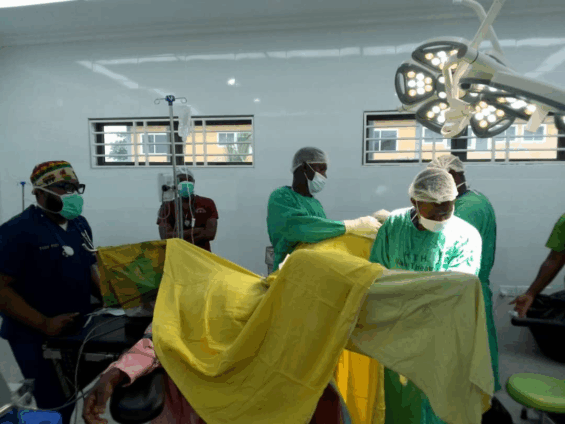
In a move to restore dignity to women living with obstetric fistula, Ghana has launched a nationwide initiative offering free surgeries in five major hospitals.
The initiative, led by the Partnership to End Fistula in Ghana (PEFIC), aims to eliminate one of the most debilitating childbirth-related conditions by providing comprehensive care and reintegration support to survivors.
The designated hospitals now offering free fistula repairs include Komfo Anokye Teaching Hospital (Kumasi), Ho Teaching Hospital (Volta Region), Tamale West Hospital (Northern Region), Mercy Women Catholic Hospital (Central Region), and Upper West Regional Hospital.
The announcement was made by Dr. Wilfred Ochan, Country Representative of the United Nations Population Fund (UNFPA), during a commemorative event on May 23 at Ho Teaching Hospital marking the International Day to End Obstetric Fistula.
“This year, we decided to take the conversation out of the conference rooms and into clinics and communities,” Dr. Ochan emphasized, underscoring the need to confront the stigma and isolation that fistula survivors endure.
Obstetric fistula, caused primarily by prolonged or obstructed labour, results in a hole between the birth canal and the bladder or rectum, leading to uncontrollable leakage of urine or faeces.
Beyond the physical trauma, affected women often suffer severe psychological and social rejection ,many lose their babies, are abandoned by spouses, and are excluded from basic social activities.
Restoring Hope, One Surgery at a Time
PEFIC, officially launched in December 2023 by former First Lady Rebecca Akufo-Addo, has rapidly grown from seven founding partners to 18 institutions.
These include ministries, health facilities, international organizations like WHO and WFP, and private sector players such as Fidelity Bank, Access Bank, and AT (formerly AirtelTigo).
Non-governmental organizations such as Qatar Charity and MCAM are also contributing significantly to the campaign.
Qatar Charity is building a shelter for fistula patients in Yendi, providing a safe space for recovery and reintegration.
At the same time, the Ministry of Gender, Children and Social Protection is constructing a new surgical theatre in Tamale to support the increased demand for repairs and improve access to quality care in the Northern Region.
The estimated cost per patient around $700 covers transportation, surgery, and two weeks of recovery care.
While the Ghana Health Service provides the clinical workforce and infrastructure, other partners support with logistics, public education, and infrastructure projects.
“It's not just about performing the surgery,” Dr. Ochan noted. “We must ensure each woman is transported safely, given a place to heal, and supported to rejoin her family and community.”
From Donor Dependency to National Ownership
What began with a modest $60,000 in donor support has evolved into a nationally-owned, multi-sectoral campaign.
Ghana’s move toward self-sufficiency is a beacon of hope for countries battling similar maternal health challenges.
With skilled delivery care now covering 87-88% of births in health facilities, the nation is making visible strides but challenges remain.
Ghana’s maternal mortality rate stands at approximately 310 deaths per 100,000 live births, and for every death, about 20 women suffer serious complications many of which are preventable, like obstetric fistula.
How to Access the Free Surgery
Women in need of fistula repair can contact the following hospitals:
Komfo Anokye Teaching Hospital (Kumasi) – 057 020 2800
Ho Teaching Hospital (Volta Region) – 027 939 0179
Tamale West Hospital (Northern Region) – 027 701 3270
Mercy Women Catholic Hospital (Central Region) – 027 523 2127
Upper West Regional Hospital – 055 849 6307
A Future Free of Fistula
With this new campaign, Ghana is not only treating a condition it is restoring dignity, empowering women, and setting a global example.
“We’ve moved from dependency to sustainability,” said Dr. Ochan. “This is what national commitment to maternal health looks like.”
As the country accelerates efforts to eradicate obstetric fistula by 2030, the collaboration between government, civil society, the private sector, and international agencies marks a hopeful turning point in the lives of thousands of women.
Latest Stories
-
Mobile Money Ltd’s Paapa Osei recognised in Legal 500 GC Powerlist: Ghana 2026
3 minutes -
Flights in and out of Middle East cancelled and diverted after Iran strikes
21 minutes -
Dr Maxwell Boakye to build 50-bed children’s ward at Samartex Hospital in honour of late mother
31 minutes -
One killed and 11 injured at Dubai and Abu Dhabi airports as Iran strikes region
38 minutes -
Former MCE, 8 others remain in custody over alleged land fraud in Kumasi
44 minutes -
Black Queens players stranded in UAE over Israel-Iran conflict
1 hour -
James Owusu declares bid for NPP–USA chairman, pledges renewal and unity
2 hours -
Trump threatens strong force if Iran continues to retaliate
2 hours -
Lekzy DeComic gears up for Easter comedy special ‘A Fool in April’
4 hours -
Iran declares 40 days of national mourning after Ayatollah Ali Khamenei’s death
4 hours -
Family of Maamobi shooting victim makes desperate plea for Presidential intervention
5 hours -
Middle East turmoil threatens to derail Ghana’s single-digit gains
6 hours -
Free-scoring Semenyo takes burden off Haaland
6 hours -
Explainer: Why did the US attack Iran?
7 hours -
Peaky Blinders to The Bride!: 10 of the best films to watch in March
7 hours