

Audio By Carbonatix
Many Ghanaians will experience hunger and malnutrition by 2030 due to anticipated drop in national fish production, Professor Berchie Asiedu, the Dean, School of Natural Resources, University of Energy and Natural Resources (UENR) has hinted.
He said the nation’s fish consumption was expected to reach 888,096 tonnes by 2030; however, total fish production was anticipated to constitute only about 43 per cent of the total fish requirement.
“This clearly shows that demand for fish consumption is expected to outweigh the national supply,” Prof Asiedu explained.
At the current growth rate, per capita fish consumption is predicted to decline from 28 kg in 2018 to 23.9 kg in 2030, Prof Asiedu, stated saying, “fish consumption would increase, but people would be eating less fish.”
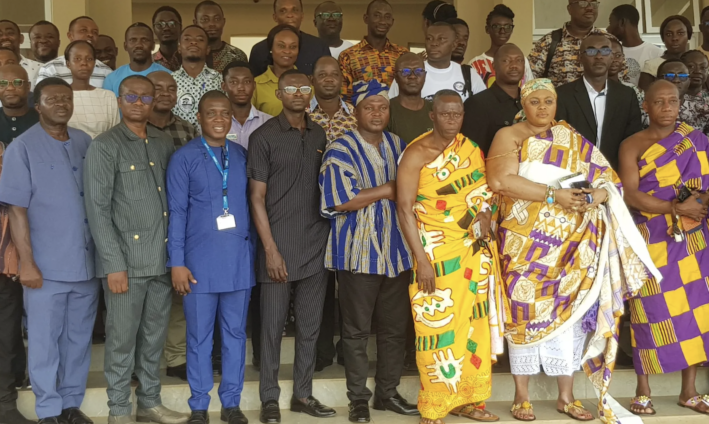
Prof Asiedu made this known when speaking on a research update session, organised by the School of Natural Resources of the University in Sunyani on the theme “Managing our Natural Resources: Academia-Industry Partnership for Sustainable National Development.”
The session was attended by natural resources experts.
Prof Asiedu explained that as the cheapest and most consumed animal protein (60 percent) in the country, fish demand had increased rapidly over the past few years, growing from 960,000 tonnes in 2010 to 1.1 million tonnes in 2020.
Within the same period, per capita fish consumption increased from 24.2 kg to 27.9 kg at a rate of 1.6 percent per annum.
Following the gaps in the trends of production and consumption, Prof Asiedu called for an urgent need for policies to accelerate aqua-culture development in the country.
He also underlined the importance of ensuring general improvement in the fisheries management practices, as well as exploration of adaptive strategies and thereby improve the adaptive capacity of fishers to climate change.
Later in an interview, Mr. Hanson Kodzo Dzamefe, the Bono Regional Director of the Fisheries Commission, expressed concern about the nation’s over-reliance on marine fishes, and called for private sector collaboration to develop the nation’s aqua-culture sector.
He said aquaculture had huge potential for job creation and food security, saying the inland fishing value chain could create millions of jobs if investments were put into the sector.
Mr Dzamefe said aquaculture remained a lucrative business, and therefore, called on the unemployed youth and graduates to engage in commercial fish production to better their lots and advance national food security too.
Latest Stories
-
25-year-old woman battles trauma after surviving deadly Nkwanta attack
14 minutes -
Vice President honoured at Tortsogbeza as South Tongu leaders highlight development needs
22 minutes -
Kwahu Business Forum 2026: Corporate citizenship, sustaining African businesses take centre stage with KGL as the case study
2 hours -
Trump seeks $152m to reopen notorious Alcatraz prison
4 hours -
Ex-Chelsea player Oscar retires with heart issue
4 hours -
CA Foundation drives constitutional literacy in Kpone Katamanso municipality
4 hours -
GPRTU to hold talks with Transport Ministry over rising fuel costs
4 hours -
CUTS International urges gov’t to halt sachet water price hike pending cost review
4 hours -
Chief Justice: Efficient Judiciary essential to reducing business costs
4 hours -
Bayern grabs 99th-minute winner to cap superb fightback
4 hours -
Ahmed Ibrahim urges Ghanaians to reflect Easter values in nation-building
4 hours -
ECG inefficiencies undermining power supply -Mahama outlines reforms
4 hours -
Lewandowski scores as Barca fight back to defeat Atletico
4 hours -
Lack of private sector consultation undermining economic growth – Jerry Ahmed Shaib
4 hours -
Real Madrid seven points adrift after Muriqi’s late Mallorca winner
4 hours