

Audio By Carbonatix
Renewable energy capacity in Sub-Saharan Africa is projected to nearly double (https://apo-opa.co/3tbpYZ0) by 2027, with the addition of over 40 GW from alternative power sources. More than 60% of this growth will be derived from South Africa, largely due to its Renewable Independent Power Producer Programme (REIPPP). However, as the world's attention increasingly focuses on optimising energy consumption and minimising CO₂ emissions, the sustainability of the components used in renewable energy projects becomes paramount.
Dr Andrew Dickson, Engineering Executive at CBI-electric: low voltage (https://CBI-LowVoltage.co.za/), emphasises that despite their eco-friendly nature, all electricity generation technologies, including renewables, emit greenhouse gases during their lifecycle. “The carbon footprint (https://apo-opa.co/3tbPi0W) of renewable energy can range from 11 to 740 grams of CO₂ equivalent per kWh. Therefore, to achieve true sustainability, it is imperative to adopt advanced, greener technologies wherever possible.”
He continues by saying, “Something as innocuous as a circuit breaker should be factored in when determining the carbon footprint an installation creates. While these are essential for safeguarding electrical installations, they still consume electrical energy during normal operation and though they are passive devices, they are contributing to CO₂ emissions. Furthermore, this passive energy consumption ultimately translates into monetary costs. Given the growing demand for low-voltage circuit breakers as renewable energy projects expand across South Africa and the continent, it's essential to reduce these emissions and financial costs while also gaining maximum efficiency from the renewable system.”
To this end, Dr Dickson recommends a refocus on Hydraulic-Magnetic (Hy-Mag) circuit breakers over thermal-magnetic counterparts in renewable energy projects. “Hy-Mag circuit breakers utilise magnetic flux to switch, relying on the relationship between current flow and coil turns to create the necessary tripping force. In contrast, thermal-magnetic breakers require the heating of a bimetal strip mechanism, which, by its nature, consumes more electrical energy. This fundamental technology difference results in lower lifetime energy consumption during standard operation of Hy-Mag breakers, reducing total energy losses and carbon emissions.”
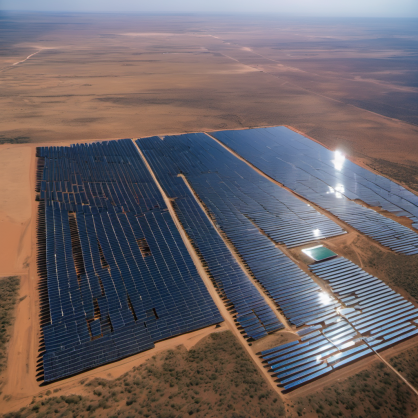
He also points out that thermal-magnetic breakers' performance is temperature-dependent, which can be problematic in regions with extreme temperature variations, such as South Africa's Northern Cape which is home to numerous solar power plants. “Hy-Mag breakers, on the other hand, maintain consistent protection regardless of temperature changes, making them more suitable for environments with substantial temperature fluctuations.”
“Furthermore, Hy-Mag breakers' optimal performance within a temperature range of -40 °C to +85 °C minimises nuisance tripping and ensures a more stable solution,” he adds. “This not only enhances operational reliability but also extends the lifespan of the breakers, leading to more dependable performance over time.”
“By adopting greener, more energy-efficient solutions, the industry can reduce carbon emissions, improve energy efficiency, and ensure the long-term success of renewable energy installations. As Sub-Saharan Africa and the world at large transition toward a more sustainable energy landscape, these innovations are pivotal in driving positive change,” concludes Dr Dickson.
Distributed by APO Group on behalf of CBI-electric: low voltage.
About CBI-electric: low voltage:
Established in 1949, CBI-electric: low voltage is a manufacturer and supplier of quality low voltage electrical distribution, protection, and control equipment. Previously known as Circuit Breaker Industries or CBI, the company specialises in the design, development, and manufacturing of circuit breakers, residential current devices, surge protection, wiring accessories, and metering products.
Head quartered in Johannesburg, South Africa, the company is a subsidiary of renowned JSE listed industrial group Reunert (https://www.Reunert.co.za/), with international operations across Africa, Asia, Australia, Europe, and USA.
CBI-electric: low voltage can be found in almost every home and has firmly become a market leader over the last 72 years while supplying products to authorities, utilities, manufacturers, commercial property developers, industrial, mining, telecommunications, and general power distribution applications.
In 2021, the brand launched its smart IoT (internet-of-things) home automation range, called the Astute Range.
For more information about CBI-electric: low voltage visit: www.CBI-LowVoltage.co.za
Latest Stories
-
New York Times executive fatally shot allegedly by elderly in-laws
24 minutes -
Teacher Payment Crisis: GES races to protect academic calendar
33 minutes -
US prosecutors reopen case of alleged gang rape at Cornell University
50 minutes -
Journalist to be crowned king in Uganda after bitter succession dispute
60 minutes -
OpenAI scraps rollout of new model over safety concerns
1 hour -
Nigerian attempts to break world record by dancing non-stop for seven days
1 hour -
GES urges government agencies to end blame game over teacher payments
3 hours -
GES sets Oct. 5 deadline to resolve teachers’ payment dispute
3 hours -
GES working around the clock to get teachers back to class, says Daniel Fenyi
4 hours -
French PM warns against escalation of school protests after 164 arrested
4 hours -
UK tries to stop Trump’s diesel export ban
4 hours -
Late Olise goal gives France win over Belgium
4 hours -
Mancini enjoys first win since return as Italy boss
5 hours -
Interest payments to average a high 20% of government revenue over next 4 years
5 hours -
Anthropic warns AI may pose ‘existential risks to humanity’ in IPO filing
5 hours