

Audio By Carbonatix
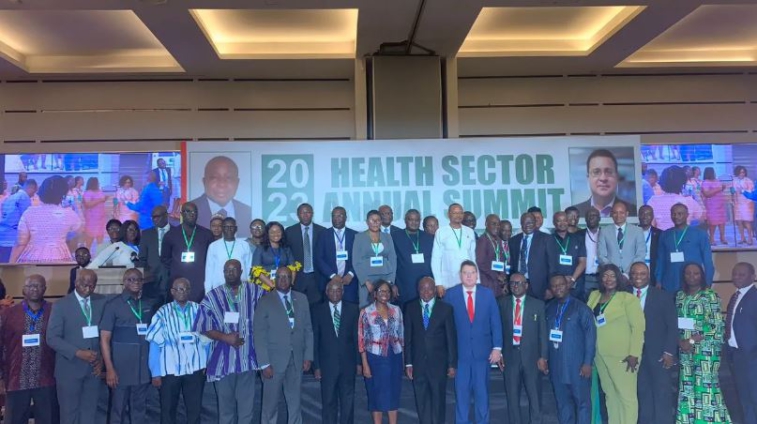
The 2023 Annual Health Summit was on Monday opened in Accra with a call for strategic funding for the health sector.
The Minister for Health, Mr Kwaku Agyeman-Manu, who made the call, said adequate financing for the health sector would ensure a better, responsive and resilient health system.
The three-day summit is on the theme: “Sustainable Financing for Primary Health Care (PHC) towards Attaining of Universal Health Coverage in Ghana; the role of stakeholders”.
The summit brings together stakeholders from the Ministries and Departments, all health sector agencies, development partners, implementing partners, civil society, and non-governmental organisations to discuss concrete actions towards Ghana achieving sustainable financing for universal health coverage.
The summit is held every year to afford stakeholders the opportunity to review the sector’s performance in the previous year and redefine health priorities for the next programme of work.
Mr Agyeman-Manu said the year 2022 was very challenging due to the country’s economic crisis.
He said despite the challenges, the health sector remained relatively stable in terms of its interventions and corresponding outputs, outcomes, and impacts.
“The year saw a decline in the institutional maternal mortality ratio from 119.6 in 2021 to 102.6 in 2022, however, Ashanti, Greater Accra and Eastern regions recorded high maternal mortality ratios. So, there is an urgent need to support these regions to address the possible contributory factors,” he said.
The Minister said institutional stillbirths, neonatal, infant and under-five mortalities had also reduced marginally in 2022.
He said Family Planning acceptor rates also saw an increase from 33.8 per cent in 2021 to 36.1 per cent in 2022, adding that the Ahafo region recorded the highest Family Planning acceptor rates among the regions.
Mr Agyeman- Manu said all-cause mortality rates also declined from 21.73 per cent to 19 per cent in 2022.
The Health Minister reiterated the Government’s commitment to achieving Universal Health Coverage (UHC) and increasing access to essential health services by 2030 and beyond, which could be achieved through strategic investments in primary healthcare.
He called for a strengthened collaboration with Metropolitan and Municipal District Assemblies (MMDAs) to mobilise resources to address issues affecting primary healthcare delivery.
“We must strengthen our collaboration with other MMDAs under the Health-In-All policies principle to mobilise resources to address issues hindering the delivery of PHC in line with our National Health Policy,” he said.
Mr Pierre Laporte, Country Director, Ghana World Bank, said though Ghana had made notable progress in building human capital during the period, some segments of the population were being left behind.
“Inequality in access to basic services among marginalised groups and across regions has impacted economic opportunities, unfortunately, this includes people with disabilities and those who suffer mental health issues.”
He said the health sector service delivery gap would require innovative sustainable financing of the primary healthcare system.
Mr Laporte said the challenges of the health sector were multi-dimensional and required effective collaboration with key stakeholders.
He congratulated the Health Ministry for securing a USD 150 million IDA and USD 31 million global financing facility grant for PHC reforms called the Network of Practice.
Mr Laporte said achieving the Sustainable Development Goals target for the country would require that development financing focused on results.
Mrs Uzoamaka Gilpin, the Development Partners (DP) Lead, Foreign, Commonwealth and Development Office (FCDO), commended the Ministry of Health and its agencies for the pragmatic effort at reforming PHC service delivery through the Network of Practice (NoP) and Model Health Centres (MHC).
“We call on the government to protect the National Health Insurance Scheme (NHIS) and prioritise sustainable domestic financing for procurement of health commodities and essential medicines, including vaccines,” she said.
Mr. Bright Amissah-Nyarko, the National Chairman of Ghana Coalition of NGOs in Health, called on the Government to budget, allocate and disburse adequate funds to primary healthcare interventions.
“We suggest the imitation of high-level advocacy for the establishment of the National Emergency and Immunisation fund born out of the COVID-19 one per cent recovery levy and the National COVID-19 trust,” he said.
Latest Stories
-
We can tackle multiple priorities – Sam George defends Anti-LGBTQ Bill push
27 minutes -
Statement: Ghana Chamber of Mines’ Response to Claims in Joe Jackson’s “Ananse Stories about the Economy of Ghana”
29 minutes -
GES opens 2026 teacher recruitment for licensed B.Ed graduates
31 minutes -
Ghana must value skilled trades, build resilient learners — Ibn Chambas
39 minutes -
Ghana must rethink education around relevance, resilience and responsibility — Ibn Chambas
42 minutes -
Prince Harry faces defamation lawsuit from charity he co-founded
44 minutes -
South Korea deploys thermal cameras to track escaped zoo wolf
45 minutes -
Calls for royal meeting with Epstein survivors grow ahead of US visit
49 minutes -
Ibn Chambas advocates blend of technology and human values in education
50 minutes -
UMA improves healthcare access in Asutifi North with GH₵700k ‘Kim Taylor Legacy’ Walkway
55 minutes -
Scholarships Authority and Fanaka University offer sponsorship for procurement and supply chain studies
58 minutes -
Bisa Kdei drops new single ‘Go N Look’ featuring Medikal
1 hour -
Benin facing rising terrorism in north as French military presence faces growing criticism
1 hour -
UEW Public Lecture Series 2026: Education debate ‘about the soul of Ghana’s future’ — Dr Ibn Chambas
1 hour -
EU fingerprint and photo travel rules come into force from today
2 hours