


Audio By Carbonatix
The Indian pot belly - once a badge of prosperity, indulgence and aging respectability - has long been a target of satire and social commentary.
In literature, it quietly signalled comfort or complacency; in films, it became a shorthand for the lazy official, gluttonous uncle, or a corrupt policeman. Cartoons exaggerated it to mock politicians. In rural settings, it was once considered a status symbol - a sign that "this man eats well".
But what was once dismissed or even celebrated is now raising alarm bells. The obesity crisis in India is ballooning, and the seemingly harmless pot belly may be a far bigger villain than we think.
India had the second-highest number of overweight or obese adults in 2021, with 180 million affected, behind only China. A new Lancet study warns this number could soar to 450 million by 2050, nearly a third of the country's projected population.
Globally, more than half of all adults and a third of children and adolescents are expected to face the same fate.
At the heart of this issue in India lies the pot belly, or in medical terms, abdominal obesity.
This form of obesity refers to the accumulation of excess fat around the belly and doctors say it's more than a cosmetic concern. As far back as the 1990s, studies showed a clear link between belly fat and chronic conditions like Type 2 diabetes and heart disease.
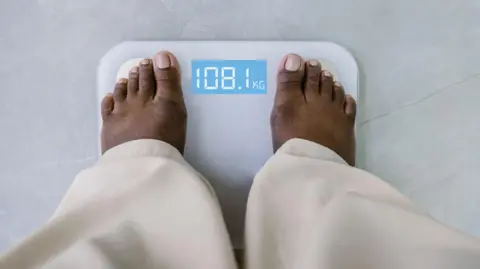
Obesity isn't just abdominal. It appears in different patterns, depending on fat distribution: peripheral obesity affects the hips, thighs, and buttocks, while generalised obesity involves fat spread more evenly across the body.
The numbers on abdominal obesity in India are already troubling. According to the latest National Family Health Survey (NFHS-5) - which, for the first time, measured waist and hip sizes - about 40% of women and 12% of men in India have abdominal obesity.
Abdominal obesity, based on Indian guidelines, means a waist over 90cm (35 inches) for men and 80cm (31 inches) for women. Among women aged 30 to 49, nearly one in two already shows signs of it. Urban populations were found to be more affected than rural ones, with high waist circumference or waist-to-hip ratios emerging as a key red flag.
So why is belly fat such a big deal?
One reason is insulin resistance - a condition where the body stops responding properly to insulin, the hormone that helps regulate blood sugar. Abdominal fat disrupts how the body uses insulin, making it harder to control blood sugar.
Studies have found South Asians, including Indians, tend to have more body fat than white Caucasians at the same Body Mass Index. (BMI is a simple measure that assesses a person's weight in relation to their height.)
It's not just how much fat you have - it's where it goes. In South Asians, fat tends to collect around the trunk and under the skin, but not always deep in the abdomen as visceral fat.
Though South Asians may have less of the more harmful deep abdominal fat around organs like the liver and pancreas, studies show their larger, less efficient fat cells struggle to store fat under the skin. As a result, excess fat spills into vital organs that regulate metabolism - like the liver and pancreas - raising the risk of diabetes and heart disease.

Scientists still don't fully understand the biological reasons behind the fat distribution patterns. Though numerous genetic studies have been conducted, no single gene has consistently explained this tendency.
One theory offers an evolutionary root. India, for centuries, was racked by famines and chronic food shortages, leaving generations to survive on meagre nutrition.
In such conditions, the human body adapted for survival in extreme scarcity.
The body needed a depot for this energy, and the abdomen, being the most expandable area, became the prime storage site. Over time, as food became more plentiful, this fat store continued to grow, eventually to harmful levels.
"It's a conjectural but plausible evolutionary theory - one that can't be proven, but makes sense," says Anoop Misra, who heads Delhi's Fortis-C-DOC Centre of Excellence for Diabetes, Metabolic Diseases and Endocrinology.
Last year, in a paper, doctors belonging to the Indian Obesity Commission redefined obesity guidelines for Asian Indians, moving beyond BMI to better reflect how body fat relates to early health risks.
They created a two-stage clinical system that considers fat distribution, related diseases and physical function.
Stage one involves a high BMI, but without abdominal obesity, metabolic disease, or physical dysfunction. In such cases, lifestyle changes like diet, exercise and sometimes medication are usually enough.
Stage two includes abdominal obesity - the harmful visceral fat - and is often accompanied by health issues like diabetes, knee pain or palpitations. This stage signals higher risk and calls for more intensive management.
This classification guides treatment intensity. Once belly fat appears, early action is key - new weight loss drugs like semaglutide and tirzepatide are proving effective at targeting it, doctors say.
"As shocking as it may sound, even people with a normal weight can have dangerous levels of belly fat," says Dr Misra.
Indian physicians say abdominal obesity is rising due to lifestyle changes - more junk food, takeaways, instant meals and greasy home cooking. Between 2009 and 2019, Cameroon, India and Vietnam saw the fastest growth in per capita sales of ultra-processed foods and beverages, studies found.
So, what needs to be done?
Experts say Indians need tougher lifestyle changes than Western norms recommend. While 150 minutes of weekly exercise may suffice for their European men, their South Asians counterparts need around 250–300 minutes to offset slower metabolism and less efficient fat storage, studies show.
"Our bodies simply aren't as good at handling excess fat," says Dr Misra.
In short, the pot belly isn't just a punchline - it's a warning sign. And India is sitting on a ticking health time bomb.
Latest Stories
-
Author and former politician Jeffrey Archer dies aged 86
9 minutes -
No education reform can succeed without teachers – Education Ministry
18 minutes -
Gauff condemns racist abuse after China Open win
34 minutes -
Medvedev disqualified for hitting spectator with ball
43 minutes -
Oliseh scores twice in late comeback win for France
52 minutes -
Pentagon stops using Anthropic AI tools after blacklisting company, BBC told
1 hour -
From despair to dance: Family of nurse Salomey Baffoe rejoices after GH¢100k bail granted
2 hours -
Kejetia Phase III pricing talks loom as government moves to restart stalled works
2 hours -
Nchiraa Yam festival: Two killed, 14 injured as police restore calm
2 hours -
I draw inspiration for my songs from Reggae music – Lyrical Joe
2 hours -
AI must not replace human judgment in public spending – BoG Governor
2 hours -
Ghana should withdraw from 2027 AFCON – Kojo Addae Mensah
3 hours -
Team Ghana departs Accra for Angola ahead of Karting Africa Trophy
3 hours -
AIT President Prof Clement Dzidonu urges lifelong learning as AI reshapes work and education
3 hours -
FWSC to meet striking teacher unions on Tuesday
3 hours