

Audio By Carbonatix
The nation needs a long-term development plan (DP) to serve as a blueprint for successive governments to implement.
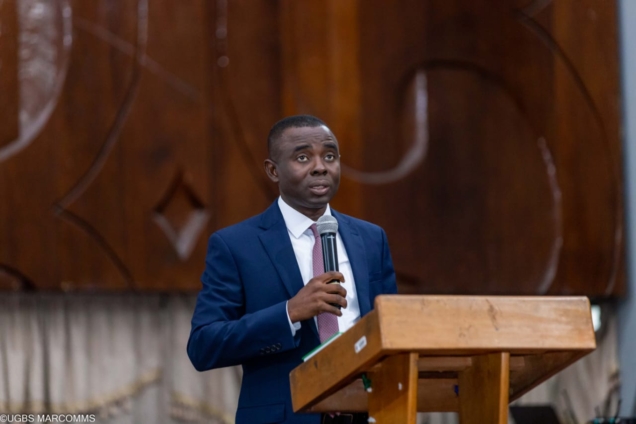
A Professor of Finance and Afreximbank Research Fellow, Joshua Yindenaba Abor, said such a plan would also guide the implementation of policies and programmes of successive governments.
Prof. Abor, who is a former Dean of the University of Ghana Business School (UGBS), said: “The system where one party draws a development plan and another party comes and abandons it is not good for the nation but we can cure that by ensuring that the government that develops a development plan does so with all stakeholders involved.
“So, once you have the buy-in of stakeholders, it will be difficult for the next government to abandon it because they were part of the process,” he added.
Delivering a lecture on the changing roles of national development banks in Africa, the financial economist said it must also be forward-looking by a minimum of 40 years and be respected and utilised by all future governments within that time frame.
Since its establishment, the National Development Planning Commission (NDPC) has prepared three long-term development plans that have largely been underutilised.
The most recent one, the 40-Year Development Plan (2018-2057) with a vision of achieving “a just, free and prosperous society”, has been shelved while manifestoes have become the source of policies and programmes.
Event
Dubbed “DBG-UGBS Development Finance Dialogue Series,’’ the round table meeting saw Prof. Abor examine contemporary roles of NDBs in Africa, their business models, challenges they face and how the continent could make them more effective to achieve national development aspirations.
It was an initiative of the business school with support from the bank to educate graduate students of the UGBS on the relevance of development finance and roles of development banks.
Prof. Abor, who is also an External Fellow at the Centre for Global Finance, shed more light on his latest book “The changing role of national development banks in Africa: Business models, governance and sustainability,” published by Palgrave Macmillan in August this year.
Concerns
The former visiting scholar of the International Monetary Fund (IMF) said the country’s inability to stick to one long-term development plan opened it up to piecemeal and party-based policies and programmes that lacked the capacity to propel the nation to sustained development.
That, he said, contributed gravely to the nation’s limited and unsystematic development over the years.
It could also limit the ability of national development banks (NDBs) to unlock growth poles and fund sustainable development given that their operations would not be drawn from a national development plan by successive governments, Prof. Abor added.
The Development Bank Ghana (DBG) is the new NDB which was established in 2020, and licensed in 2021 to address the long-term, patient funding gap that faced businesses and the economy.
It added to the Ghana Export-Import (Exim) Bank established in 2016 to support export development.
Linking NDBs to dev't plans
Prof. Abor, who is also a Fellow of the Ghana Academy of Arts and Sciences, further said while NDBs were critical institutions to national development the world over, they functioned better when their roles and operations were drawn from a national development plan.
He said development finance institutions were a critical avenue for providing countercyclical financing during and after periods of shocks, as well as offer a pool of resource to fund the UN Sustainable Development Goals (SDGs).
Prof. Abor said they also enhanced inclusive financing, especiallyw when they lend to small and medium enterprises (SMEs).
He added that DBs also promoted innovation and structural transformation, crowded in private capital by de-risking key investment areas, helped to fund public goods, climate action, as well as deepened the financial market due to their ability to provide long-term financing.
Recommendations
Prof. Abor said NDBs needed to prioritise governance systems and that board members must also be allowed to complete their term.
He said NDBs also needed to implement strong and robust impact evaluation mechanisms, as well as ensure a balanced funding mix where loans were procured in local and foreign currencies to address the currency mismatch and minimise the foreign exchange risk component in their books.
On regulations, he proposed that NDBs adopt a proportionate approach of implementing Basel III from the Basel Accord, an international framework that sets standards for bank capital, to avoid suffering liquidity constraints.
Latest Stories
-
T-bills auction: Interest rates fell sharply to 6.4%; government exceeds target by 170%
46 minutes -
Weak consumption, high unemployment rate pose greater threat to economic recovery – Databank Research
2 hours -
Godfred Arthur nets late winner as GoldStars stun Heart of Lions
2 hours -
2025/26 GPL: Chelsea hold profligate Hearts in Accra
2 hours -
Number of jobs advertised decreased by 4% to 2,614 in 2025 – BoG
2 hours -
Passenger arrivals at airport, land borders declined in 2025 – BoG
3 hours -
Total revenue and grant misses target by 6.7% to GH¢187bn in 2025
3 hours -
Africa’s top editors converge in Nairobi to tackle media’s toughest challenges
4 hours -
Specialised courts, afternoon sittings to tackle case delays- Judicial Secretary
4 hours -
Specialised high court division to be staffed with trained Judges from court of appeal — Judicial Secretary
5 hours -
Special courts will deliver faster, fairer justice — Judicial Secretary
5 hours -
A decade of dance and a bold 10K dream as Vivies Academy marks 10 years
5 hours -
GCB’s Linus Kumi: Partnership with Ghana Sports Fund focused on building enduring systems
6 hours -
Sports is preventive healthcare and a wealth engine for Ghana – Dr David Kofi Wuaku
6 hours -
Ghana Sports Fund Deputy Administrator applauds GCB’s practical training for staff
6 hours