

Audio By Carbonatix
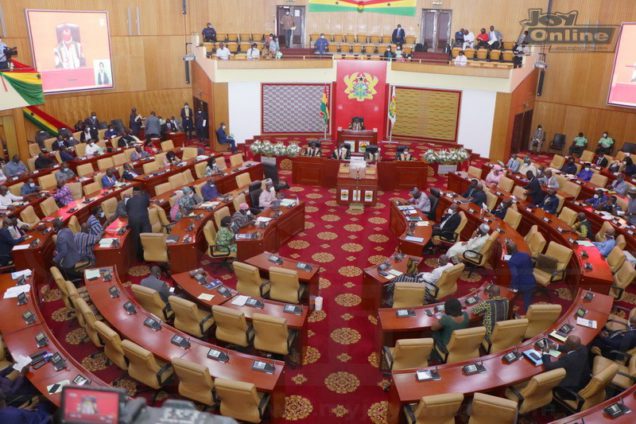
After a rejection last week Friday, the 2022 budget statement and economic policy was finally approved yesterday by parliament.
In fact, it has been more than 40 years since a national budget was rejected in Ghana by parliament. On June 30, 1980, the national budget meant for the 1981/82 fiscal year under the Hilla Limann administration with George Benneh as the finance minister was rejected. The rejection was based on certain provisions in the budget which were described as “austere”.
Fast forward in 2021, a similar historic event has been replicated. The budget meant for the 2022 fiscal year has been rejected by parliament after a unanimous voice vote.
The Rejection
According to the minority caucus, their rejection of the 2022 budget statement and economic policy was based on five key provisions which were contained in the budget. They believe that these five outlined provisions have the tendency to inflict more hardship on the ordinary Ghanaian. The minority therefore wants:
- Withdrawal of the Agyapa Deal
- Suspension the 1.75% e-Levy
- Reconstruction of paragraph 829 of the Aker Energy deal
- Review of benchmark value for imports
- Provisions for the Keta tidal wave disaster
The majority who walked out before the voice vote called later called on Ghanaians to disregard reports concerning the rejection of the 2022 budget by parliament. According to them, the action is illegal and must be treated with contempt.
One key constitutional provision which has become the bone of contention with respect to the budget rejection is the one which states that “except as otherwise provided in this Constitution, matters in Parliament shall be determined by the votes of the majority of members present and voting, with at least half of all the members of Parliament present”
The Approval
On Tuesday, November 30, 2021 the 2022 budget statement and economic policy was approved by parliament upon a rejection by the same parliament on Friday, November 26, 2021.
During the approval, there were 138 members of parliament including the First Deputy Speaker of parliament, Joe Osei Owusu who is Member of Parliament for Bekwai Constituency. In effect, the constitutional provision outline in Article 104 (1) of the 1992 constitution which is a requirement for voting was met, according the Majority.
The Minority caucus has also described this action by the Majority as unconstitutional citing the same Article 104 of the 1992 constitution and the Order 109 of the Parliamentary Standing Orders.
The Minority have admitted to have had a closed-door meeting with the Majority on how to come to a consensus with respect to the five outlined issues raised by them. Both sides have admitted that reaching an agreement on the proposed 1.75% electronic levy ended up in a stalemate.
JoyNews’ Evans Mensah has more in this analysis contained in the video below.
Latest Stories
-
GPL 2025/26: Dreams FC stage stunning comeback to hammer Eleven Wonders
1 hour -
Livestream: The Probe examines Kumasi’s looming water crisis
1 hour -
MTN Ghana gears up to lead Africa’s AI revolution
1 hour -
Philanthropist Alhaji FuZak donates Da’wah bus to Ambariya Sunni community
1 hour -
GUTA calls for suspension of Publican AI system over trade disruptions
2 hours -
TTAG raises alarm over proposed recruitment of 7,000 teachers, demands national posting roadmap
2 hours -
Civilians feared killed after reports of air strike on Nigerian market
2 hours -
Bishop Simon Kofi Appiah installed as new Jasikan Diocese Bishop
2 hours -
Trump’s Strait of Hormuz blockade threat raises risks and leaves predicaments unchanged
2 hours -
US Court backs extradition of former MASLOC CEO Sedina Tamakloe-Attionu to Ghana
3 hours -
Seven arrested as NAIMOS dismantles illegal mining camp, seizes firearms at Boin River
3 hours -
Fire erupts at Madina Ritz Junction, destroys multiple wooden structures and containers
3 hours -
Daniel-Kofi Kyereh returns from long-term injury, registers assist for Freiburg U23
3 hours -
Knifeman calling himself ‘Lucifer’ slashes three at NYC’s Grand Central
3 hours -
Brands are built from within to without
3 hours