

Audio By Carbonatix
Nollywood actor Segun Arinze has dismissed claims that Nigeria has banned foreign models and voice-over artists from its advertising space.
Arinze, who is President of the Association of Voice Over Artists in Nigeria said reports of a blanket ban were misleading.
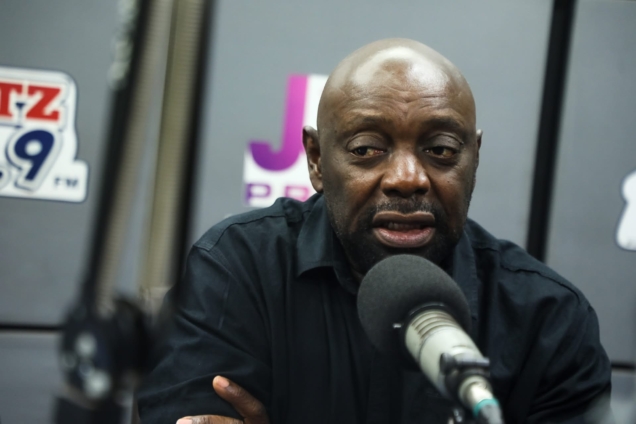
Speaking in an interview with Kwame Dadzie and Doreen Avio on Accra-based Hitz FM, he explained that the directive had been misinterpreted.
“CNN had an interview with me on that. So this is it. We said ‘stop taking it out of the country. The Director General of the Advertising Regulation Council of Nigeria called me and said this is what they were going to do. I knew what they were going to do.
He said they were tired of advertising agencies taking the jobs to the UK and South Africa to shoot. Because they were trying to make money and then you were leaving the young talents. So why don’t leave all those things here, do them here? No voice-over talent in America will come to Naija to come and produce or shoot the advert. They won’t, unless it’s intentional. Unless there is a reason for it,” he told Kwame and Doreen on Daybreak Hitz.
“It wasn’t like a blanket ban. We just said please stop taking them out for now. Even for modelling, do them. Why would take Ghanaian for like ‘bofrot’ to the UK and go and shoot [an advert for] it with white kids and bring it back and say ‘bofrot.’ So how do the kids relate to it. So you do it in such a way that you shoot it in Ghana here so the kids can relate. So that is what exactly the Advertising Regulation Council was saying,” he further explained.
Ghanaian actor and playwright Andrew Tandoh Adote, who was also on the show, confirmed that adverts he voiced are currently running in Nigeria.
Background to the directive
In August 2022, the Federal Government of Nigeria, through the Advertising Regulatory Council of Nigeria (ARCON), announced a ban on the use of foreign models and voice-over artists in advertisements targeted at or exposed on the Nigerian market.
The directive, which took effect from 1st October 2022, is backed by the Advertising Regulatory Council of Nigeria Act No. 23 of 2022. ARCON says the law gives it authority to enforce the measure.
Under the rules, all adverts and marketing communications in Nigeria must use only Nigerian models and voice-over artists. Ongoing campaigns at the time were allowed to run their contracts, but once expired, applications for revalidation were not to be granted if they violated the new regulation.
ARCON stated that there were no exemptions, whether for television commercials, print adverts, billboards or other advertising formats.
The rationale, according to the Council, was to develop local talent, promote inclusive economic growth, retain more advertising revenue within the country, and ensure greater use of indigenous skills and representation in the sector.
Latest Stories
-
I have supported highway authority financially to fix roads in my constituency – A Plus
57 minutes -
US, Iran fail to reach peace agreement after marathon talks in Pakistan
1 hour -
ECG kicks off Phase Two of transformer upgrades at Lashibi; brief outages expected
2 hours -
Port crises loom as 11,000 drivers threaten four-day strike
3 hours -
A source of excellence across generations – Vice President Opoku-Agyemang lauds Mfantsipim
4 hours -
(Photos) Mfantsipim School launches historic 150th anniversary
4 hours -
Knights and Ladies of Marshall group backs Catholic Bishops’ stance on anti-LGBTQ+
5 hours -
Bright Simons writes: All the Filla in the Ibrahim Mahama/E&P – Gold Fields Saga
5 hours -
Monetise Idiocy In Ghana
5 hours -
The Ghanaian prophet and the mysterious death of his scottish wife Charmain Speirs
6 hours -
Nearly 400 sentenced in Nigeria for links to militant Islamists
7 hours -
Ghana’s recovery supported by gold strength despite global oil price pressures – Standard Bank Research
7 hours -
Methodist Church hails Mfantsipim@150; calls for “fresh consecration” to excellence
7 hours -
‘Excellence is our inheritance’ – Nana Sam Brew-Butler hails Mfantsipim’s 150-year reign in leadership
7 hours -
Kwaku Azar writes: A-G vs OSP
7 hours