

Audio By Carbonatix
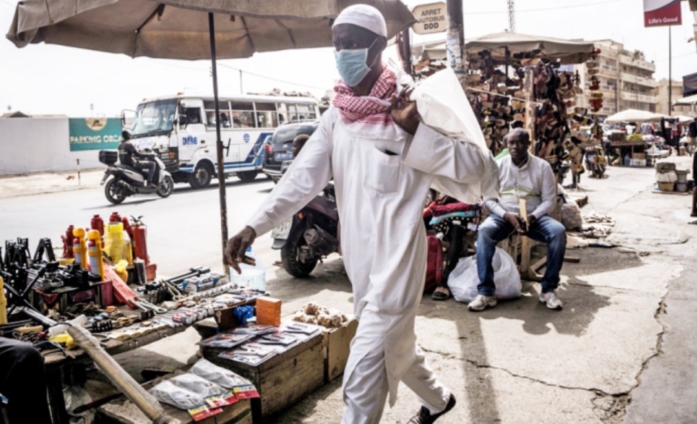
Over the past week or two, several African countries such as Ghana, Kenya Rwanda and South Africa have announced the closure of their borders including airports, barring anyone from entering or leaving. Whilst this mirrors actions taken by some countries in the West with thousands of cases and deaths from coronavirus, it is misguided and a missed opportunity for Sub-Saharan African countries to close their borders to their own citizens and neighbours from the continent.
Yes, by all means, stop people from affected countries from coming in to limit the risk of infection but not your own citizens and neighbours with just a handful of cases and deaths, literally in double digits.
Worldwide, there are currently about 400,000 cases of coronavirus and over 18,000 deaths - although the numbers are rising every day. However, in Africa as a whole, at the time of writing, the number has only just surpassed 1,600 cases with deaths in single or double digits in most countries.
Egypt, South Africa, Algeria and Tunisia alone account for about half of the total cases on the continent. With the exception of South Africa, the reported cases in Sub-Saharan Africa (SSA) are relatively low and most of these were imported from outside the continent although there are now cases of local transmission.
No doubt, the virus is spreading fast and decisive measures must be taken to limit widespread infections. Let me state here, in case of doubt, that I do not in any way deny the seriousness of Covid-19. Like everyone else, I am impacted by the pandemic. For example, I have loved ones in Italy who are suffering in complete lockdown, close friends in isolation elsewhere with symptoms of the virus.
My own daughter is presently in mandatory quarantine. I personally have been ordered to work from home along with 1,000 fellow workers. I am stuck in a foreign country and cannot go home due to border closures. So, short of catching the dreaded virus myself, I am feeling the impact. Certainly, this is a serious pandemic.
The above notwithstanding, there is little basis, scientifically or commercially, for closing the borders to fellow citizens or neighbours in SSA countries. The WHO, which is the world body responsible for public health, is on record for saying that closing national borders is not the solution and has advised against this. Rather their prescription is simple: (a) test, test, test every suspected case, (b) isolate those found or suspected to be positive, c) trace all contacts of those infected, d) treat and (e) maintain social distancing. This is the scientific advice. South Korea has achieved remarkable results for doing just that.
From a trade perspective, the blanket border closures are also ill-conceived. In 2017, intra-Africa trade was 17%, compared to 68% in Europe, 59% in Asia and 50% in the Americas. Instead of seizing upon the opportunity in the midst of the adversity to support each other and in the process increase trade with our neighbours, we have rather chosen to follow others and shut down our airports and borders to all.
Only God knows what would be the impact of this action on our economies. Consider, for example, our fragile, loss-making airlines such as Kenya Airways and South African Airways - which, by the way, are the biggest in SSA, next to Ethiopian Airlines. Or the impact on hotels, restaurants, shops, transport, to mention but a few, and the people who work in these sectors.
The West can go into lockdown and throw lots of money at their businesses, workers and economies. Germany has just announced a Euros 600 billion stimulus package, whilst the US Senate has just approved two trillion US dollars. On top of GBP 330 billion, the UK has announced a raft of measures including paying up to 80% of salaries of workers (subject to set limits).
What about Africa - how much are we pledging? What are we doing to help our already weak and disadvantaged businesses, workers and economies? No country in SSA can afford anything close to the afore-mentioned stimulus packages. So, whilst it may be okay for countries elsewhere to go into lockdown and close borders, governments in SSA ought to be more circumspect.
I wonder if the decision to close our borders to our own citizens and neighbours was informed by regulatory impact analysis or any such serious review. When would we learn that a borderless Africa would allow us to be more competitive in global trade and value chains?
Is this not the time for our political leaders to put their heads together and be united in their interventions including mass production and joint purchasing of medical supplies? After all, is this not the essence of the African Union and the African Free Continental Trade Agreement? It is time for our heads of state and government ministers to be joined up.
Latest Stories
-
GoldBod must be more accountable to Ghanaians – Haruna Iddrisu
9 minutes -
Affi Agbenyo’s EC appointment is constitutionally appropriate, but politically, people have the right to remind us – Haruna Iddrisu
21 minutes -
Education is critical to Ghana’s future and development – Haruna Iddrisu
40 minutes -
Who’s Emelia Affi Agbenyo, the 43-year-old newly sworn-in Deputy EC Chair?
1 hour -
Haruna Iddrisu calls for limits on annual university accommodation fee increases
2 hours -
Today’s front pages: Tuesday, October 13, 2026
3 hours -
Wealth Over Water: How Galamsey Is Threatening Ghana’s Water Security
3 hours -
LA 2028: Black Queens pumped up for second leg of Mauritius tie
3 hours -
LA 2028: Black Queens hold final training session ahead of second leg against Mauritius
4 hours -
Standards are not Seasonal: What the EC appointments teach both sides
4 hours -
King Mohammed VI urges private sector to create youth jobs and spread benefits of growth
4 hours -
KGL U17 Colts 2026: Greater Accra win title after penalties win over Western Region
4 hours -
UK Investment Roadshow opens in London to advance UK-Ghana growth partnership
4 hours -
Assemblies of God requires pastors to resign before entering partisan politics – Rev. Wengam
4 hours -
Ghana targets 20% annual reduction in maternal deaths – Health Minister
5 hours