

Audio By Carbonatix
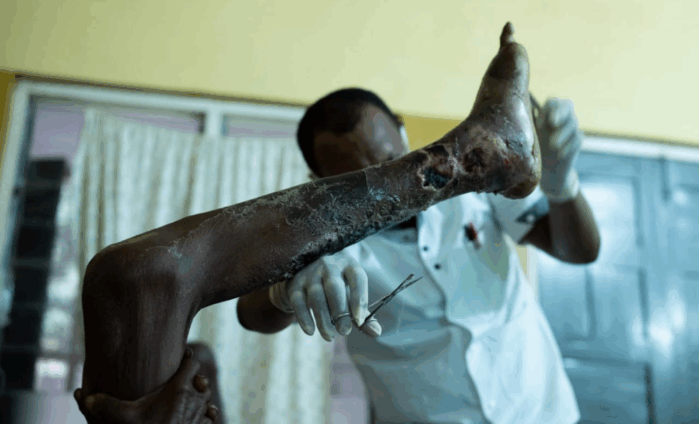
For many snakebite survivors in rural Ghana, the danger does not end when the bleeding stops or the swelling goes down. Years after the bite, some still struggle to walk long distances, work on their farms, or fully participate in community life, challenges that often go unseen and undocumented.
A new study by researchers from the College of Health Sciences at KNUST, in collaboration with international partners, has found that snakebite victims in rural Ghana face a significantly higher risk of long-term functional limitations and disabilities compared to their peers. The study highlights the urgent need for public health interventions that address not only acute snakebite management but also long-term rehabilitation and mental health support.
Snakebite is a neglected tropical disease that disproportionately affects rural, poor populations in tropical regions. In Ghana, many victims never reach health facilities, and the true extent of long-term disabilities remains underreported.
Most data are limited to hospital-based records, overlooking the broader community burden. As Ghana works toward the elimination of neglected tropical diseases and broader universal health coverage goals, understanding the long-term impact of snakebite is increasingly critical.
This study was necessary to fill this knowledge gap and provide a comprehensive picture of the burden of snakebite in Ghanaian communities.
The researchers conducted a community-based, cross-sectional study in the Ashanti and Upper West regions of Ghana. They surveyed 379 rural residents: both snakebite victims (at least six months post-bite) and community controls using the World Health Organisation Disability Assessment Schedule (WHODAS 2.0) and the Buruli Ulcer Functional Limitation Score.
The study involved collaboration between KNUST, the Kumasi Centre for Collaborative Research in Tropical Medicine (KCCR), and international partners.
The study showed that the risk of disability was 1.54 times higher in snakebite victims compared to controls, with 35% of victims with symptoms of envenoming having mild/moderate disabilities, versus 20% in controls. In practical terms, this means that even years after a bite, many survivors continue to live with limitations that affect their ability to work, move freely, and engage fully in everyday social and economic activities.
“Snakebite is often seen as a short-term emergency, but our findings show that its consequences can last for years. Many survivors continue to live with disabilities that are largely invisible in hospital records,” said Mawuli Aglanu, lead researcher and research fellow with the Global Health and Infectious Diseases Research Group at KCCR.
Domains most affected were cognition, mobility, life activities, and participation in society. These limitations can reduce productivity, increase dependency on family members, and deepen the cycle of poverty in already vulnerable rural households. Age, gender, region, and severity of bite were key predictors of disability.
The study found that many snakebite victims sought treatment from traditional healers. Additionally, health-seeking behaviour was not linked to education level.
This research matters because it reveals that the burden of snakebite extends far beyond acute injuries and deaths.
Mild to moderate disabilities, often invisible in hospital data, are common and can severely impact quality of life, productivity, and social participation. The findings support the integration of rehabilitation and mental health services into national neglected tropical disease (NTD) programs, with implications for policy and national development in Ghana.
“If we only focus on saving lives in the acute phase, we miss a large part of the burden. Snakebite survivors need rehabilitation and long-term support if they are to regain full participation in society,” noted Professor John Amuasi, Professor of Global Health at KNUST and leader of the Global Health and Infectious Diseases Research Group at KCCR.
Future research needs include multiple regions and analyse the burden by snake species. National strategies must incorporate rehabilitation and mental health support for snakebite victims. The researchers call on the Ministry of Health, the Ghana Health Service, and national NTD programmes to use these findings to strengthen rehabilitation services, mental health support, and long-term follow-up for snakebite survivors.
Latest Stories
-
Opanin Joseph Kofi Nti
24 minutes -
Flights cancelled and new travel warnings issued after Iran strikes
33 minutes -
Helicopter crash: Children’s support fund surpasses GH¢10.15m
1 hour -
MobileMoney Ltd breaks silence on viral TikTok fraud claim, urges public to dial 419
2 hours -
Blind refugee found dead in New York after being released by immigration authorities
3 hours -
Stanbic Bank Ghana leads $205m financing for Engineers & Planners
3 hours -
MobileMoney Ltd responds to viral TikTok video by Healwithdiana, advises customers to report fraud on 419
3 hours -
Mobile Money Ltd’s Paapa Osei recognised in Legal 500 GC Powerlist: Ghana 2026
3 hours -
Flights in and out of Middle East cancelled and diverted after Iran strikes
4 hours -
Dr Maxwell Boakye to build 50-bed children’s ward at Samartex Hospital in honour of late mother
4 hours -
One killed and 11 injured at Dubai and Abu Dhabi airports as Iran strikes region
4 hours -
Former MCE, 8 others remain in custody over alleged land fraud in Kumasi
4 hours -
Black Queens players stranded in UAE over Israel-Iran conflict
5 hours -
James Owusu declares bid for NPP–USA chairman, pledges renewal and unity
5 hours -
Trump threatens strong force if Iran continues to retaliate
5 hours