

Audio By Carbonatix
Korea International Cooperation Agency (KOICA) CHPS+ Project that seeks to strengthen the capacity of Ghana's health system in the Upper East Region to deliver high-quality care has ended.
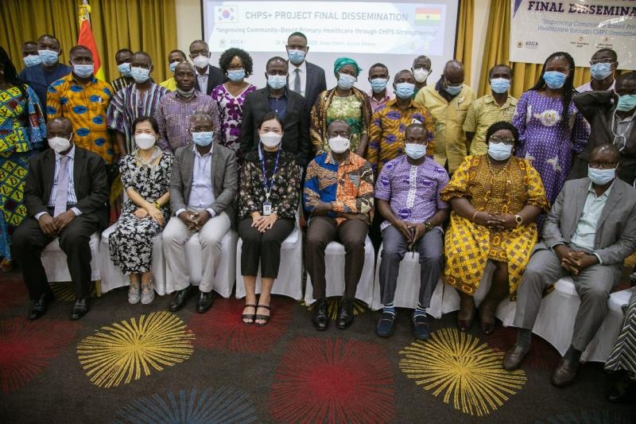
The Final Dissemination of the CHPS+ Project which was held in Accra to mark the closing of the five-year project provided a platform to share impacts and lessons learned during the implementation period.
A statement from KOICA Office and copied to the GNA in Accra said the five-year (2016 -2020) project focused on strengthening the regional health system for primary healthcare delivery.
It involved community health volunteers and management committee, maternal, newborn and child health, provision of basic equipment and infrastructure, as well as technical training and capacity building of the health workforce.
Dr Winifred Ofosu, the Upper East Regional Health Director, in his remarks at the event, noted that CHPS+ Project was one of the most comprehensive projects that covered all the cascading health system and same took care of the administrative and health management system.
Dr Ofosu said he was impressed with the transparency level and autonomy that the Project instilled in the implementing partners such as Ghana Health Service and Upper East Regional Health Directorate.
“KOICA Ghana Office was grateful to the Ministry of Health, Ghana Health Service (HQ and Upper East), Navrongo Health Research Center, UNOPS, and PWC as well as all health workforce and community members in the Upper East Region for their commitment and selfless dedication to the project.
We hope to continue to support Ghana to achieve its Universal Health Coverage by 2030,” the statement said.
The statement said during the project’s life span, more than 2,700 health workforces (administrative, nurses, midwives, and doctors) in the area of health management, essential newborn skills, and CHPS operation, as well as more than 3,000 community members in CHPS operations, were trained.
The project also provided more than 2,900 essential medical equipment ranging from basic delivery kits, baby warmers, suction machines, anaesthesia, and ultrasound machines to 120 CHPS zones, health centres, and district hospitals in the Upper East Region.
According to the statement, the project supported the Region with four vehicles, 171 motorbikes, 820 bicycles, and 80 community tricycle ambulances to support the health outreach and monitoring activities of the health workforce.
The Project has improved the availability of basic equipment and delivery and Emergency Obstetric Care (EmOC) services that health facilities offered and the same had a strong effect on measles and DPT3 vaccination coverage.
“The deployment of community tricycle ambulances has reduced delays in case of referrals by three hours,” the statement said.
Latest Stories
-
Ghana defend African Schools Football Championship title after shootout win over Burkina Faso
2 minutes -
Ghana’s education system must evolve or risk becoming irrelevant – Patricia Obo-Nai warns
9 minutes -
Ghana Health Service responds to dead fish incident at Tema Port
22 minutes -
David Vondee lauds Mahama for emergency Cabinet meeting and key resolutions
28 minutes -
Universities should focus on churning out impactful graduates rather than merely adding new programmes — UEW VC
31 minutes -
Publican AI system is speeding up trade, not slowing it — GRA Boss
34 minutes -
Government to construct a FIFA category 2 stadium in the Volta Region – James Gunu
44 minutes -
CAF to introduce reforms to fix AFCON final controversies – Patrice Motsepe
45 minutes -
EOCO defends probe into Kwamigah-Atokple
46 minutes -
Fuel tanker accident at Breku Forest spills thousands of litres of diesel
52 minutes -
IEAG backs Publican AI system after concerns addressed
55 minutes -
No new taxes or charges- GRA boss assures importers over rollout of Publican AI system
56 minutes -
Egypt goalkeeper banned for striking referee
56 minutes -
Police restore calm following clashes between Asisiriwa and Brodekwano
58 minutes -
Education sector job seekers must submit certificates for verification – GTEC
59 minutes