

Audio By Carbonatix
The Kukuom Traditional Council in the Ahafo Region has announced a tough crackdown on sanitation offenders as part of efforts to restore environmental cleanliness and protect the community from the growing threat of pollution.
Under the new directive, anyone caught littering, indiscriminately dumping refuse, engaging in open defecation or polluting water bodies will be arrested or reported to the Traditional Council to face sanctions.
The initiative follows concerns over persistent poor sanitation practices despite recent interventions by the Paramount Chief of Kukuom, Nana Kwaku Atakyi, who donated litter bins across the community to encourage proper waste disposal.
Speaking on behalf of the Paramount Chief, the Chief of Yankye, Nana Boadi Assibey Ababio, said the council would no longer tolerate actions that undermine efforts to keep the community clean.
"We cannot watch our community go down," he said.
"We have given the power to everyone, even visitors, to catch and report anyone littering or polluting our water. The palace will deal with them drastically to serve as a deterrent."
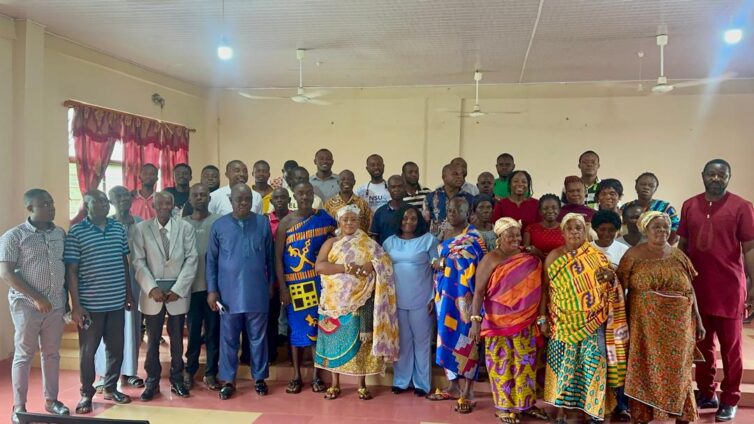
The announcement was made on Wednesday during a Town Hall Meeting on Water, Sanitation and Hygiene (WASH) organised by IRC Ghana, the Ahafo Regional Coordinating Council and the Asunafo South District Assembly in Kukuom.
The meeting, informed by findings from a water user satisfaction survey, brought together local authorities, service providers and residents to discuss challenges affecting water service delivery and identify practical solutions for improving sanitation and hygiene in the district.
The Traditional Council believes empowering residents to report sanitation offenders will strengthen local enforcement and help address environmental degradation more effectively.
According to the organisers, stronger community participation in enforcing sanitation regulations will help reduce indiscriminate waste disposal, protect water sources and lower the incidence of waterborne diseases.
The initiative also comes against the backdrop of growing concerns over the economic and public health consequences of poor sanitation.
According to World Bank estimates, Africa loses approximately US$200 billion annually in economic output due to poor sanitation, with countries recording gross domestic product (GDP) losses of up to five per cent as a result of increased healthcare costs, reduced productivity and environmental degradation.
Poor sanitation is also associated with preventable diseases such as cholera, typhoid and diarrhoea, while indiscriminate waste disposal contributes to blocked drainage systems, increased flooding and damage to local ecosystems.
The Kukuom Traditional Council expressed optimism that stricter enforcement, coupled with greater public participation, would help restore environmental cleanliness and safeguard public health in the community.
Latest Stories
-
FTBLRLIFE targets Ghana in expansion of global grassroots football network
6 minutes -
Former ‘American Idol’ contestant sentenced to life without parole for wife’s murder
1 hour -
Education Ministry commends Ghanaian teachers on World Teachers’ Day 2026
2 hours -
NPP can reconcile with aggrieved members who want to return – Nana Akomea
2 hours -
Tamale Child Deaths: Vehicle owner arrested as IGP deploys homicide team
2 hours -
From ShattaFest to MoMo Fest: Entertainment takes centre stage in youth engagement
2 hours -
Nigerian military aircraft crashes, killing 32
2 hours -
MTN encourages Ghanaians to use MoMo for saving, investing and financial planning
2 hours -
Absa Bank Ghana names Stephen Ato Frimpong as Board Chair
3 hours -
Pickford ‘almost caused crash’ with careless driving
3 hours -
Author and former politician Jeffrey Archer dies aged 86
3 hours -
No education reform can succeed without teachers – Education Ministry
3 hours -
Gauff condemns racist abuse after China Open win
3 hours -
Medvedev disqualified for hitting spectator with ball
3 hours -
Oliseh scores twice in late comeback win for France
4 hours