

Audio By Carbonatix
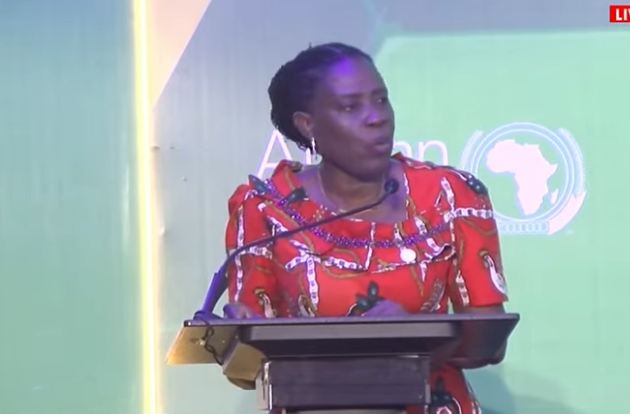
The African Union (AU) Commissioner for Health, Humanitarian Affairs, and Social Development, Ambassador Amma Twum-Amoah, has called on African leaders and policymakers to adopt a more integrated approach to health, water, and sanitation, stressing that the continent can no longer afford fragmented interventions if it is to achieve its health and development goals by 2030.
Delivering remarks at the African Union Extraordinary Health Summit in Accra on Tuesday, July 21, Ambassador Twum-Amoah underscored the critical link between healthcare delivery and access to safe water and sanitation, describing the three sectors as inseparable pillars of sustainable development.
"We must recognise the inseparable relationship between health, water, and sanitation," she said.
She noted that the African Union's 2026 Theme of the Year, under South Africa's chairmanship, rightly places sustainable water availability and safe sanitation at the centre of the continent's development agenda.
"The 2026 South Africa Union Theme of the Year rightly elevates sustainable water availability and safe sanitation as continental priorities," she stated.
According to the Commissioner, access to safe water, sanitation, and hygiene is fundamental to preventing infections, improving maternal and newborn health, enhancing nutrition, and preserving human dignity.
"Safe water, sanitation, and hygiene are fundamental to infection prevention, maternal and newborn health, nutrition, and human dignity," she said.
She further stressed that healthcare facilities cannot effectively deliver quality services without adequate water and sanitation infrastructure.
"A health facility without safe water is not fully functional. A maternity ward without adequate sanitation is not safe," Ambassador Twum-Amoah emphasised.
She therefore urged African governments and stakeholders to ensure that health, water, and sanitation policies are planned and implemented together rather than as separate programmes.
"Our water, sanitation, and health agendas must therefore advance together," she said.
Call for practical action
Ambassador Twum-Amoah said the summit presented an opportunity for African leaders to move beyond discussions and focus on practical solutions capable of accelerating progress across the continent.
"Our mission today is clear: to assess progress honestly, acknowledge the gaps courageously, identify practical and adequate finance actions, and build consensus around a strong declaration for consideration by our Heads of State and Government," she stated.
She challenged delegates to ensure that their deliberations provided concrete answers to critical implementation questions.
"Our deliberations today must answer five essential questions: What will we do differently? Who will be responsible? How will implementation be financed? How will progress be measured? And how will we hold ourselves accountable to Africa's people who are watching us?" she asked.
Urgent need for implementation
The AU Commissioner warned against delays in implementing existing commitments, saying millions of Africans continue to suffer from preventable illnesses while governments and development partners debate new policies and financing arrangements.
"A mother experiencing complications during childbirth cannot wait for another declaration," she said.
"A child with malaria cannot wait for another financing cycle. A young woman at risk of HIV cannot wait for promises that are never implemented."
She noted that with less than five years remaining until the 2030 Sustainable Development Goals deadline, African countries must prioritise implementation over making fresh commitments.
"The road to 2030 is now very short. Our task is not to produce more commitments, but to honour those already made," she said. "Not merely to speak about African ownership, but to demonstrate it through our budgets, institutions, and decisions."
Building resilient health systems
Concluding her address, Ambassador Twum-Amoah invoked the symbolism of the baobab tree to emphasise the importance of collaboration in strengthening Africa's health systems.
"Let us remember the wisdom of the baobab tree. No one can embrace this task alone. But together, we can build health systems whose roots are strong, whose reach is wide and whose protection extends to generations yet unborn," she said.
She called on African governments, development partners and health stakeholders to translate policy commitments into tangible outcomes that improve the lives of citizens across the continent.
"Let us move from declarations to delivery, from dependence to greater self-reliance, from fragmented programmes to integrated systems, and from preventable suffering to health, dignity, and opportunity for every African," she concluded.
The Extraordinary Health Summit brought together ministers, health experts, development partners and policymakers from across Africa to review progress in strengthening the continent's health systems and to develop strategies aimed at accelerating the achievement of universal health coverage and the Sustainable Development Goals by 2030.
Latest Stories
-
Ghana explores centre of excellence for hearing, communication and cochlear implant care
1 hour -
Schizophrenia-related disorders lead mental health cases recorded in Ghana
1 hour -
Dutch authorities enlist Ghana in hunt for fugitive drug lord Bolle Jos
2 hours -
Ghana housing finance conference adopts communiqué to improve affordable housing access
6 hours -
Special Initiatives Minister urges Wa Technical Institute to enrol more girls as EU-backed solar training lab opens
7 hours -
In the matter of my first year at the Bar
7 hours -
ActionAid Ghana calls for an end to child marriage, greater investment in girls’ rights
7 hours -
Newsfile to tackle World Cup visa scandal, beach demolitions, education strikes, BRICS bid
7 hours -
UK-Ghana Trade & Investment Summit: Trade Resource Centre to help businesses maximise UK-Ghana trade opportunities
8 hours -
Embassy of Denmark celebrates World Maritime Day
8 hours -
Linking LEAP to productive inclusion could cut extreme poverty by 2030 – UNICEF
9 hours -
Trade Ministry backs use of creative arts to rehabilitate prison inmates
9 hours -
Negotiations with government to continue despite strike suspension – GNAT
9 hours -
‘Ghana cannot afford to waste public resources; every cedi has a job’ – Ato Forson
9 hours -
Ghana expects economic boost as World Assemblies of God Congress brings 10,000 delegates to Accra
9 hours