

Audio By Carbonatix
Concerns about the performance and management of State-Owned Enterprises (SOEs) have resurfaced following renewed warnings from government that loss-making entities will be reformed, merged, privatised, or shut down.
The Deputy Finance Minister, Thomas Ampem Nyarko, speaking at a recent engagement with the State Interests and Governance Authority (SIGA), stressed that SOEs can no longer operate at a loss while paying bonuses.
“It doesn’t make sense that you make losses and pay bonuses… Bonus comes out of profits or surplus,” he said, adding that paying incentives under such conditions could further weaken already struggling institutions.
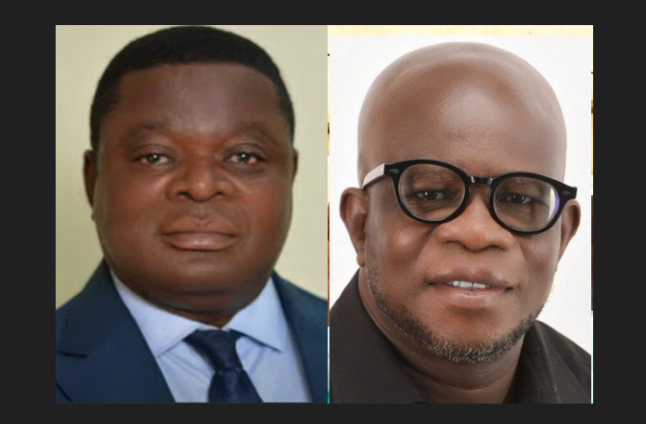
The issue was further discussed on Joy FM’s Super Morning Show, where Winston Amoah engaged Professor Peter Quartey, Professor of Economics and immediate past Director of the Institute of Statistical Social and Economic Research, University of Ghana., and Professor Kpessah-Whyte, Director-General of SIGA.
Governance and accountability concerns
Professor Quartey attributed the persistent challenges in SOEs to structural and governance issues, particularly how leadership is appointed.
According to him, the process for selecting chief executives must be scrutinised to ensure competence and efficiency.
“How are CEOs appointed? Are they competitively selected, or are they appointed along political lines? If this were a private business, would you appoint such a person?” he questioned.
He noted that while SOEs play both economic and social roles, their leadership must be held to clear performance standards. He called for strict enforcement of key performance indicators (KPIs) and regular assessments.
“CEOs should be given KPIs and assessed annually. Boards are assessed, so the same should apply to chief executives,” he said.
On the issue of bonuses, Professor Quartey maintained that such incentives must be strictly tied to performance.
“Bonuses are paid because you have done well… If we are paying bonuses to SOEs that are making losses, it must be stopped,” he stated.
SIGA clarifies position on bonuses
On his part, Professor Kpessah-Whyte clarified that while some SOEs have requested approval to pay bonuses, SIGA has not granted such requests where performance benchmarks were not met.
“We have received requests from some entities based on their financial statements asking to pay bonuses, but when we analysed them, they did not meet the required thresholds,” he explained.
He added that some SOEs argue that their financial losses are due to unplanned directives from government to deliver essential public services.
“Oftentimes, they explain that but for certain directives—such as providing social services they had not budgeted for—they would not have made losses,” he said.
Despite these explanations, SIGA has maintained its stance.
“We have declined all such requests,” Professor Kpessah-Whyte emphasised.
He noted that the Finance Ministry’s recent directive is intended to provide policy clarity and strengthen compliance.
Balancing commercial and social obligations
Professor Kpessah-Whyte acknowledged that SOEs are sometimes required to undertake activities outside their approved budgets in response to national needs, such as extending utilities or delivering essential services.
To address this, SIGA is encouraging SOEs to properly account for such interventions.
“If you are asked to act outside your strategic plan or budget, you need to quantify it and treat it appropriately in your books—either as a cost to be reimbursed or as a service rendered on behalf of the state,” he said.
Call for reforms
Both experts agreed that reforms are necessary to improve the performance and sustainability of SOEs.
While Professor Quartey emphasised governance, merit-based appointments, and strict accountability, Professor Kpessah-Whyte highlighted the need for clearer financial reporting and alignment between government directives and enterprise operations.
Latest Stories
-
World Cup visa scandal: Sports Ministry not shielding anyone – Sports Minister’s special aide
13 minutes -
World Cup visa scandal: Over 30 people misrepresented as GTA board members to US Embassy – Vincent Assafuah alleges
15 minutes -
Fire destroys wooden structure near Yesu Mo Villa at Bush Road
16 minutes -
NDC threatens sanctions over oversized campaign posters, gives aspirants 5 days to comply
1 hour -
Star Oil paid GH¢2.7bn in taxes, levies in nine months of 2026
1 hour -
Samson’s Take: The rule of law is cheaper before the bulldozer
1 hour -
GRA blames system failure for delay in issuing receipt over passenger’s customs duty
2 hours -
Livestream: Newsfile discusses World Cup visa scandal, beach demolitions, education strikes, BRICS bid
2 hours -
NC-PTAs welcomes end of teachers’ strike, urges parents to prepare children for Monday
2 hours -
Government procures over 2,000 transformers as Ghana’s electricity access hits 89.13% – Energy Minister
2 hours -
UTAG-UG threatens strike on October 19 over unpaid allowance
3 hours -
Let The Constitution direct Chieftaincy to deliver “All Development Is Local”
4 hours -
John Jinapor outlines renewable energy, nuclear power priorities for 2027
4 hours -
Ghana explores centre of excellence for hearing, communication and cochlear implant care
5 hours -
Schizophrenia-related disorders lead mental health cases recorded in Ghana
5 hours