

Audio By Carbonatix
The Media Foundation for West Africa (MFWA) has raised concerns over the government’s recent closure of seven private radio stations, warning that the move threatens press freedom and media pluralism.
While acknowledging the need for regulatory enforcement, the MFWA questioned the fairness and transparency of the shutdowns, particularly the potential for political interference in media regulation.
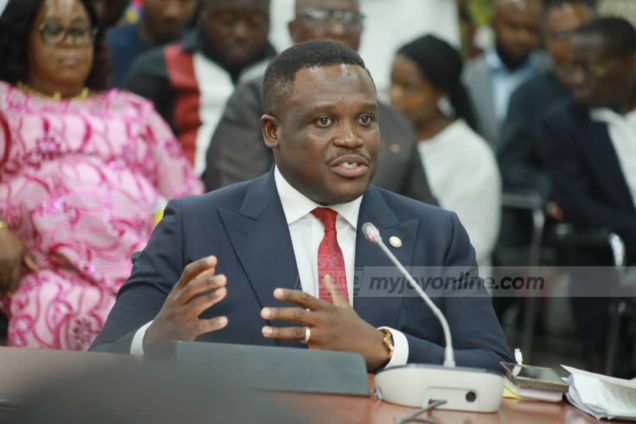
The directive, issued by Minister for Communication, Digital Technology, and Innovations, Sam Nartey George, affected Bawku-based Gumah FM and six other stations accused of operating without valid frequency authorizations.
The government has defended the move as a legal and necessary step to uphold broadcasting standards. However, the MFWA cautioned that such actions, if unchecked, could erode democratic principles.
“Radio plays a crucial role in promoting inclusion and reflecting divergent opinions in the political terrain,” the MFWA stated on Wednesday. “Any intervention in the broadcasting regulation domain by politicians raises suspicions of possible political targeting and favouritism.”
A major concern for the MFWA is the manner in which Gumah FM’s closure was handled, arguing that such matters fall under the independent National Media Commission (NMC), not government authorities.
“While the accusations may be tenable, we cannot allow a ‘tribunal’ of partisan political players such as the sector minister, the regional minister, the director general of the NCA, the national security coordinator, among others, to prosecute while being themselves the complainants,” the MFWA asserted.
The foundation insisted that even if the shutdown was based on intelligence reports, the appropriate procedure would have been to present evidence to the NMC, which should then determine the station’s fate.
To protect press freedom, the MFWA is calling for urgent reforms to transfer broadcast licensing and regulatory authority from the National Communications Authority (NCA) to the independent NMC, warning that continued government interference in media regulation could have severe repercussions.
“If this trend is entrenched, critical broadcast stations could be shut down for political reasons,” the statement warned.
Latest Stories
-
The Ghanaian prophet and the mysterious death of his scottish wife Charmain Speirs
23 minutes -
Nearly 400 sentenced in Nigeria for links to militant Islamists
44 minutes -
Ghana’s recovery supported by gold strength despite global oil price pressures – Standard Bank Research
51 minutes -
Kwaku Azar writes: A-G vs OSP
1 hour -
Mfantsipim–Adisadel rivalry built excellence, not division – Sam Jonah
2 hours -
Vice President launches Mfantsipim’s 150 years of shaping Ghana’s greatest mind
2 hours -
I assure Otumfuo, Mahama will join him to commission KNUST Teaching Hospital by end of this year – Haruna Iddrisu
3 hours -
Barcelona dominate derby to extend La Liga lead
3 hours -
Gov’t to roll out free special education for persons with disabilities from July 1 – Education Minister
3 hours -
Importers and Exporters Association declares full support for Publican AI port system
3 hours -
“We used it to test our officiating officials’ readiness” – Bawah Fuseini after CAA Athletics event
4 hours -
Volleyball emerges as Ghana’s fastest rising sport
4 hours -
National Sports Fund needs strong leadership from the top – Administrator David Wuaku
4 hours -
JoySports Exclusive: Steve McLaren in talks with GFA after expressing interest in Black Stars job
4 hours -
Fire guts auto parts warehouse at Bubuashie, one fire officer injured
4 hours