

Audio By Carbonatix
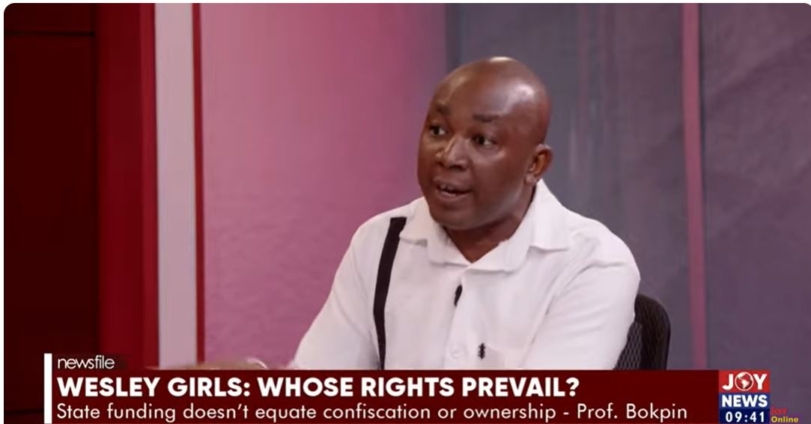
Economist and Finance Professor at the University of Ghana, Professor Godfred Bokpin, has urged the government and the public to approach current debates on religious rights in mission schools with caution, warning that any reforms must not erode the identity or long-standing investments made by these institutions.
His comments come amid intensifying national conversations following the Supreme Court’s directive to Wesley Girls’ High School to respond within 14 days to claims that Muslim students face restrictions on prayer, fasting, and the wearing of hijab.
Speaking on JoyNews' Newsfile on Saturday, November 29, Prof. Bokpin stressed that mission schools—Christian or Muslim—have historically partnered with the state in delivering quality education, and their rights over the schools must be respected.
“If we look at it in totality, the state grants space for mission schools to preach, and this partnership has been sustained for decades. No religious body will give up its right over its mission schools—they won’t,” he said.
He noted that it is inherently difficult for any religion to fully exercise its practices inside mission schools of another faith, and this reality should be acknowledged rather than denied.
“I believe we should be moving towards unity that recognises diversity,” he said. “We must promote tolerance that gives each group a safe space to operate. As the state supports all institutions, that approach becomes more sustainable.”
Prof. Bokpin drew from his personal experience attending a Muslim mission school, explaining the nuanced differences even within Islamic groups. Orthodox Muslims, he said, often feel uncomfortable in Ahmadiyya schools due to differences in belief and teaching—yet the Ahmadis were among the earliest to embrace Western-style education and invested heavily in establishing schools.
He commended the progress Muslim communities have made in promoting education, especially for girls, describing it as a “momentum shift” from past practices.
However, he emphasised that this new appreciation for formal education must not become a basis to dilute, override, or undermine the values upon which mission schools were built.
“This late realisation should not grant anyone the right to weaken mission schools for the investment they have made over the years,” he cautioned. “They have contributed significantly to national development.”
Latest Stories
-
Medikal vows to make an impact with ‘Red Means Stop’ campaign
23 minutes -
Middle East conflict could soon hit Ghana’s factories, says AGI president
49 minutes -
Medikal to start nationwide tour with NYA to campaign against drug abuse
1 hour -
Western Region GNFS embarks on ‘catch them young’ campaign
1 hour -
GIS recruitment: 1,000 to be selected from 180,000 applicants – Interior Minister
1 hour -
Constituency toilet project in Dambai destroyed by fire
1 hour -
Education system must equip students to innovate – Prof Boohene
1 hour -
NYA CEO Osman Ayariga urges social media influencers to join ‘Red Means Stop’ campaign
2 hours -
Automated traffic enforcement law to be passed by March ending – Transport Minister
2 hours -
Medikal officially named ambassador for NYA’s ‘Red Means Stop’ drug campaign
2 hours -
NPA increases fuel price floor for March 16 window; Petrol now ¢11.57, diesel pegged at ¢14.35
2 hours -
Ghana to submit UN resolution on slavery reparations; eyes broad support
2 hours -
Eswatini receives four more third-country deportees from US, government says
3 hours -
Kenya arrests man trying to smuggle over 2,000 live ants in his luggage
3 hours -
Ivory Coast considers reforming cocoa marketing system to tackle excess supply, sources say
3 hours