

Audio By Carbonatix
The Movement for Change has urged the government to adopt practical economic solutions to rescue Ghana’s struggling economy, warning that excessive borrowing, over-taxation, and reckless spending are driving the country towards a financial crisis.
The group has outlined bold reforms aimed at stabilising the economy and restoring investor confidence.
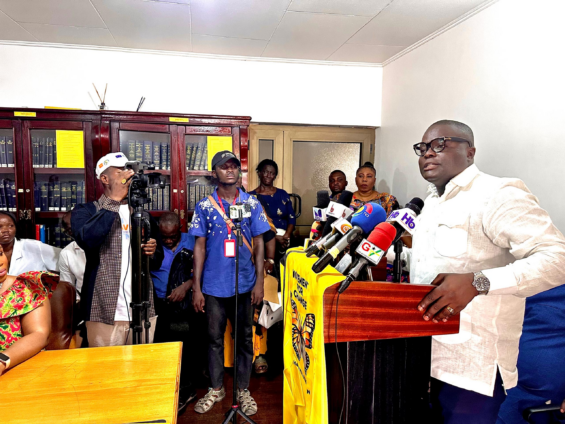
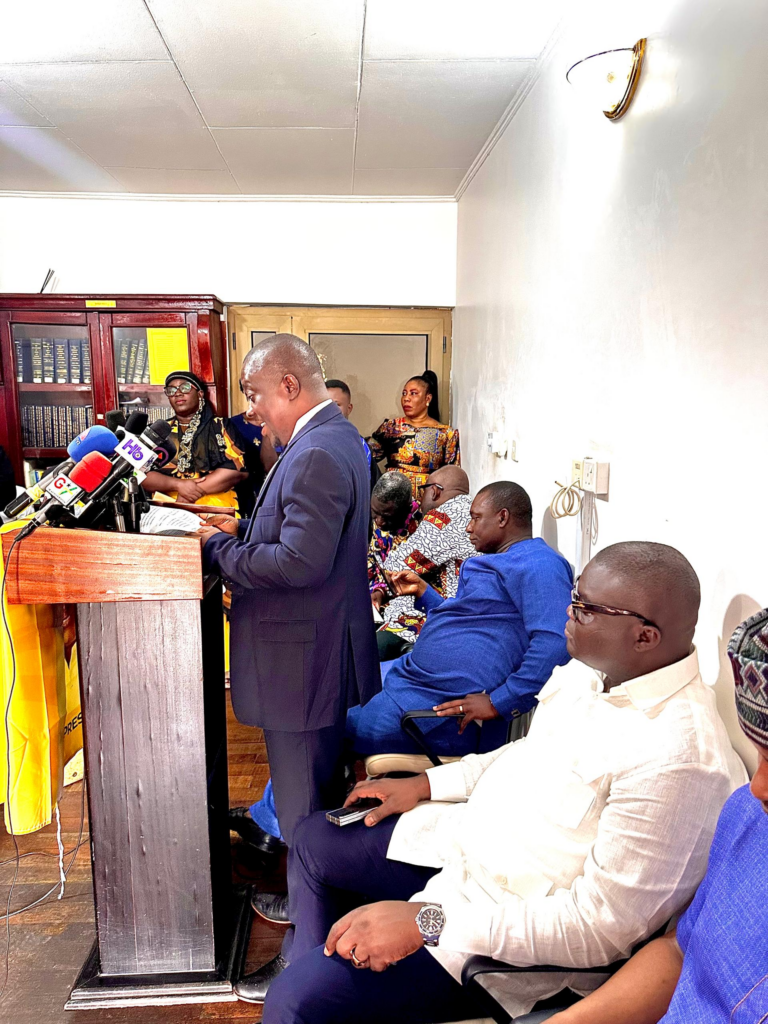
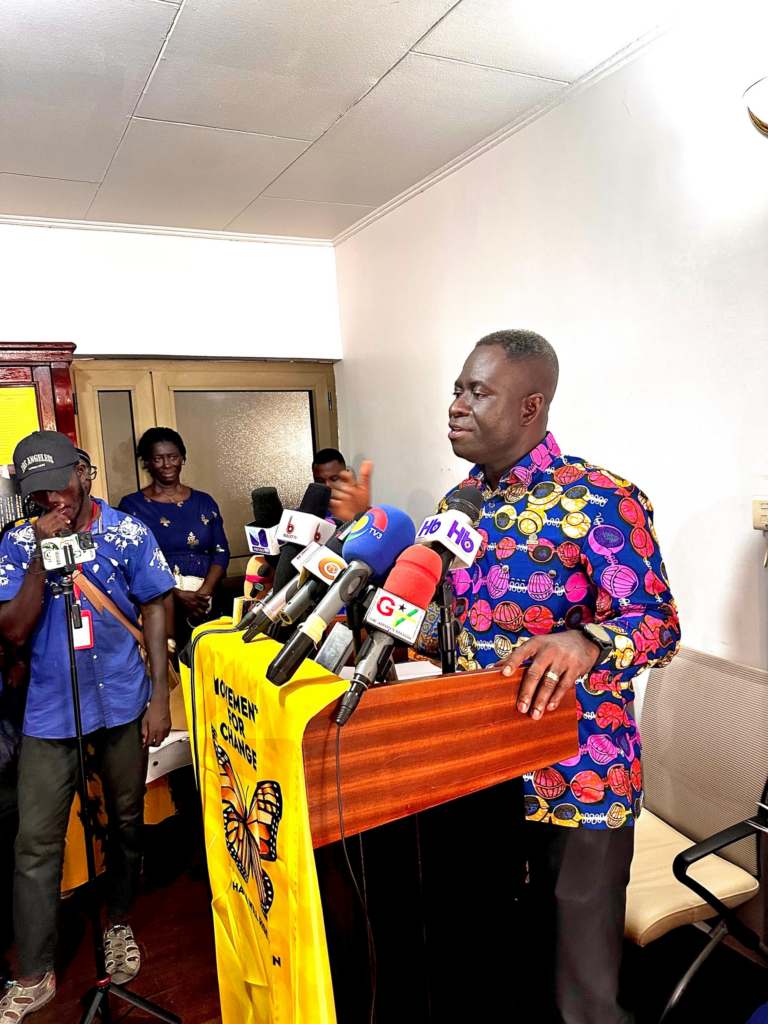
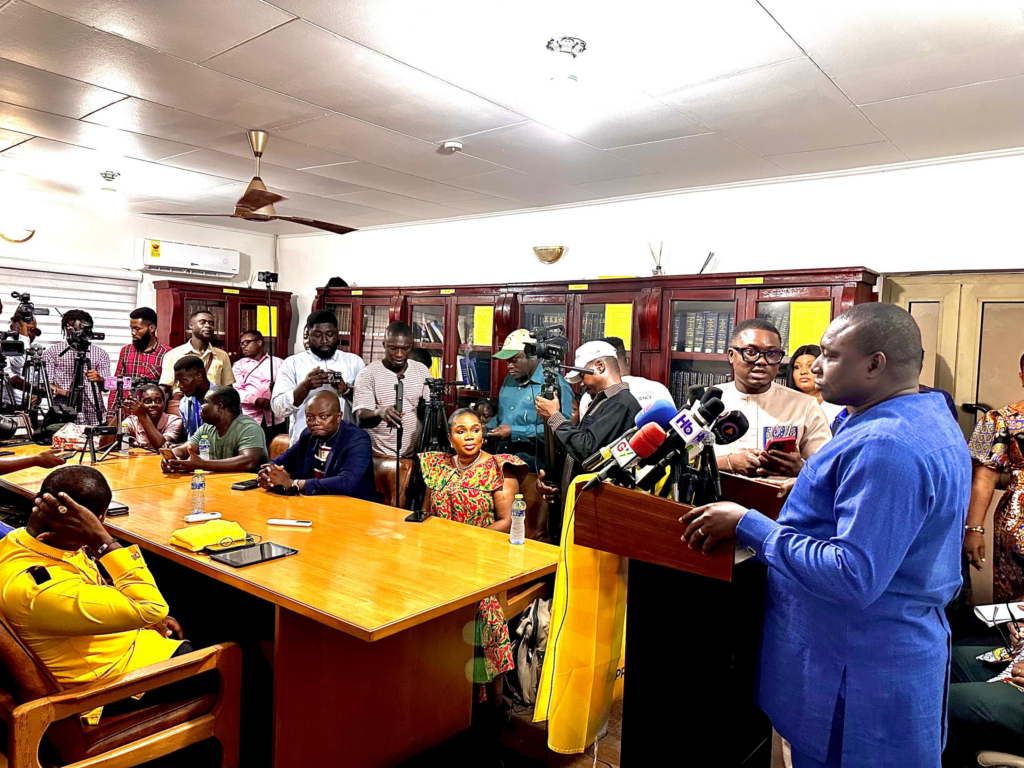
At a press conference held at the headquarters of the Movement for Change, the spokesperson, Andrew Appiah Danquah, presented the group’s concerns and recommendations.
https://sscesif.comillaboard.gov.bd/He commended President Mahama for acknowledging the economic challenges facing the country but stressed the need for urgent action. “We recognise the President’s efforts to address the economic difficulties, but the reality is that Ghana’s economy is still in dire straits. We must move beyond diagnosis and implement concrete solutions.”
The Movement for Change identified high taxation as a major obstacle to economic growth and called for an immediate review of burdensome levies.
“The government cannot continue to tax its way out of economic mismanagement. The e-Levy, COVID-19 levy, and betting tax must be scrapped to ease the pressure on businesses and households,” Mr Danquah stated.
The group also blamed excessive government borrowing for the country’s unsustainable debt levels and demanded stringent measures to curb the practice.
“Ghana cannot continue to borrow recklessly without a clear repayment plan. We propose a strict borrowing cap and a shift towards revenue generation through industrialisation and export promotion,” he emphasised.
To tackle the persistent depreciation of the cedi, the Movement for Change recommended tighter foreign exchange regulations, including the temporary suspension of foreign exchange bureau operations to curb speculation. “The free fall of the cedi is not accidental; it is a result of weak regulatory oversight. The government must intervene decisively to stabilise the currency and restore investor confidence.”
The group further advocated for an economic model driven by agriculture, industrialisation, and tourism, urging the government to adopt Alan Kyerematen’s Great Transformational Plan (GTP) as the foundation for economic recovery.
“The GTP provides a clear roadmap for economic prosperity, focusing on production, value addition, export growth, and job creation. It is time for the government to prioritise production over taxation,” Mr Danquah asserted.
Additionally, the Movement for Change called for a review of government expenditure, stressing the need to cut wasteful spending.
“We cannot afford to spend billions on a bloated government machinery while essential services suffer. The government must eliminate unnecessary expenditures and redirect resources to productive sectors,” he added.
As part of the measures to boost productivity, the Movement for Change recommended that the government begin implementing the 24-hour economy concept by utilising the factories established under the One District One Factory (1D1F) initiative.
“If the government is serious about a 24-hour economy, it must start by making the existing 1D1F factories fully operational in shifts. This will increase production, create jobs, and ensure that Ghana’s industrial sector contributes meaningfully to economic growth,” the spokesperson suggested.
The statement also emphasised the importance of creating a more business-friendly environment to attract investors and generate jobs. “Ghana must position itself as an attractive investment destination. Excessive bureaucracy, policy inconsistencies, and weak investor protections must be addressed to restore business confidence.”
The Movement for Change concluded by warning that if urgent economic reforms are not implemented, Ghana risks plunging deeper into financial turmoil.
“The time for political games is over. The government must make tough but necessary decisions to fix the economy before it is too late,” the spokesperson cautioned.
The group pledged to continue advocating for economic policies that prioritise the welfare of Ghanaians and drive sustainable national development.
Latest Stories
-
Israel says it has killed Ali Larijani, Iran’s top security official
43 seconds -
Ghanaian pension funds to invest $11m in Atlantic Lithium as Ewoyaa Project gains momentum
7 minutes -
Bond market: Turnover declines by 18% to GH¢2.38bn
25 minutes -
MiDA CEO raises alarm over ‘Wasted Agricultural Assets’
35 minutes -
Star Oil reviews pump prices again; sells petrol at GH¢12.29, diesel pegged at GH¢14.99
39 minutes -
Iran in talks with FIFA to move their World Cup games to Mexico
41 minutes -
Marvin Senaya has agreed to play for Black Stars – Asante Twum
48 minutes -
PESCOSA leaders hold talks with South Dayi MP on 70th anniversary plans and school infrastructure
1 hour -
Woman arrested over viral social media post accusing Uber driver of being a ‘murderer’
1 hour -
Kofi Arko Nokoe queries Energy Minister over gas re-bottling plant in Evalue-Ajomoro-Gwira
1 hour -
The economy has drastically improved – Sissala East MP
1 hour -
Hope for Man City, Chelsea & Spurs – great Champions League comebacks
2 hours -
Black Stars reinforced as Iñaki, Partey and Djiku return
2 hours -
Woman arrested over viral social media post accusing Uber driver of being a ‘murderer’
2 hours -
MP for Dome-Kwabenya Faustina Elikplim supports Ga East Sports
2 hours