

Audio By Carbonatix
The National Democratic Congress (NDC) has announced plans to introduce more private-sector initiatives in its next government to reduce the government’s involvement in business operations.
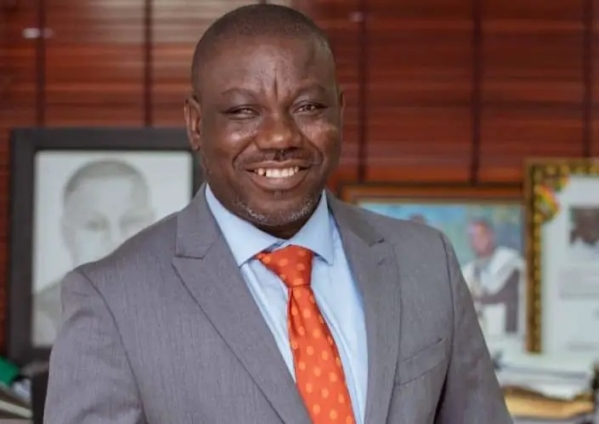
Speaking on Joy News’ PM Express, Isaac Adongo, the spokesperson on the economy for NDC flagbearer John Mahama, stated that a lean government would free up significant resources for other ventures.
“The idea of running a lean government will save the country a lot of money to channel into other ventures,” Adongo stated, underscoring the party’s commitment to efficient governance.
Mr Adongo defended Mr Mahama’s 680 campaign promises, asserting that they are both realistic and achievable.
“It's not the number of promises, it is the quantum of the envelope. If you look at the programs that we have planned and the policies that we have put together that are geared towards providing some level of realignment, you would understand that this can be funded,” he explained.
The NDC has been transparent about its strategy to fund its development projects, including leveraging Public-Private Partnerships (PPP) and development finance.
Mr Adongo pointed to successful projects from the previous Mahama administration, such as the development of the Tema Harbour (MPS) with $1.5 billion and the construction of Terminal 3, which were accomplished without burdening the government budget.
He elaborated on the party’s approach to infrastructure projects, such as the dualization of the Accra-Kumasi road, stressing the role of the Ghana Infrastructure Investment Fund (GIIF) and partnerships with multilateral institutions.
“If we say that we want to set up a vehicle, government becoming a stakeholder with $500 million, use the $500 million to leverage another $500 million that gives you $1 billion.
"With that $1 billion, if the road from Accra to Kumasi is $400 million, what you need is that government is bringing $200 million and the private sector investors are bringing $200 million,” Adongo illustrated.
Mr Adongo also addressed concerns about private sector involvement during a time when Ghana’s creditworthiness is in question.
“I trust the private sector more than government because the private sector has certain attitudes and principles and risk management beliefs that allow the investor to recoup his money.
"And we want to introduce programs that allow us to leverage this private sector arrangement without necessarily suffering the long hand of government in those activities,” he concluded.
Latest Stories
-
Anti-LGBTQ Bill: Forget the rumour mongers, I’m a man of action, and will pass the bill – Speaker
45 minutes -
Women and children among those killed in Sudanese army shelling of wedding celebration
48 minutes -
President Mahama is not sincere with Ghanaians on LGBTQ bill matter – Hassan Tampuli
1 hour -
Gov’t to establish Prison Industrial Hub to equip inmates with income-generating skills – Prison Service boss
1 hour -
Alhassan Tampuli donates cement, roofing sheets to support storm victims in Gushegu
1 hour -
Alhassan Tampuli appeals for urgent support for storm victims in Gushegu
1 hour -
The hypocrisy must stop; pass Anti-LGBTQ+ Bill now – Alhassan Tampuli to Mahama
2 hours -
Imprisonment should be rehabilitative, not punitive – Ghana Prisons boss at UNGA
2 hours -
Ga Adangbe traditional priests petition Mahama over McDan aviation licence revocation
2 hours -
Anti-LGBTQ Bill: NDC’s arrogance is worrying – Hassan Tampuli
2 hours -
Let’s give OSP time to mature, not to scrap it – Hassan Tampuli
2 hours -
Nigeria convicts 386 Islamist militants in mass trials
2 hours -
Djibouti president wins election with 97.8% of vote, state media says
2 hours -
We don’t have mandate to deduct tax from rent allowance of security services personnel – Interior Ministry clarifies
3 hours -
Ablakwa receives Presidential Special Envoy on Reparations to advance global agenda
3 hours