

Audio By Carbonatix
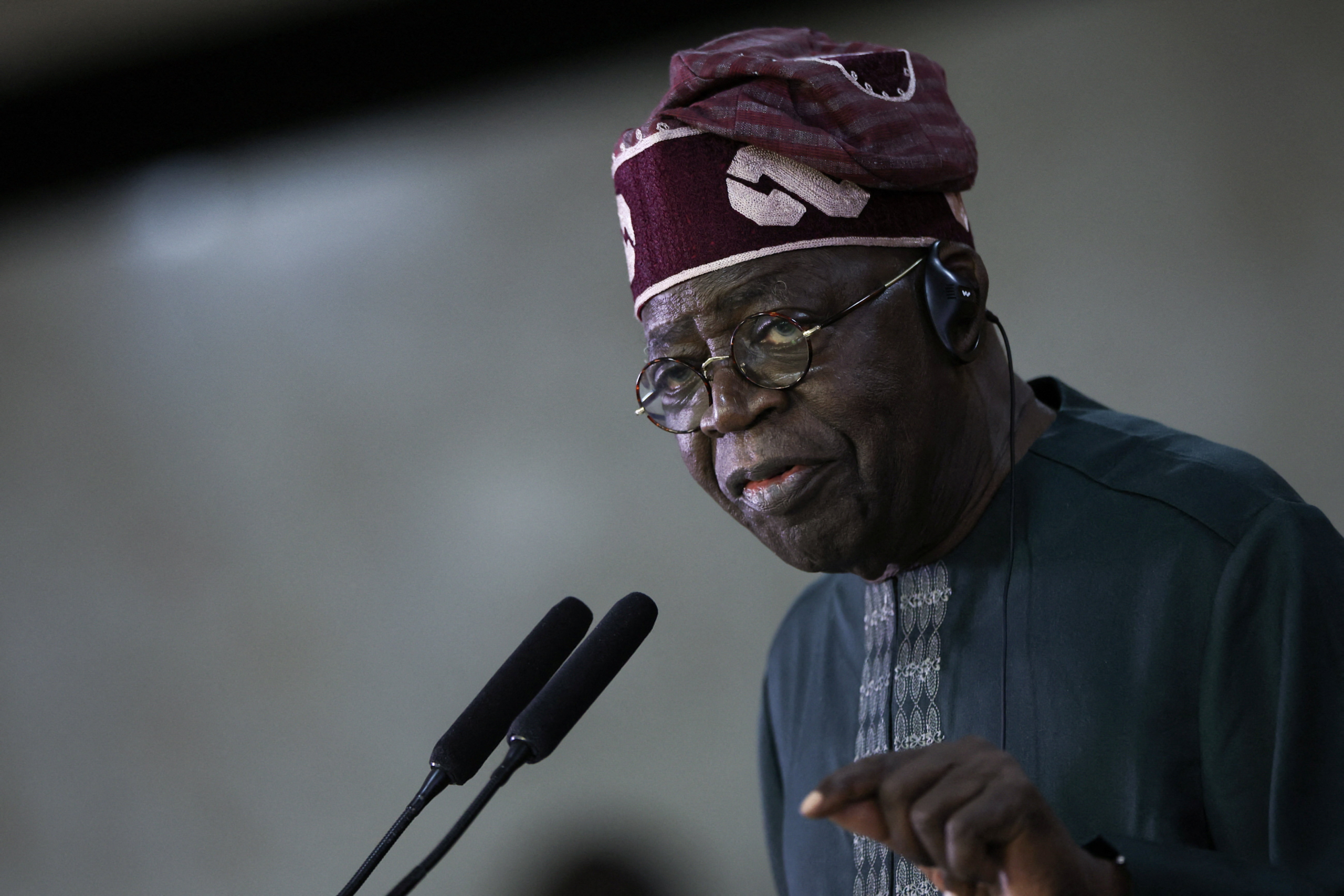
Nigeria is betting on green finance to drive its energy transition with the president unveiling plans for a $2 billion climate fund on Tuesday, saying oversubscribed green bonds were proof of investor appetite.
Speaking at the Abu Dhabi Sustainability Week summit, President Bola Tinubu said Nigeria’s Climate Investment Platform aims to mobilise $500 million for climate-resilient infrastructure, while the National Climate Change Fund targets a $2 billion capitalisation to back projects that cut emissions and boost resilience.
Tinubu also announced that Nigeria and the United Arab Emirates had signed a Comprehensive Economic Partnership Agreement (CEPA) that aims to boost trade and investment across sectors, including renewable energy, aviation, logistics, agriculture, digital trade, and climate-smart infrastructure.
Nigeria faces major environmental and climate policy challenges, including reducing gas flaring and methane emissions, as it works towards its Energy Transition Plan, which targets net-zero emissions by 2060 while delivering universal energy access.
Nigeria’s green bond programme has drawn strong investor interest. A 50 billion naira ($38 million) sovereign green bond issued in 2025 attracted 91 billion naira in subscriptions, while Lagos State’s green bond was oversubscribed by nearly 98%, the president said.
Tinubu said his government was also seeking to unlock an ambitious $25–$30 billion in climate finance annually. A new Climate and Green Industrialisation Investment Playbook will help private investors and other stakeholders navigate manufacturing policy and the regulatory landscape.
This builds on past initiatives, including the Nigeria Sovereign Investment Authority's $500 million Distributed Renewable Energy Fund, launched in March 2025 to catalyse local financing.
“These reforms show Nigeria is ready for business,” the president said, adding that non-oil exports have grown by 21% and investment commitments now exceed $50 billion across key sectors.
Nigeria is prioritising technology partnerships to modernise its grid and deploy artificial intelligence for efficiency, alongside pilot projects in electric mobility and green industrialisation, he added.
The president called for a shift towards more blended finance — which combines public and philanthropic capital with private investment and can absorb initial losses if the project underperforms — rather than sovereign guarantees, which he said unfairly penalise emerging economies.
Latest Stories
-
US, Iran receive 45-day ceasefire proposal as Trump deadline to reopen Strait of Hormuz looms
2 minutes -
Iran defiant as Trump vows ‘entire country’ could be taken out if no deal reached by tonight
7 minutes -
Afigya Kwabre North crowned champions of maiden MTN Ashantifest Regional U17 football competition
8 minutes -
The case for an explicit and limited Legal threshold for internal military deployment in Ghana
9 minutes -
UK Wireless Festival sponsorship withdrawals highlight high cost of Kanye West controversy for global brands
11 minutes -
CAF President to pay working visit to Senegal over AFCON title saga
19 minutes -
GPL 2025/26: Samartex end winless run with victory over Kotoko
22 minutes -
Afreximbank to avail US$10bn under its Gulf Crisis Response Programme to shield African, CARICOM economies from Middle East conflict
27 minutes -
NPP behind every monumental agenda in Ghana – Miracles Aboagye
37 minutes -
Ho Airport not a misplaced priority — GACL Board Chair
39 minutes -
Nationwide sensitisation of haulage truck drivers ahead of Axle Load Enforcement
39 minutes -
Vice President backs community tourism at Vodza Regatta 2026
43 minutes -
Tree Crops Development Authority says media reports on rubber exports are misleading, demands apology
50 minutes -
Kotoko suffer shock 2-1 defeat to Samartex in Kumasi
60 minutes -
Scrap sanitation levy amid fuel price hikes — Miracles Aboagye
1 hour