

Audio By Carbonatix
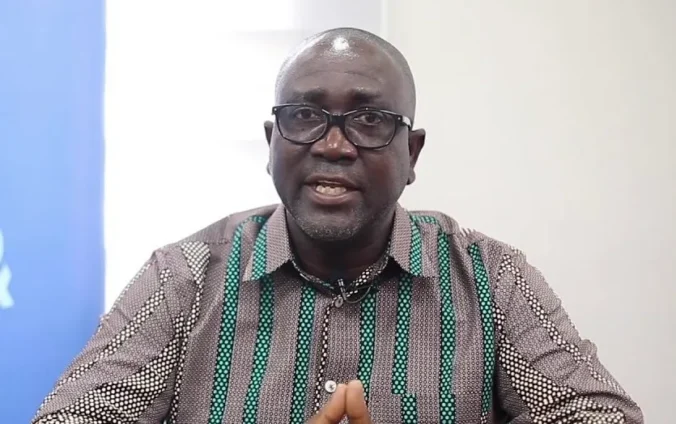
Executive Secretary of the National Media Commission (NMC), George Sarpong, is calling for civil society to take the lead in capacity-building for bloggers and emerging online creators, warning that leaving the responsibility solely to regulators could tilt the media environment toward government influence.
Speaking at the 2025 Media and Development Conference in Abuja, held under the theme “Reimagining Democracy, Development, and Data for the Next Decade,” George Sarpong stressed the need for a careful balance between media freedom and responsible regulation.
He noted that although bloggers now play a significant role in Ghana’s public information space, support for improving their professionalism should not be driven by regulatory bodies alone.
“I would want to partner with civil society to get this done,” he said. “If you left the regulators alone, they would lean towards government. And that is why a strong civil society partnership is the way forward.”
He explained that regulators naturally perform four core functions setting standards, monitoring those standards, enforcing them, and facilitating industry growth.
But he cautioned that when regulators dominate capacity-building, it risks weakening media freedoms.
According to him, civil society organisations are better positioned to lead training and support for bloggers, while regulators offer technical assistance to maintain quality and accountability.
“So whilst I completely agree with you on the need to offer any kind of capacity building to everybody who is participating in the public sphere, if there are resources for this to be done, I would want them in the hands of civil society with the regulatory support,” he added.
The comments come at a time when concerns about misinformation, online abuse, and declining media standards are prompting public calls for blogger regulation in Ghana. The NMC has consistently argued that reforms must protect press freedom while strengthening responsibility in the digital space.
The Abuja conference brought together policymakers, journalists, academics, and media development experts from across Africa to discuss the future of democratic governance and the role of data and emerging digital actors.
Latest Stories
-
Fire guts auto parts warehouse at Bubuashie, one fire officer injured
5 minutes -
I owe my victory to coach Ofori Asare – Allotey after winning WBA Africa Gold Super Flyweight belt
9 minutes -
Church of Pentecost supports over 2,000 BECE candidates in Obuasi with career guidance seminar
2 hours -
Brandon Asante and Coventry all but promoted to Premier League despite Sheffield Wednesday draw
2 hours -
GPL 2025/26: Late Kwartemaa strike downs Hearts in Tema
2 hours -
Ghana Faces Sierra Leone Moment as Prosecutorial Powers come under strain
2 hours -
Don’t consume fish or seafood from Tema Shipyard until further notice – FDA warns
2 hours -
Why volunteering might be Africa’s most underrated career accelerator
3 hours -
ActionAid Ghana raises concern over gender gaps in Feed Ghana Programme
3 hours -
Windstorm wreaks havoc in Gushegu, displacing nearly 2,000 residents and damaging schools
3 hours -
Friends of Bridget Bonnie Marks her 35th birthday with donation to Kasseh Model Health Centre
3 hours -
From Ekumfi Kokodo to the Pulpit Stage: Essi Donkor’s gospel journey takes shape
4 hours -
Landfilling waste management creates no value, it’s an economic waste
4 hours -
Photos: Speaker Bagbin Commissions MPs constituency office under parliamentary decentralisation programme
4 hours -
Black Stars technical advisor Winfried Schäfer sacked as GFA shakes up backroom staff
4 hours