

Audio By Carbonatix
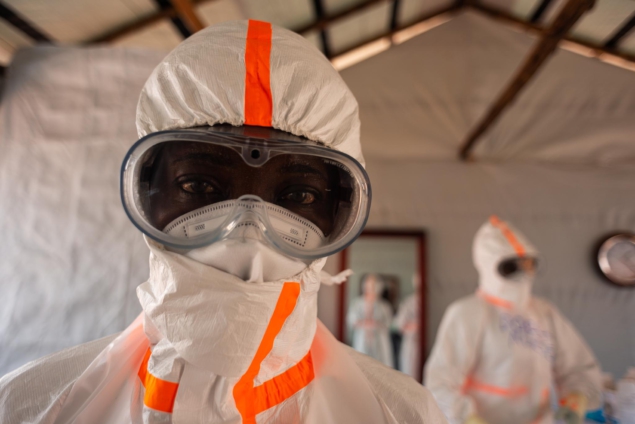
Uganda's Ministry of Health has confirmed a new outbreak of the Ebola virus in the capital, Kampala, with one reported death.
The victim was a 32-year-old male nurse whose symptoms included "high fever, chest pain, and difficulty in breathing" and "bleeding from multiple body sites".
He died of multi-organ failure on Wednesday at Mulango National Hospital, located in the city's central business district.
This marks Uganda's eighth recorded Ebola outbreak since the first infection was documented in 2000.
The Sudan Ebola Virus Disease (SUDV) is a highly infectious haemorrhagic fever which is transmitted through contact with infected bodily fluids and tissues. It is one of several strains of the Ebola virus known to cause outbreaks.
In the days before his death, the nurse went to multiple health facilities as well as a traditional healer, before the diagnosis was confirmed.
He also went to a public hospital in Mbale, a city which borders Kenya.
The ministry said 44 contacts of the deceased man, including 30 healthcare workers, have been identified for tracing.
Rapid response teams have been deployed to try to contain the disease.
But contact tracing may be difficult since Kampala, a bustling city of over four million people, serves as a major hub for travel to South Sudan, Democratic Republic of Congo, Rwanda, and other neighbouring countries.
Uganda's last Ebola outbreak was in September 2022, which was also caused by SUDV. Centred in Mubende district, it was declared over after four months.
There are six known types of the Ebola virus. Four of them, Zaire, Bundibugyo, Sudan, and Taï Forest, are known to cause disease in humans.
The Reston and Bombali strains primarily affect non-human primates.
Unlike the more common Zaire Ebola virus, there is no approved vaccine for the Sudan strain.
Symptoms of Ebola infection include fever, fatigue, muscle pain, headache, and sore throat, followed by vomiting, diarrhoea, rash, and internal and external bleeding.
The World Health Organization (WHO) estimates that, on average, Ebola kills five in every 10 infected individuals.
However, past outbreaks have shown a case fatality rate ranging from 25% to 90%, depending on the circumstances and response measures.
Latest Stories
-
‘We’ve become quite experienced in negativity’ – Liverpool’s Slot
1 hour -
Legendary manager Lucescu dies days after resigning
2 hours -
One dead as train travelling 99mph collides with lorry in France
2 hours -
Airlines cut flights and hike fares as fuel prices surge
2 hours -
Kane inspires Bayern to first-leg advantage over Real Madrid at Bernabéu
2 hours -
Wireless Festival cancelled after Kanye West blocked from coming to UK
3 hours -
Wa West MP commissions five boreholes for the benefit of his constituents
3 hours -
Havertz’s late strike hands Arsenal narrow first-leg advantage over Sporting
3 hours -
Damang mine award: Minority not against Ghanaian participation; we’re asking for fair process – Konadu
3 hours -
NPA to enforce stricter registration rules for petroleum tankers
3 hours -
Manhyia South MP laments decline in hospitality operations in his constituency
4 hours -
How a simple clean charcoal innovation could benefit Ghana’s climate future
4 hours -
NPA, COMAC launch Safety Week 2026 to promote risk management in petroleum sector
4 hours -
Stakeholder engagement resolves onion trade impasse
4 hours -
Gender Ministry holds staff durbar, welcomes new Chief Director
4 hours