

Audio By Carbonatix
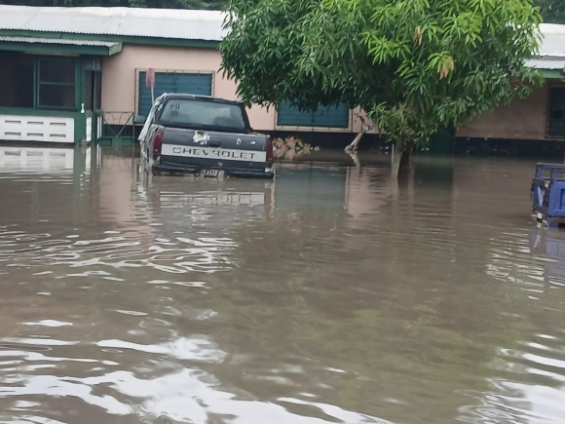
The Greater Accra Resilient and Integrated Development (GARID Project) has raised fresh concerns over persistent flooding in Accra, warning that newly constructed drainage systems are being filled with refuse shortly after rainfall, undermining ongoing government investments in flood control.
Communications Specialist for the project, Philip Dornyo, says the situation highlights a growing behavioural challenge among residents, despite years of investment in drainage infrastructure aimed at reducing flood risks in the capital.

Speaking during the fourth edition of the Loud and Green XSpaces on JoyNews’ X platform, Mr Dornyo said engineers continue to encounter large volumes of waste in drains immediately after rainstorms.
“Government has been making a lot of effort… But one thing that I’ve noticed is that no matter what government does, especially when it comes to the construction of the drains, people pack their solid waste, wait for the rain, and as soon as the rain sets in, they dump that solid waste into the drains,” he said.
He explained that this practice obstructs water flow and contributes directly to recurring floods in several parts of Accra, even in areas where drainage works have recently been completed.
According to him, recent inspections at Kaneshie revealed significant accumulation of refuse in newly constructed drains following rainfall events.
“The heap of solid waste that came when the first rain actually occurred was mind-boggling,” he added.
Mr Dornyo noted that GARID was established following the June 3 flood disaster to strengthen flood resilience within the Odaw River Basin, with support from the World Bank. The project is currently implementing drainage works across flood-prone communities including Kaneshie, Achimota, Bubuashie and Akweteyman, spanning 17 metropolitan, municipal and district assemblies in Greater Accra.
However, he stressed that engineering solutions alone cannot resolve Accra’s flooding challenges if poor waste disposal practices continue.
“Part of the issue is that all these solid waste make it difficult for the free flow of water, and the result is what we are seeing in the city,” he said.
The warning comes as Accra continues to grapple with seasonal flooding, with authorities repeatedly citing both infrastructure gaps and human behaviour as key contributing factors.
GARID says long-term flood prevention will require a combination of improved drainage systems and stronger public discipline in waste management, as government efforts risk being reversed by illegal dumping habits immediately after rainfall.
Latest Stories
-
NDC Deputy National Organizer Aspirant Hamza Umar targets grassroots mobilisation
33 minutes -
Villarreal fight back to beat Napoli and end losing run
3 hours -
Tresoldi nets hat-trick as Club Brugge win Inter thriller
3 hours -
PSG’s Luis Enrique hopes Man City avoid sanctions
3 hours -
Lisandro Martinez issues scathing attack on Man Utd board – has he made things worse?
3 hours -
Saka responds to Arteta’s challenge with ‘huge impact’
3 hours -
Viking hold Bayern in thriller as Kane breaks Messi record
3 hours -
Gordon scores as Barcelona beats Galatasaray
4 hours -
Bumble bought for $1.3bn in ‘bet on the future of humanity’
4 hours -
Imagination Africa, Mentors Chess Academy to host second African Genius Chess Championship at Ghud Park
4 hours -
Paradigm Initiative steps up calls over digital rights, internet freedom in Africa
4 hours -
Saudi man charged with planting ‘sophisticated’ recording device in OpenAI office
4 hours -
Ghana wins UN Human Rights Council seat as calls grow for action against atrocities
4 hours -
Royal Mail losing 400 postal workers a week, says union
4 hours -
Techiman South MP ends decades of water struggle in Asutia
5 hours