

Audio By Carbonatix
Petrochemical engineer and project manager Ing. Benedict Atta Poku has challenged the notion that engineers should bear the blame for Accra's recurring floods, arguing that the city's drainage problems are largely rooted in poor maintenance and weak infrastructure management after projects have been completed.
Speaking during the fifth edition of the Loud and Green X Spaces discussion on flooding, Ing. Atta Poku said drainage infrastructure is designed and constructed to specified standards before being handed over to the appropriate government institutions responsible for its upkeep.
"Engineers are not necessarily the owners of the project," he said.
According to him, every drainage project goes through a rigorous design process, after which engineers prepare as-built drawings and, where necessary, maintenance manuals before officially transferring responsibility to the project owner.
"When you're done with the structure, you hand over the as-built design and the associated documents regarding the infrastructure to the owners of the project, which is the government," he explained.
He argued that the greatest challenge arises after the handover, insisting that the long-term performance of drainage systems depends on how well they are maintained and managed.
"The maintenance of the infrastructure is where the issue is. The utilisation of the infrastructure is where the issue is. That's got nothing to do with engineers."
Ing. Atta Poku explained that even properly designed drainage systems can become ineffective when drains are blocked with refuse, silt and other debris.
Using a simple analogy, he noted that accumulated waste reduces the volume available for water to flow, significantly limiting the drainage system's capacity during periods of heavy rainfall.
"The pipe whose volume was designed to carry water reduces because the refuse takes up part of that space," he said.
He also cautioned against attributing Accra's perennial flooding to a single factor, describing the challenge as the cumulative result of years of planning deficiencies, inadequate maintenance, environmental degradation and weak enforcement of development regulations.
"I cannot say it's just a matter of enforcement or just a drainage problem. What we are seeing is a combined effect of things we haven't done right as a nation."
The engineer further stressed that natural watercourses cannot be ignored, warning that flood disasters become inevitable when human activities obstruct waterways.
"Water cannot disappear. Water will always find its way."
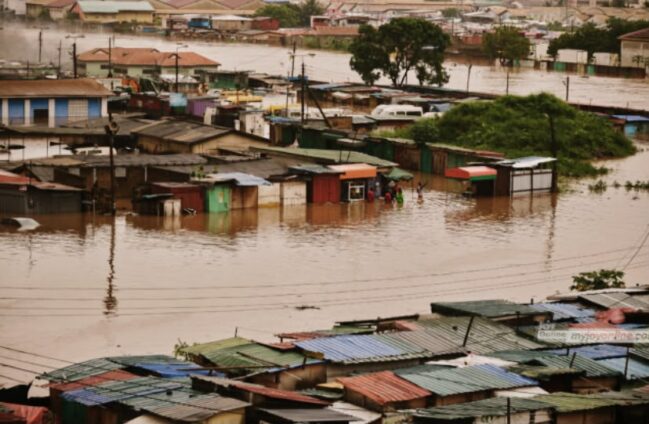
His comments come amid renewed public debate over Accra's flood resilience following recent heavy rains that left several communities inundated, damaged property and disrupted economic activities.
The remarks also add to growing calls for authorities to place greater emphasis on the routine maintenance, proper utilisation and effective management of existing drainage infrastructure, alongside the construction of new flood control systems, to reduce the city's vulnerability before future downpours.
Latest Stories
-
Ballon d’Or Power Rankings: Lamine Yamal leads race for Golden Ball ahead of Rodri and Kane
19 minutes -
‘Nothing worked for us’ – Gideon Mensah takes responsibility for Gambia defeat
38 minutes -
2026 Women’s Super Cup: FC Savannah beat Epiphany Warriors to win trophy for first time
2 hours -
AFCON 2027Q: ‘The last time Ghana won was eight games ago’ – Carlos Queiroz
3 hours -
AFCON 2027Q: Gambia defeat doesn’t make me a loser – Carlos Queiroz
3 hours -
2027 AFCONQ: Late goals seal 2-0 for Côte d’Ivoire against Somalia
3 hours -
AFCON 2027Q: My resignation won’t solve Ghana football issues – Queiroz
3 hours -
Morocco call off Ghana friendly after Black Stars’ AFCON setback
3 hours -
‘We have to say sorry’ – Queiroz apologises after Ghana’s humiliating defeat to Gambia
3 hours -
New Yorker identified as Yaw Boahene, 57, killed after bag was caught in subway train doors
3 hours -
Former American Idol contestant and pastor found guilty of murdering wife
4 hours -
Trump rules out joint US-China venture to develop AI
4 hours -
‘Beating Ghana did not surprise me’ – Gambia boss
4 hours -
OpenAI agents get rebrand – as ‘dots’ – while safety worries delay new model
4 hours -
US ban on Canadian alcohol and dairy takes effect as trade war drags on
4 hours