

Audio By Carbonatix
Reducing global food loss and waste is urgent and essential for a sustainable food-secure future for all, says the Food and Agriculture Organisation (FAO) of the United Nations.
An estimated 13.2 per cent of food, equivalent to 1.25 billion tonnes, is lost after harvest and before reaching retail.
In 2022, over 1 billion tonnes (19 per cent) of food was wasted in households, food services, and retail.
Approximately 8.2 per cent of the global population, or about 673 million people, experienced hunger in 2024, and 2.6 billion could not afford a healthy diet.
FAO stated during this year's 6th International Day of Awareness of Food Loss and Waste that reducing food loss and waste can enhance food security and nutrition, offer economic benefits, and lower environmental impacts.
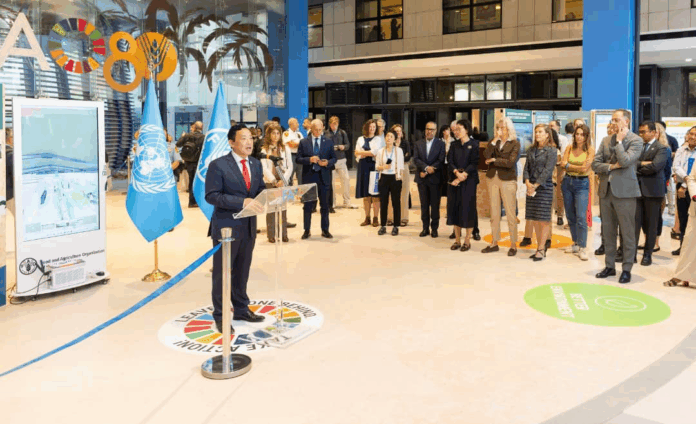
"By taking action to prevent and reduce food loss and waste, we can generate triple wins: improving food security and nutrition, providing economic benefits for primary producers, businesses, and consumers, and lowering environmental and climate impacts while protecting biodiversity and reducing pollution," said Qu Dongyu, FAO Director-General, in a video message at a special event co-organized with the UN Environment Programme (UNEP) at FAO headquarters in Rome.
Mr Qu also added that, “Accelerating actions to reduce food loss and waste is now a matter of urgency, and a priority, to ensure a sustainable food-secure future for all.”
Qu also emphasised that addressing food loss and waste requires systemic collaboration across all sectors, stating that strong partnerships with the private sector are crucial for investment and capacity building to adopt new technologies and innovations.
"Strong partnerships with the private sector are particularly important in unlocking the investments and strengthening the capacity needed to enable the adoption of new technologies and innovations,” he said.
The FAO Director-General announced the launch of Optiwaste, a digital app for tracking and analysing food waste in schools to improve meal quality and reduce waste.
To achieve these benefits, he said, targeted investments are needed across the value chain, especially in low and middle-income countries facing food insecurity and malnutrition.
Key investment areas include infrastructure development, innovative technologies, circular economy approaches, and enhancing stakeholder capacity and consumer education to reduce food loss and waste.
The event featured concrete actions and case studies from Ethiopia, Thailand, Argentina, and the Dominican Republic, focused on reducing food loss and waste, with a panel discussion highlighting successful public and private initiatives.
An exhibition at FAO headquarters showcased the organisation's efforts in food loss measurement and initiatives aligned with the Science and Innovation Strategy, emphasising advanced tools and technologies for sustainable agrifood systems.
The exhibition demonstrated how FAO's initiatives contribute to climate action and improving global livelihoods.
The Italian Rugby Federation joined FAO’s Champions community to celebrate FAO’s 80th anniversary, marking a new partnership.
Latest Stories
-
GMTF advances healthcare access in Ahafo Region with hospital needs assessment
7 minutes -
Ozempic maker takes rival to court over alleged fake weight-loss drugs
13 minutes -
Cape Coast Sea Defence Project: We can’t go beyond completion timeline – Ken Adjei
21 minutes -
‘A Tax For Galamsey’: Security operatives aware, part of taskforce – Amansie Central Presiding Member
25 minutes -
John Awuah: Where are the CSOs in the galamsey fight?
29 minutes -
KATH compelled to detain patients over medical bills, complains of costs and resource burdens
49 minutes -
Gov’t begins construction of CATH Lab at KATH to curtail surging heart conditions
1 hour -
High Court dismisses Gifty Oware’s application for Supreme Court referral
1 hour -
Education Minister proposes ‘Our Day’ cultural wear in schools after Mahama’s fugu buzz
1 hour -
Women’s FA Cup: Hasaacas draw Ampem Darkoa Ladies in quarterfinals as Jonina face Supreme Ladies
1 hour -
Ghana’s food insecurity hits 38.1% as over 13m people face hunger risks- GSS
1 hour -
Ghana holds strategic talks with Afreximbank on minerals sector development
1 hour -
Cost of Azumah Nelson Sports Complex to be revealed after audit – NYA CEO
1 hour -
Tetteh Quarshie Memorial Hospital records milestone with first dialysis procedure after 64 years
2 hours -
Cape Coast Phase II Sea Defence project advances to protect coastal communities
2 hours