

Audio By Carbonatix
Guinea's military junta has protested to Russia's ambassador after his embassy reportedly warned of possible unrest in the capital, Conakry.
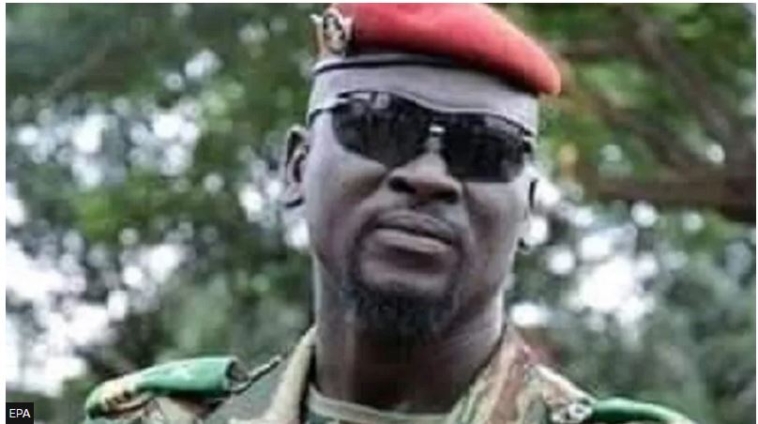
The warning was issued after junta leader Colonel Mamady Doumbouya dissolved the government on Monday, and ordered the closure of all borders.
Ambassador Alexey Popov apologised to the junta for what he called a misunderstanding, Guinean media reported.
Col Doumbouya took power in a 2021 coup.
He dissolved his government on Monday without offering any explanation.
He also ordered the seizure of the passports of sacked ministers, and the freezing of their bank accounts.
Guinean media reported that Col Doumbouya's decision led to the Russian embassy in Guinea advising Russian nationals to be vigilant as there could be unrest in the West African state's capital, Conakry.
The junta reacted angrily, with an official in its foreign ministry summoning Mr Popov to a meeting.
"I explained that it was a misunderstanding, a false translation of what was published. The announcement was published only in Russian for Russian citizens," Mr Popov was quoted as saying by Guinea's state-owned television and radio.
The junta accepted the apology, while Mr Popov said the incident would not affect relations between the two nations.
Guinea is one of several former French colonies in West Africa to be hit by coups in recent years.
The juntas, which seized power in Mali, Niger and Burkina Faso have pivoted toward Russia, while being hostile towards France and the West African regional bloc, Ecowas.
However, Col Doumbouya has tried to maintain good relations with all sides.
He has promised to hold elections to restore democratic rule by the end of 2024.
The junta banned all demonstrations in 2022 and has detained several opposition leaders, and members of civil society groups.
Col Doumbouya overthrew President Alpha Condé in September 2021, saying the army had little choice but to seize power because of rampant corruption, disregard for human rights and economic mismanagement.
Mr Condé was Guinea's first democratically elected president, taking office in 2010 following the end of military rule.
He was re-elected in 2015, but faced protests four years later when he changed the constitution to run for a third term.
Latest Stories
-
Rejecting pesewa coins is illegal, fuels inflation – BoG warns traders
18 minutes -
New Juabeng MP seeks details on GRA’s customs AI system
19 minutes -
TaxForGalamsey: Levies were institutional, not personal – Kwakye Ofosu explains lack of sanctions
24 minutes -
Feeding Hungry Pupils: 38-year-old female teacher initiates food bank to promote teaching and learning at Abankoro
35 minutes -
Education Minister announces 2027 start date for Jomoro College project in Western Region
37 minutes -
‘Sit us down and explain ‘it’—Customs agents raise alarm over new GRA AI system
46 minutes -
Gov’t commits GH¢25m seed fund to Ghana Defence University project
52 minutes -
Fighters condemns PAC Chair Abena Osei-Asare over Agbana comments; renew call for inclusive politics
54 minutes -
72 Days to Mundial: Ghana’s risky gamble after sacking Otto Addo
57 minutes -
Health Ministry boosts cardiovascular care with new guidelines, GH¢6m equipment support
1 hour -
OmniBSIC Bank delivers 104% profit growth, assets and deposits double in 2025
1 hour -
Ghana month donation drive ends on high note as NPA donates GH₵1m to GMTF
1 hour -
Prudential Africa CEO working visit to Ghana sets pace for business excellence and agency expansion
1 hour -
Salman residents call for halt to illegal mining activities
1 hour -
Goaso Municipal Hospital decries NHIS arrears, staff and equipment shortages
2 hours