

Audio By Carbonatix
As global wildlife populations continue to decline at an alarming rate, scientists from Ghana, Brazil, and the United Kingdom have converged in Kumasi for a landmark workshop to equip the next generation of conservation researchers with the tools needed to reverse the tide.
According to the Living Planet Report 2024, global wildlife populations have declined by an average of 73% between 1970 and 2020, driven by habitat loss, climate change, and overexploitation.
More than one million species are now threatened with extinction, with amphibians and marine mammals among the most at risk. Africa has recorded the second-highest regional decline at 76%, a figure attributed to intense human pressure on natural habitats.
The Biodiversity Monitoring Tools Workshop, running from March 24 to 27, 2026, is held under the theme: “Capacity Building and Observation Network for Nature and Climate in Tropical Ecosystems (CONNECT)”.
The event is a collaboration between the Forestry Commission of Ghana, the Forestry Research Institute of Ghana of the Council for Scientific and Industrial Research (CSIR-FORIG), the University of Ghana, and the University of Bristol in the United Kingdom.
Targeting postgraduate students, early-career researchers, and biodiversity conservation professionals, the workshop introduces participants to a suite of emerging technologies transforming conservation science, including Artificial Intelligence (AI) for biodiversity monitoring, Species Distribution Models (SDMs), and Environmental DNA (eDNA) analysis.
These innovations enable non-invasive, large-scale data collection on species movement, population health, and ecosystem changes, significantly reducing the labour burden on conservation researchers.
For the organisers, the stakes go beyond scientific training.
Senior Research Fellow at the University of Bristol, Fillipe Machado França, stressed the importance of bridging the gap between knowledge generation and real-world impact.
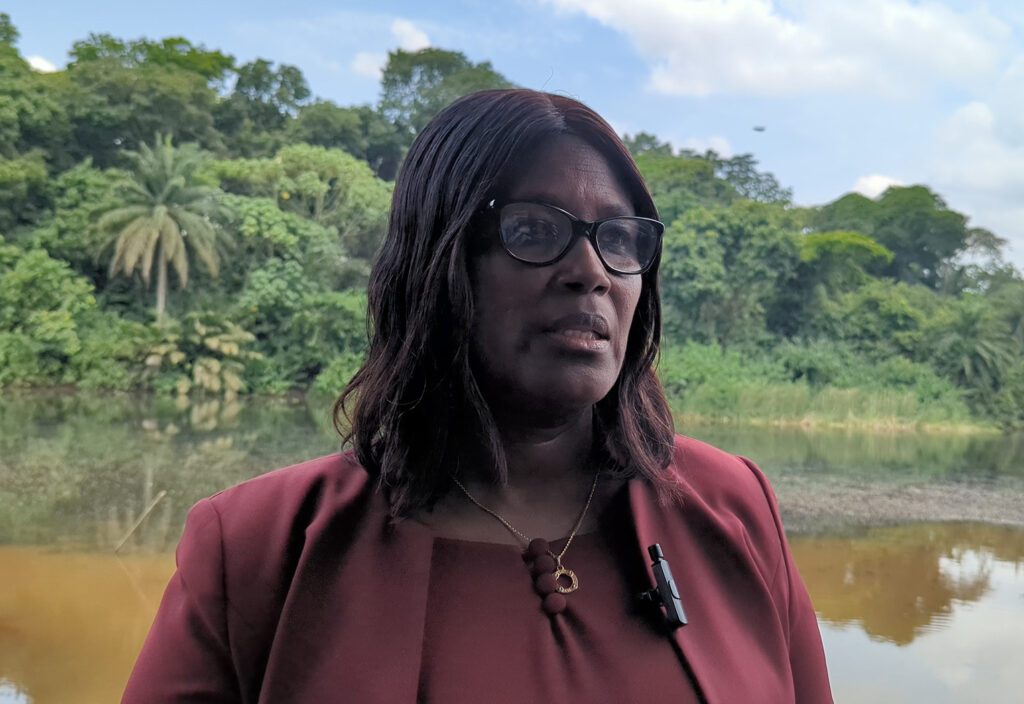
“One of the things we would want to achieve is to allow for knowledge exchange and training, what we call capacity building, particularly here in Ghana,” he said. “We want to fill the science and policy gap. Sometimes we are generating knowledge, but we need to make sure that the knowledge being created here is being adopted and translated into real actions in the real world.”
Deputy Director of the CSIR-FORIG, Dr. Mrs. Lucy Mensah, speaking at the event, highlighted the long-term institutional benefits of the international partnership.
“Partnering with this group from the University of Bristol in the UK and our Brazilian colleagues would build the capacity of a new generation of scientists in Ghana, and we think that is going to help us achieve our mandate inscribed by the Government of Ghana, which includes the conservation of biodiversity and forest resources,” she said.
Dr. Mensah further called on the Ghanaian government to invest in training more professionals in artificial intelligence so that AI tools can be meaningfully integrated into national conservation operations.
“With regards to the technological improvements, we need a lot of training because there are many kinds of AI. Government should come in to support the training of young scientists in this regard,” she added.
Participants at the workshop also expressed enthusiasm for the programme's practical value.
A researcher from the Department of Marine and Fisheries Sciences at the University of Ghana, Jannatu Fridaus, said the knowledge gained would directly inform her ongoing research work.
“I expect that the knowledge that will be shared from the workshop, which has to do with AI-driven biodiversity tools, Species Distribution Models (SDMs) and also the eDNA, I would be able to apply it in my research area,” she emphasised.
Latest Stories
-
Police arrest suspect over jewellery theft during fire outbreak
1 minute -
EOCO returns Hanan’s £6,700, GH¢2,750 and devices after defence challenge
10 minutes -
Opplift Youth Entrepreneurs Summit 2026 equips entrepreneurs with skills, mentorship and support
23 minutes -
Rival clubs want range of punishments for Man City
34 minutes -
Tear gas in Paris and Marseille as school protests grow across France
44 minutes -
Kane inspires England to win over Czech Republic in UEFA Nations League
53 minutes -
Finland orders halt to work on two Google data centres
1 hour -
Substitute Merino scores twice as Spain win in Croatia
1 hour -
Ronaldo wants Portugal ‘punishment’ but not retiring
1 hour -
White House defends Trump comment to let Iran ‘take out’ LA and San Diego
1 hour -
Asos confirms hackers sent ‘unauthorised’ notification to app users
1 hour -
US televangelist Jim Bakker, disgraced from sex scandal and fraud, dies at 86
2 hours -
Congolese-born golfer to represent Ghana at Turkish Airlines World Cup grand final
2 hours -
Amazon wins global rights to stream Emmys in six-year deal
2 hours -
European Film Festival returns to Ghana after a 5-year break
2 hours