

Audio By Carbonatix
Huawei hosted its second annual TrustInTech Summit, which was attended by ICT industry experts, academia, and economists from around the world.
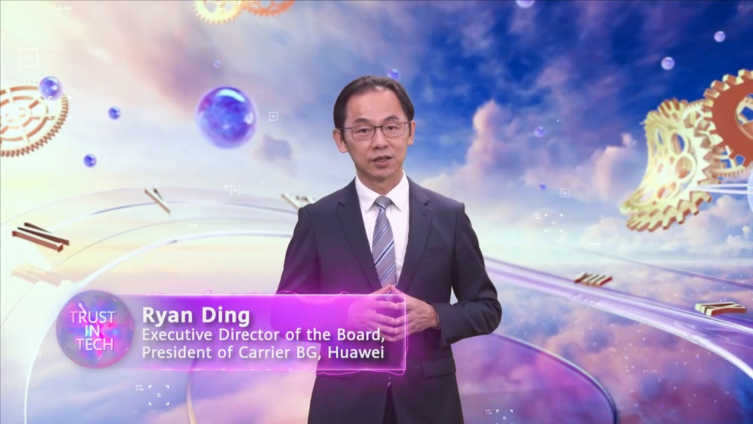
Speakers included Huawei's Executive Director of the Board and President of the Carrier Business Group, Ryan Ding, international investor Jim Rogers, GSMA CMO Stephanie Lynch-Habib, and others.
Focusing on the new challenges the world faced in 2020, the Summit highlighted ICT's critical role as the key digital infrastructure to support societal wellbeing and economic recovery.
Given the rising trend of technology decoupling, the Summit emphasized the need to embrace open collaboration, as well as the call to defeat the unnecessary fear of adopting new technologies.
In 2020, ICT played a vital role in resuming work and production during the pandemic. Meanwhile, 2020 has witnessed the exponential growth of 5G business applications.
Global consultancy firm STL Partners estimated that 5G-enabled scenarios will raise the global GDP by US$1.4 trillion by 2030.
At the Summit, STL Partners co-founder Chris Barraclough stressed the transformative role of 5G in the manufacturing, energy, and healthcare sectors.
Huawei Enterprise’s digital transformation expert Edwin Diender also concurred, explaining the role of how 5G, AI, big data, and cloud computing pushed for faster drug screening and diagnosis, intelligent monitoring, and remote working and education during the pandemic.
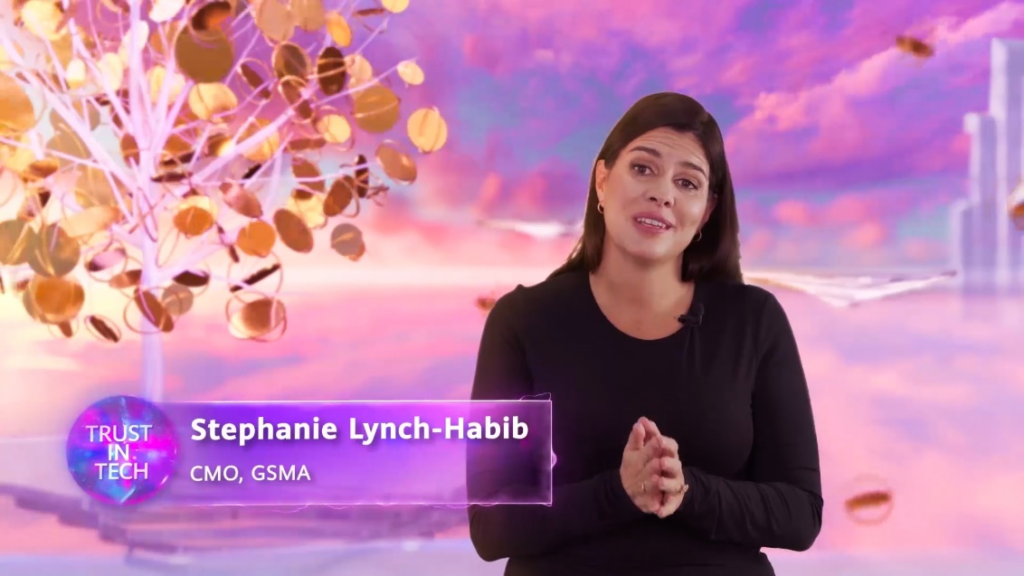
GSMA CMO Stephanie Lynch-Habib shared that 5G's rollout in 2020 brought over 100 5G networks in 47 countries, and some regions are leading in making 5G a mature application.
5G will influence consumer-oriented industries such as e-commerce, as well as boosting innovative services like virtual reality and augmented reality.
Standard network slicing models and edge computing will provide high reliability, low latency, high throughput, and service customization.
"Our working groups are continually supporting and enhancing global standards," stressed Lynch-Habib.
During the virtual, live streamed event, Huawei Carrier Business Group CTO Paul Scanlan called 2020 a ‘Sputnik’ moment.
"Similar to how the first man-made satellite Sputnik was successfully launched in 1957, bringing humanity into the age of space exploration, as 5G matured in 2020, everything changed," said Scanlan.
"The industry began to accelerate 5G adoption, offering spectrum discounts, innovating business models, and driving industry transformation. That's never happened in the last 10 years."
Several guests at the event commented on early adoption and major technological breakthroughs by saying there has always been a mistrust and fear of new things.
For example, during the Industrial Revolution in the 19th century, as there was fear for automated production, factories were destroyed.
As the events in 2020 led to more isolation and nationalism, there’s been a rise against transnational cooperation, and more countries are closing their doors and decoupling from each other over technology.
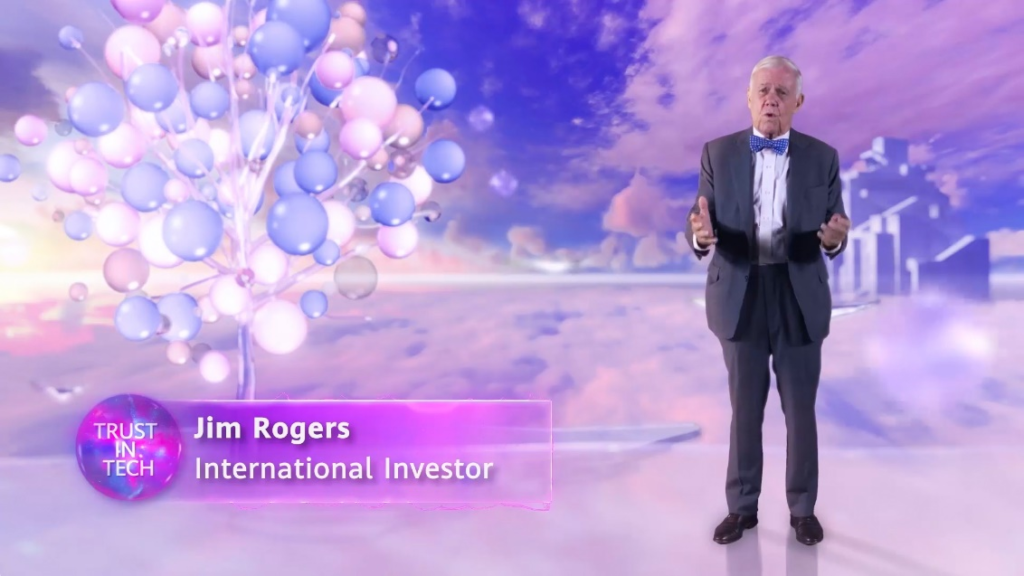
"Anybody taking a unilateral approach to anything, certainly to technology and economics, are going to have problems," said international investor Jim Rogers.
"Foreign policy should be around the opening. We need to avoid protectionism, especially in technology." He also said that protectionism was bad for the world as seen throughout history.
Professor Jin Keyu of the London School of Economics also echoed during the Summit, "[In today's world], it's less about competition, rivalry, and substitution, and more about collaboration, complementarity, and cooperation."
At the end of the summit, Ryan Ding, Huawei's Executive Director of the Board and President of the Carrier Business Group, emphasized that an open and trusted ecosystem is required for everyone to share the prosperity brought by technology.
To do so, the ICT industry needs to continue adopting unified technical and security standards. Given the current complex geopolitical environment, he stressed, “Politics should stay away from technical issues. We need to remain fair and open to drive technological cooperation. Industry cooperation is not a zero-sum game.
"If an isolated approach is adopted now, while new technology is unlocking social and business value at a faster rate, the victim will not be one company.”
Latest Stories
-
Civil society is not an adversary of gov’t, but partners in nation-building – Mahama
7 minutes -
Defeamekpor calls for interdiction of Land Ministry’s director of finance
11 minutes -
Atebubu Paramount Chief visits NPA boss to strengthen ties
11 minutes -
TGMA Group of the Year nominees to be announced this week – Robert Klah
15 minutes -
Ex-Effia MP writes: Big Push for infrastructure, Small Push for people
16 minutes -
Interior Minister demands probe into GH¢3m payments made outside GIFMIS
19 minutes -
Ex-Defence Ministry procurement director to face prosecution over GH¢4.8m scandal
35 minutes -
Gov’t committed to finishing Tema Motorway by 2027, says Agbodza
42 minutes -
OSP under threat from political interference — Kissi Agyebeng calls for constitutional protection
46 minutes -
T.I. Ahmadiyya SHS, Kumasi, celebrates 75 years of excellence
54 minutes -
Court orders SHS students to pay compensation for assault on teacher
56 minutes -
Mahama assents to 5 bills, including key amendments on security, education and finance
1 hour -
Students of Nkwantanang M.A 6 Basic School benefit from ‘Break the Silence’ Menstrual Awareness Initiative
1 hour -
Fuel price hike exposing NDCs’ deceitful politics—Mercer
1 hour -
Farmers trained in snail rearing, beekeeping and mushroom cultivation under EMBRACE project
1 hour