

Audio By Carbonatix
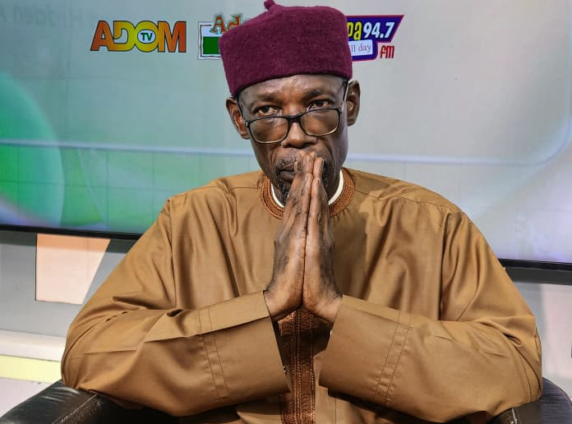
The Spokesperson for the National Chief Imam, Sheikh Armiyawo Shaibu, has criticised Ghana’s social welfare infrastructure, warning that the "disappointing" state of government support services is actively deterring victims of domestic violence from seeking justice.
Speaking at a thought leadership forum organised by Adom TV, Adom FM, and Asempa FM, subsidiaries of the Multimedia Group Limited, on Friday, April 17, the prominent cleric argued that the fight against domestic abuse cannot be won through advocacy alone if the physical institutions meant to harbour and help survivors are in a state of decay.
The programme, held under the theme “Safe Homes, Strong Society: Ending Domestic Violence and Hidden Abuse Together,” brought together religious leaders, gender activists, and policymakers to confront the rising tide of "hidden abuse" within Ghanaian households.
A First-Hand Witness to Decay
Sheikh Shaibu revealed that his assessment of the sector was not based on hearsay but on a personal investigative visit to a local social welfare office. What he discovered, he described as a national embarrassment that undermines the dignity of those already traumatised by violence.
“I have visited a social welfare office, and it was very disappointing. The conditions are appalling,” Sheikh Shaibu stated.
He further noted that the dilapidated environment does more than just lack aesthetic appeal; it actively erodes the professional morale of the social workers tasked with handling sensitive cases.
He suggested that when staff are forced to work in such "appalling" settings, their ability to provide the high-level emotional and legal support required by victims is severely compromised.
Restoring Confidence through Investment
The cleric argued that there is a direct correlation between the quality of the state's welfare facilities and the reporting rates of domestic violence. Many victims, he contended, choose to remain in abusive environments because they do not believe the state offers a viable or dignified alternative.
“If the social welfare system is in good standing, people will feel confident to report such cases,” he emphasised.
Sheikh Shaibu expressed deep concern that social welfare has been relegated to the sidelines of national priority, often overshadowed by more "glamorous" infrastructure projects. He called on the Ministry of Gender, Children, and Social Protection to view the retooling of these offices as an emergency security issue rather than a minor administrative concern.
The Clergy’s Role in a Strong Society
The Spokesperson’s intervention signals a growing push from the National Chief Imam’s office to use religious platforms to drive social reform.
By highlighting the structural failures of the state, the Sheikh is advocating for a wraparound approach where spiritual guidance is matched by robust, well-resourced state intervention.
As the forum concluded, participants called for a radical budgetary increase for the Social Welfare Department to ensure that every district in Ghana has a "safe haven" that lives up to its name.
For Sheikh Armiyawo Shaibu, the equation is simple: a weak welfare system is a win for the abuser, while a strong one is a shield for the survivor.
Latest Stories
-
Haruna Iddrisu calls for limits on annual university accommodation fee increases
33 minutes -
Today’s front pages: Tuesday, October 13, 2026
1 hour -
Wealth Over Water: How Galamsey Is Threatening Ghana’s Water Security
2 hours -
LA 2028: Black Queens pumped up for second leg of Mauritius tie
2 hours -
LA 2028: Black Queens hold final training session ahead of second leg against Mauritius
3 hours -
Standards are not Seasonal: What the EC appointments teach both sides
3 hours -
King Mohammed VI urges private sector to create youth jobs and spread benefits of growth
3 hours -
KGL U17 Colts 2026: Greater Accra win title after penalties win over Western Region
3 hours -
UK Investment Roadshow opens in London to advance UK-Ghana growth partnership
3 hours -
Assemblies of God requires pastors to resign before entering partisan politics – Rev. Wengam
3 hours -
Ghana targets 20% annual reduction in maternal deaths – Health Minister
3 hours -
Cyber attacks in Africa grow faster than global rate, report finds
3 hours -
Ghana signs UAE deal to create 5,000 overseas jobs
3 hours -
One Million Coders Programme targets 100,000 digital jobs in two years – Sam George
4 hours -
John Jinapor, Italian Ambassador explore opportunities for energy sector investment
4 hours