

Audio By Carbonatix
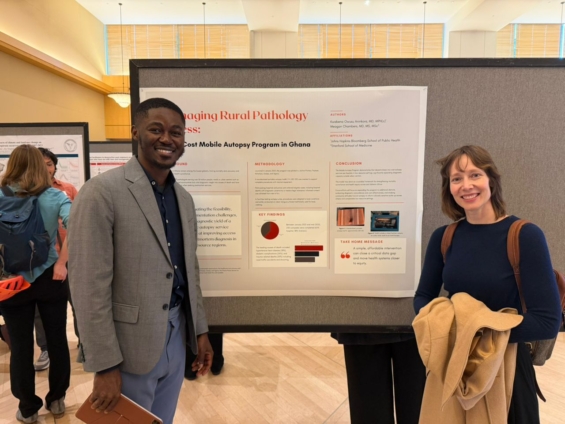
A low-cost autopsy initiative developed in Ghana is drawing international attention after being presented at a major global health research convening hosted by Stanford University earlier this year.
The Mobile Autopsy Program, designed to improve access to postmortem diagnosis in underserved communities, was featured during a lightning presentation at the 2026 Global and Planetary Health Research Convening in California. The event brought together researchers, clinicians, and policymakers from around the world to explore innovative solutions to pressing global health challenges.
The program was presented by Dr Kwabena Aninkora, a senior medical officer in the Department of Pathology at Komfo Anokye Teaching Hospital (KATH), Kumasi. Developed in response to limited access to specialist pathology services in many parts of Ghana, the initiative uses portable equipment and community-based partnerships to provide professional autopsy services in areas without dedicated facilities.
In many rural districts, families seeking postmortem examinations must travel long distances to major teaching hospitals, often at high financial and emotional cost. As a result, many deaths go undocumented or aren't certified adequately, affecting public health surveillance and legal processes.
The Mobile Autopsy Program seeks to address this gap by deploying trained personnel and low-cost tools directly to participating communities. Since its launch in 2021, the program has supported hundreds of hospital and forensic autopsies across parts of the Ashanti and Bono regions, helping clinicians and public authorities establish accurate causes of death.
Speaking on the significance of the initiative, Dr Ernest Boakye, a pathologist and lead clinician, described the project as a major step forward in diagnostic equity.
“This program has made it possible for families in remote areas to access professional autopsy services that were previously unavailable to them,” he said. “It has improved the quality of mortality data and strengthened confidence in medical and legal reporting.”
According to DDrBoakye, the impact extends beyond service delivery.
“Through this initiative, trainees and medical students are gaining early exposure to postmortem medicine and diagnostic practice,” he noted. “This kind of hands-on experience is critical for building interest in pathology and addressing the long-standing shortage of specialists in the country.”
Ghana continues to face a limited number of practising pathologists, most of whom are concentrated in major urban centres. Health experts have long warned that this shortage affects disease surveillance, patient safety, and public health planning. By incorporating supervised volunteer opportunities, the Mobile Autopsy Program has created an informal training pathway for young doctors, medical laboratory scientists, and students interested in diagnostic medicine. Participants receive mentorship while supporting real-world casework in underserved settings.
At the Stanford convening, researchers expressed interest in the model’s adaptability for other low-resource environments. Conference organisers highlighted the initiative as an example of how locally developed solutions can inform global health practice.
Dr Aninkora’s presentation focused on the feasibility, cost-effectiveness, and community acceptance of decentralised autopsy services. He outlined how a basic portable toolkit, combined with standardised protocols and community engagement, can expand diagnostic coverage without heavy infrastructure investment.
Similar challenges exist in parts of Latin America, South Asia, and even rural regions of developed countries, where access to forensic and diagnostic pathology remains limited.
“This model shows that you don’t always need expensive facilities to improve mortality surveillance,” said one participant during the session. “What matters is system design, training, and accountability.”
Back in Ghana, hospital administrators and public health officials say the program has helped reduce diagnostic delays and improve collaboration between hospitals, law enforcement agencies, and families.
Mr Samuel Adjei, a hospital administrator who worked with the initiative during its early stages, said the service improved confidence in clinical decision-making.
Dr Aninkora says plans include expanding the network of participating districts, formalising training modules for volunteers, and strengthening partnerships with academic and public health institutions.
“Our goal is to make reliable postmortem diagnosis accessible, respectful, and sustainable,” he said.
As interest grows internationally, Ghana’s Mobile Autopsy Programme is emerging as a locally driven innovation with global relevance, demonstrating how practical solutions rooted in community needs can shape the future of public health diagnostics.
Latest Stories
-
Today’s front pages: Wednesday, September 30, 2026
16 minutes -
Bawumia highlights agricultural, compulsory insurance reforms in IBAG engagement
17 minutes -
Ghana will secure Tullow tax revenues while protecting Jubilee, TEN investments – Ato Forson
25 minutes -
Ghana wins $393m Tullow tax arbitration as tribunal upholds GRA assessment
30 minutes -
Gender Minister assures women’s group of action on Affirmative Action, Development Bank
1 hour -
Over 2,000 teachers in Dormaa comply with strike – GNAT Secretary
1 hour -
Food Buffer Stock seeks stronger liquidity buffer despite record profit
1 hour -
LPG investments key to achieving 50% access target by 2030 – Energy Minister
2 hours -
Jinapor: New LPG terminal strengthens Ghana’s energy security
2 hours -
Agbodza directs road agencies to fast-track design approvals to prevent project delays
2 hours -
Housing Minister urges stakeholders to prioritise quality education in Banda District
2 hours -
Government redeems pledge to complete abandoned projects – Kofi Buah
2 hours -
Sam George calls for Black Stars disbandment, GFA dissolution after Gambia defeat
2 hours -
Bunkpurugu MP urges action to curb network disruptions in Northern Ghana
2 hours -
Education Minister calls for evidence-based response to learning crisis in West Africa
2 hours