

Audio By Carbonatix
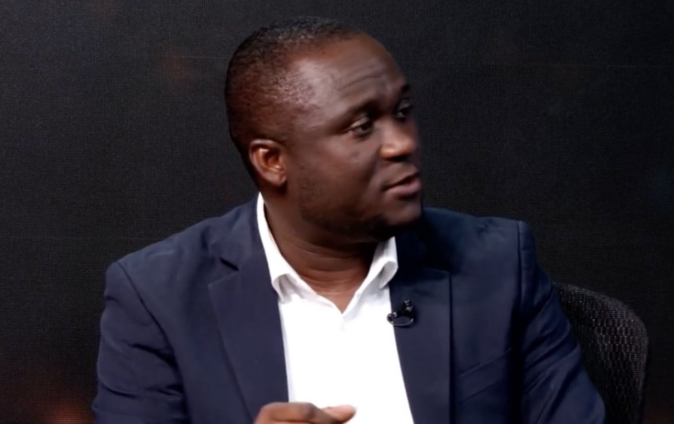
Frederick Amissah, Technical Advisor at the Ministry of Finance, has questioned how millions of dollars diverted from a World Bank-funded project to support Ghana’s Covid-19 response were spent.
He pointed to a $3 million expenditure described only as “support” with no clear explanation.
Speaking on JoyNews’ PM Express on Monday, July 6, he insisted that there had been no delays in the release of funds under the Greater Accra Resilient and Integrated Development (GARID) Project. Instead, he argued the real issue was how loan proceeds had been used.
“There haven’t been any delays in the release of funds, and I just don’t know where that is coming from,” he said.
Mr Amissah stressed that World Bank facilities are loans contracted by the state and must eventually be repaid. For that reason, he said attention should focus on whether the borrowed funds were used for their intended purposes.
He argued that the current administration inherited several projects in which loan resources had been used in ways that raised concerns.
As an example, he cited the Ghana Economic Transformation (GET) Project, claiming that almost GH¢1 billion was spent on travel in 2024 alone.
“For a government that, for eight years, couldn’t boast of one completed district hospital, which may cost about $30 million to $40 million, to use such an amount to travel in one year was a bit troubling,” he said.
Mr Amissah explained that after President John Mahama established a flood committee in March 2025, the Finance Minister was directed to support its work through the GARID facility.
He said the $350 million project had so far drawn down $137 million, but nearly half of that amount had earlier been redirected to Covid-19 spending.
According to him, $65 million was transferred for that purpose, but only $60.8 million had been retired, leaving $4.2 million unaccounted for.
When asked whether the Covid emergency justified the diversion, Mr Amissah rejected the argument.
“There was no justification for that,” he said.
He argued that Ghana already had other sources of financing for the pandemic, including the Stabilisation Fund established during President Mahama’s first administration, the IMF Rapid Support Facility, and financing from the African Development Bank.
He further claimed that Covid became “one of the reasons we had the debt crisis” because it was used to secure additional borrowed resources rather than grants.
Breaking down the expenditure, Mr Amissah said that fumigation alone accounted for about $2.8 million. More than $1 million was used for quarantine feeding, while portions of the money were shared to Metropolitan, Municipal and District Assemblies.
However, he said the most troubling item was a $3 million expenditure simply described as “support.”
“What actually perplexes me is that there was something that was described as support, support for Covid-19 activities of $3 million, and we don’t know what that is,” he said.
He also questioned the value of the fumigation exercise, saying it later emerged that it was not effective and adding that whether some of the work was even carried out remained another issue.
Mr Amissah maintained that no Finance Minister or President would ignore such spending because Ghana’s economic crisis was ultimately driven by the country’s debt burden.
Latest Stories
-
WPL 2026/27: Ampem Darkoa Ladies to start title defence against Northern Ladies
7 minutes -
WPL 2026/27: Hasaacas Ladies face Army Ladies in opening round as GFA announce Southern Zone fixtures
19 minutes -
Eduwatch calls for urgent resolution of teachers’ strike and reforms
20 minutes -
Media worker, journalist remanded over alleged GH¢800k fraud
22 minutes -
Safeguard all personal, financial information, including Mobile Money PINs, ATM PINs – BoG to general public
24 minutes -
Gov’t launches roadmap to implement Social Protection Act, Regulations and Affirmative Action Regulations
24 minutes -
Photos: Pete Edochie meets GoldBod CEO Sammy Gyamfi over African youth mentorship initiative
26 minutes -
Black Maidens: Ghana’s envious record at U-17 Women’s World Cup ahead of seventh appearance
38 minutes -
BoG cautions public against 20 unlicensed mobile loan apps
47 minutes -
Mahama urges tougher enforcement of building regulations over recent collapses
51 minutes -
FWSC denies reports of salary deductions for striking teachers
55 minutes -
Rooted like a tree, responsive like a river: Dr Amin Adam calls for new model of Imamship to meet modern realities
1 hour -
La Traditional Council secures suspension of SSNIT’s La Pleasure Beach redevelopment plans
1 hour -
Joy FM listeners support mother seeking treatment for 3-year-old daughter after alleged sexual abuse
1 hour -
German Unity Day celebrated with music, art and Ghana-Germany friendship in Accra
1 hour