

Audio By Carbonatix
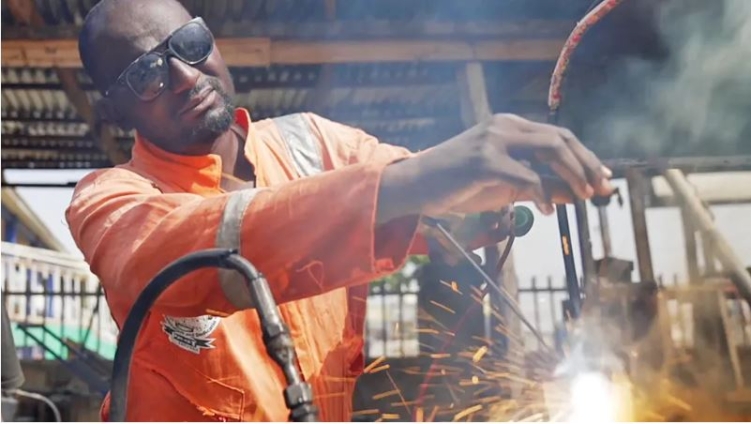
Kabir Abu Bilal is not your regular Nigerian university professor - he has a second job working as a welder in the northern city of Zaria.
Welding is widely seen as a menial job across Nigeria and he has shocked many - especially his colleagues - by opening up his own welding workshop.
"I am not ashamed that I work as a welder despite being a professor," he tells the BBC. "I make more money from welding."
The 50-year-old teaches and supervises research students at the faculty of engineering at Ahmadu Bello University, Nigeria's largest and one of its most prestigious universities.
He has worked there for 18 years and published several books on physics and electrical engineering.
His fellow academic, Prof Yusuf Jubril, explains that their colleagues find it strange: "Society makes us think someone is too big for certain roles and it's not true.
"What he is doing is not humiliating but commendable, and I hope others learn from him."
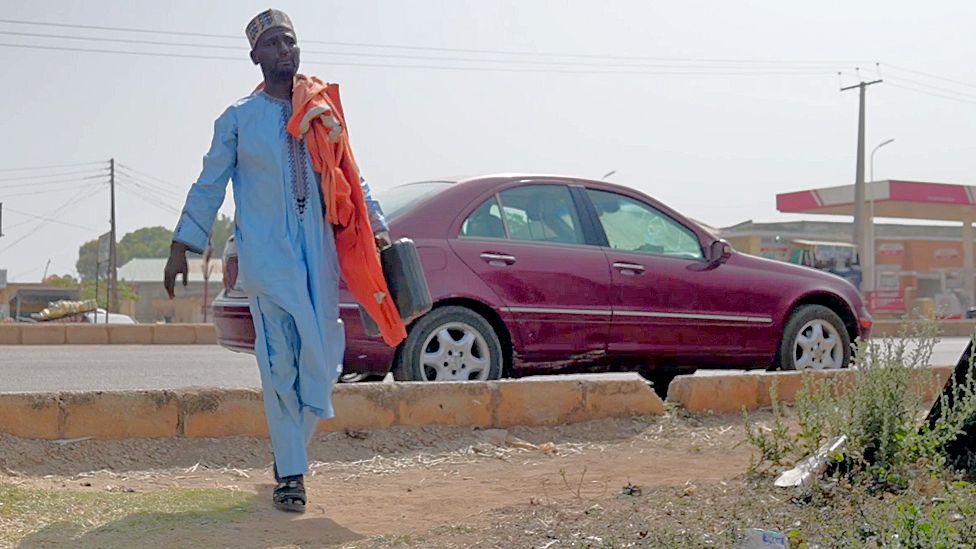
Prof Abu Bilal agrees that people, especially graduates, need to be more open-minded about how they make their living.
"Education shouldn't stop one from doing jobs like this, I am surprised that there are people with first degrees who find a job like this degrading."
His words have resonance - as according to Stutern's Nigeria Graduate Report, more than 40% of graduates fail to get a job in Nigeria, Africa's most-populous country.
He opened up a mini-workshop in Zaria around two decades ago.
In 2022, a year after he was promoted to become a professor, he moved to larger premises having found plenty of business in the university town.
This has allowed him to buy more equipment and take on bigger jobs, with customers asking him to make things such as metal doors and window frames.
"I collect the job no matter how small it is, even if it is one door I will weld it happily to get paid," he says.
Since he was a child, the professor says, he has always liked taking apart and putting back together gadgets and things like radios, which drew him to his career.
"Unfortunately I found out engineering here was more theoretically based and I needed a place to express myself," he says.
"That desire culminated in me starting this welding workshop."
Not only has the workshop satisfied his need to get his hands dirty, but it has helped him on the financial front.
Academics in Nigeria have long struggled on modest salaries, most earning between 350,000 naira ($390; £305) and 500,000 ($555; £435) a month - and there are often long battles with the government to get a pay increase.
Prof Abu Bilal says his welding job has allowed him to be more self-sufficient and he has even been able to buy a more reliable car - a Mercedes.
In leaner times, he has even helped those who frowned on his joint career.
"When university lecturers went on strike for eight months in 2022 and we weren't paid, I always had money because of this job and a few colleagues came to me for help."
Prof Abu Bilal hopes to inspire other people to take on jobs like the one he does.
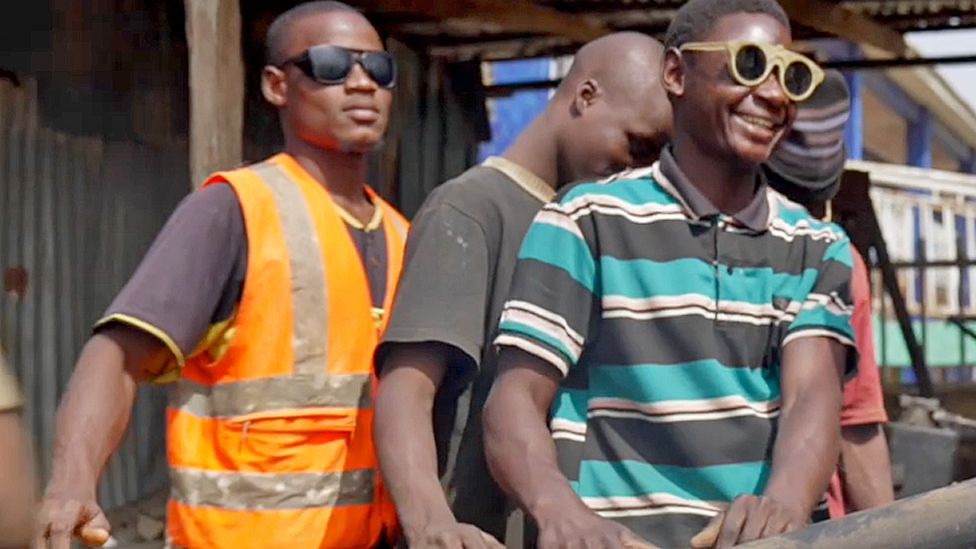
He has 10 apprentices - aged between 12 and 20 - at the workshop where he is teaching them the skills of the trade.
Those who are not at school during the day take care of the workshop when he is away at university.
The apprenticeship tends to take about a year - and then when they have the skills they can go off and set up their own businesses.
"I have learned so much being at the workshop, I can weld many items together now," 18-year-old Jibril Adam said.
"Even as apprentices, he gives us 10,000 naira every month and a daily stipend for food."
The academic is also determined that his five children do not become academic snobs: "I bring them here most weekends to see how it is done. I want them to learn it so that one day they'll be able to do it."
For Prof Abu Bilal his joint career suits him perfectly, as he is able to embrace his teaching role on both fronts: "I love to impart knowledge."
Latest Stories
-
Ghana, 3 others face large financing needs, debt servicing costs – World Bank warns
2 hours -
Eurobond repayment: Ghana faces US$6.4bn repayment burden between 2027 and 2030 – World Bank
3 hours -
Government to add 100 new ambulances to national fleet in 2027
3 hours -
Ex-Spurs player Vega set to run for FIFA president
3 hours -
Arteta signs new contract with champions Arsenal
4 hours -
Former Man City player Silva comes out of retirement
4 hours -
‘I have a screen in my office’ – Akandoh on real-time emergency bed tracking
4 hours -
Government begins pilot of national emergency bed management system
4 hours -
GRA forms 9-member committee to probe alleged missing containers at Tema Port
4 hours -
Foreign Minister inspects VFS Global Visa Centre, highlights commitment to service quality standards
5 hours -
Declan Rice close to agreeing new Arsenal deal
5 hours -
‘Draining’ few days for Gauff after online racist abuse
5 hours -
Media worker, journalist remanded over alleged GH¢800,000 fraud
5 hours -
PAC sends Ghana Water hearing back, demands Minister and MD appear over financial status
5 hours -
Foreign Affairs Minister inspects 20+ visa centres, demands better conditions for Ghanaian applicants
6 hours