

Audio By Carbonatix
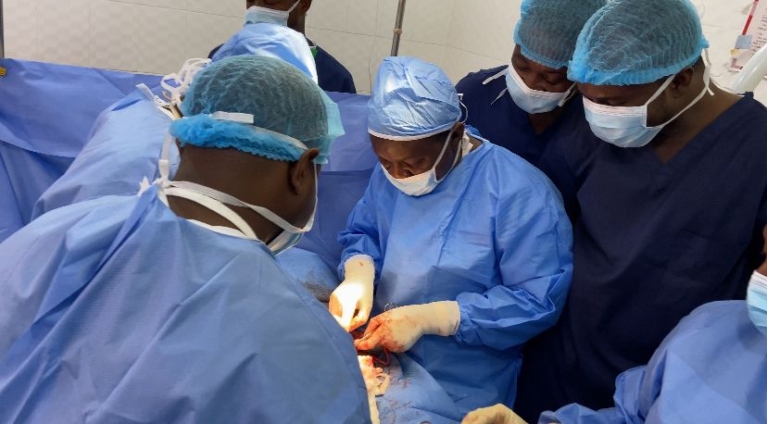
The United Nations Population Fund and local health authorities have launched an initiative offering free obstetric fistula surgeries at five major hospitals in Ghana.
Over 200,000 Ghanaian women suffer obstetric fistula, which causes uncontrollable leakage of urine or faeces, resulting from a hole between the birth canal and bladder or rectum.
The initiative, led by the Partnership to End Fistula in Ghana (PEFIC) will repair such cases and provide comprehensive assistance and reintegration support to help survivors reclaim their lives.
Over 800,000 births occur in Ghana every year.
However, the process is not always smooth as obstetric fistula hunts a lot of women who undergo childbirth.
Victims across the country recount physical traumas, and social isolation as the prolonged and obstructed labor leave aspiring mothers in an incontinent condition, with many even losing their babies.
“I didn't experience any complications after giving birth. But after a month, I started excreting and urinating uncontrollably. Because of this, I’ve not gone out for the year. I would rather prevent the shame and stay back,” 29-year-old Sumaya Abdul Rahim shares.

“I can't even go to church and I feel I need to be isolated from people. I use pampers and I feared that I might stain myself unprovoked anywhere, so I would rather not go out to even work,” 33-year-old mother of five and trader,” Vida Opoku said.
In a transformative effort to bring normalcy again to such Ghanaian women suffering from incontinence, the United Nations Population Fund and partnering health authorities, have dedicated the Komfo Anokye Teaching Hospital (Kumasi), Ho Teaching Hospital (Volta Region), Tamale West Hospital (Northern Region), Mercy Women Catholic Hospital (Central Region), and Upper West Regional Hospital for free fistula repairs and surgeries.
The intervention forms part of renewed efforts of UNFPA and other partners to eliminate Obstetric Fistula in Ghana by 2030.
Programme Specialist, Reproductive Health at UNFPA, Dela Bright Gle, explains that the intervention aims to bridge the backlogs of untreated cases and create more awareness about the life threatening condition.
She highlighted the need to confront the stigma and isolation that fistula survivors endure.
“There is an urgent need to bring public awareness on obstetrics fistula issues, prevention, reintegration, repairs, and the need for partnerships to eliminate fistula in developing countries. UNFPA’s partnership to end fistula in Ghana has grown to 19 organizations with support of resources, infrastructure, and sharing of their personnel. Women should not suffer because of this and its misconceptions; a very treatable situation and can fully be eradicated. We need society to understand,” she said.
During the commemorative event at the Komfo Anokye Teaching Hospital in Kumasi on the International Day to End Obstetric Fistula, 50 women were screened.
The free repair surgeries are estimated to cost each patient about $700, covering transportation, surgery, and two weeks of recovery care.
Obstetric Fistula Surgeon at KATH, Dr Baffour Opoku, recounting instances of the burden of condition, indicated that the Obstetric Fistula is treatable with quality obstetric professionals and care.
“There’s still more to be done, although now there's a lot of antenatal hospital visits so not many new fistulas are being formed like before. Despite its complexities, it is very treatable. We only need extremely experienced surgeons. The first repair is always the best repair. For patients here this day, we are hoping to operate on all of them by the end of the period,” he said.
The excited victims who have been set on the path of recovery from the burdens of Obstetric Fistula expressed their appreciation for the timely intervention.
“God thank UNFPA for this intervention. It will bring me back to my old life and I will feel okay to go in public again and get back to my work,” Sumaya Abdul said.
“Ever since I visited the hospital, I've been feeling a lot better, and I believe that after a successful surgery, I will be my normal self again. I am grateful for this intervention. I will be able to come back to my normal life, and get back to work,” Vida Opoku said
Latest Stories
-
Police arrest suspect over jewellery theft during fire outbreak
1 hour -
EOCO returns Hanan’s £6,700, GH¢2,750 and devices after defence challenge
1 hour -
Opplift Youth Entrepreneurs Summit 2026 equips entrepreneurs with skills, mentorship and support
2 hours -
Rival clubs want range of punishments for Man City
2 hours -
Tear gas in Paris and Marseille as school protests grow across France
2 hours -
Kane inspires England to win over Czech Republic in UEFA Nations League
2 hours -
Finland orders halt to work on two Google data centres
2 hours -
Substitute Merino scores twice as Spain win in Croatia
3 hours -
Ronaldo wants Portugal ‘punishment’ but not retiring
3 hours -
White House defends Trump comment to let Iran ‘take out’ LA and San Diego
3 hours -
Asos confirms hackers sent ‘unauthorised’ notification to app users
3 hours -
US televangelist Jim Bakker, disgraced from sex scandal and fraud, dies at 86
3 hours -
Congolese-born golfer to represent Ghana at Turkish Airlines World Cup grand final
3 hours -
Amazon wins global rights to stream Emmys in six-year deal
3 hours -
European Film Festival returns to Ghana after a 5-year break
3 hours