

Audio By Carbonatix
The US has banned the use of a synthetic dye typically added to foods and beverages to give them a bright, cherry-red hue.
Manufacturers will no longer be allowed to use the dye, called red No 3 or red dye 3, after studies linked it to cancer in male laboratory rats, the US Food and Drug Administration (FDA) announced on Wednesday.
While normal exposure to the dye is much lower in humans than in the rats in the studies, US law requires a ban if any link to cancer is found.
The dye is used primarily in candy, cakes, cookies, frozen desserts and frosting as well as some medicines, the agency said.
The ban is a result of a petition filed in 2022 by a number of groups, including the Center for Science in the Public Interest. They argued the dye should be barred due its links to cancer and its widespread use by US consumers, specifically children.
Red No 3 was banned in cosmetics 35 years ago by the FDA. California also banned the additive in food products in October 2023.
It's restricted in countries outside the US, like Australia, New Zealand and the European Union.
The FDA's ban is "long-delayed", said the Center for Science in the Public Interest, a US-based a non-profit consumer advocacy group that has long pushed for the ban.
"At long last, the FDA is ending the regulatory paradox of Red 3 being illegal for use in lipstick, but perfectly legal to feed to children in the form of candy," said the group's president, Dr Peter Lurie, in a statement on Wednesday.
Food manufacturers using red No 3 will have until January 2027 to reformulate their products, while drug manufacturers will have an extra year - until January 2028 - to adjust.
Food imported into the US also will have to comply with the new ban, the FDA said.
Which foods contain Red Dye 3?
Red No 3, also known as erythrosine or red dye 3, has been used in a number of candies, baked goods, fruit products and beverages.
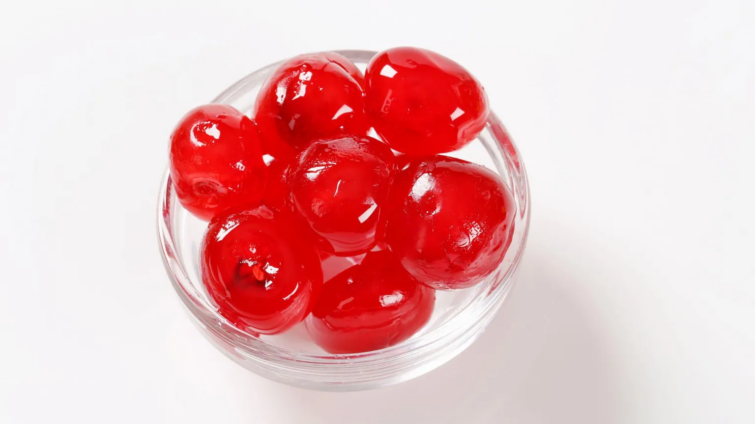
Coloured candies - like Pez - include the additive as an ingredient. It also has been used in toaster pastries, maraschino cherries, and some sodas and fruit-flavoured drinks.
The additive was used in cough syrups and gummy vitamins to give them a bright red colour.
Some manufacturers already have phased out using the dye in their products, like Dole, which eliminated it from its fruit bowls in 2023.
Instead of red dye 3, some companies have started using red dye 40, which is considered a healthier alternative, though one study linked it to an increase in bowel disorders in mice.
Another study by the UK's Food Standards Agency linked red dye 40 to increased hyperactivity in children. The additive was banned in California schools as of last year.
Latest Stories
-
English football’s independent regulator would quit over Man City interference
16 minutes -
Anthropic seeks rehearing of case over Pentagon’s security risk branding
27 minutes -
NDC Deputy National Organizer Aspirant Hamza Umar targets grassroots mobilisation
1 hour -
Partisan appointment cycle will persist without meaningful reforms – Osae-Kwapong
2 hours -
‘This cycle is not going to be broken any soon’ – Osae-Kwapong on partisan appointments
3 hours -
Partisan appointments won’t help restore trust in EC – Osae-Kwapong
3 hours -
Villarreal fight back to beat Napoli and end losing run
3 hours -
Tresoldi nets hat-trick as Club Brugge win Inter thriller
3 hours -
PSG’s Luis Enrique hopes Man City avoid sanctions
4 hours -
Lisandro Martinez issues scathing attack on Man Utd board – has he made things worse?
4 hours -
Saka responds to Arteta’s challenge with ‘huge impact’
4 hours -
Viking hold Bayern in thriller as Kane breaks Messi record
4 hours -
Gordon scores as Barcelona beats Galatasaray
4 hours -
Bumble bought for $1.3bn in ‘bet on the future of humanity’
4 hours -
Imagination Africa, Mentors Chess Academy to host second African Genius Chess Championship at Ghud Park
4 hours