

Audio By Carbonatix
The US and Iran have agreed to "stand down" following an exchange of strikes over the past few days, media reports say, citing a US official.
It comes after several attacks in and around the Strait of Hormuz, culminating in both nations accusing each other of violating the ceasefire.
The official confirmed to the BBC's US partner CBS News that vessels will now be able to move through the waterway "freely", and added that renewed talks aimed at ending the war will continue.
Iran has not commented on the reports that it has agreed to halt strikes in the strait.
On 17 June, the US and Iran signed a 14-point Memorandum of Understanding (MoU), which included an "immediate and permanent termination of military operations on all fronts".
As part of the MoU, Iran had agreed to use its "best efforts for the safe passage of commercial vessels with no charge for 60 days".
But the ceasefire agreed less than two weeks ago has been under threat in recent days because of renewed attacks by both sides.
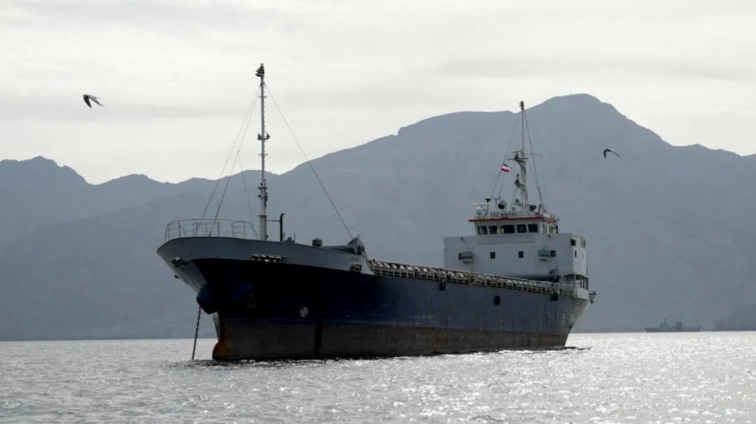
Strikes kicked off once more on Thursday after an Iranian projectile hit a cargo ship in the Strait of Hormuz.
Over the weekend, the US retaliated with a series of strikes on Iran, hitting multiple targets in what US Central Command (Centcom) called a direct response to the "continued aggression" against commercial shipping.
On Saturday, Iran responded with strikes on US bases in Kuwait and Bahrain. The US has said none of these attacks reached their targets, and there were no casualties or damage.
The Strait of Hormuz is a key waterway for oil and gas shipments, and was effectively closed by Tehran after the US and Israel launched attacks on Iran at the end of February.
On Friday, the US also mediated the signing of a framework agreement between Israel and Lebanon aimed at paving the way to a lasting peace.
Due to ongoing fighting between Israeli forces and the Iranian-backed Hezbollah in southern Lebanon, that ceasefire also looked shaky.
The leader of Lebanon's Hezbollah militant group has rejected the agreement and accused the Beirut government of undermining Lebanon's sovereignty.
On Sunday, two days after the agreement was signed, the Israeli army said it had struck a 200-metre-long tunnel used by Hezbollah in southern Lebanon, which it said contained hundreds of weapons.
The US was informed ahead of the attack, according to a statement from Israeli Prime Minister Benjamin Netanyahu and Defence Minister Israel Katz.
Tehran says hostilities in Lebanon must stop for a wider ceasefire deal to stick.
Latest Stories
-
Unchecked imports and the Middle East crisis threaten Ghana’s fragile food inflation anchor
12 minutes -
Ecobank Junior Saver Big Pitch to reward 10 winners with GH¢2,000 each
17 minutes -
AMA demolishes unauthorised pigsty obstructing Agbogbloshie waste evacuation exercise
17 minutes -
I was filled with disbelief – Akosua Achia Sarpong Esq. shares her first reaction
18 minutes -
Snake Village: A look at Volta Region’s hidden snake village and its tourism potential (Video)
25 minutes -
Election Watch Ghana calls for constitutional reforms to strengthen Electoral Commission independence
27 minutes -
NACOC, Postal and Courier Services Regulatory Commission intensify efforts to curb drug trafficking
29 minutes -
Ga Mantse chairs committee to drive Accra Green and Clean City Initiative
31 minutes -
Drivers threaten to remove traders from lorry stations over TrafficTech concerns
33 minutes -
AI could create 10 to 20 times more jobs despite current recruitment slowdown – Hubtel CEO
36 minutes -
Sexual abuse in schools persists because perpetrators are not held accountable – Dr Nyarkoa
43 minutes -
Chief Justice has designated Achimota Court to handle petroleum diversion cases – NPA CEO
46 minutes -
Philip Nai and friends gear up for bigger seventh Christmas outreach
48 minutes -
GSA strengthens electricity meter testing to protect consumers and improve energy reliability
49 minutes -
‘Dismissed or suspended? Ghanaians deserve clarity’ – NPP demands clarity on Ampofo Ankrah’s fate
52 minutes