

Audio By Carbonatix
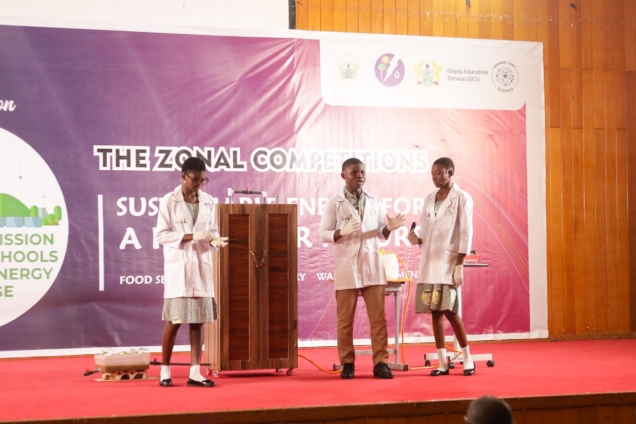
Walewale Senior High Technical School has developed a biogas digester designed to support hydroponic farming while simultaneously generating renewable energy.
The system utilises organic waste to produce biogas, which can be used as a clean energy source, and nutrient-rich slurry to nourish crops grown without soil.
This innovation offers a dual benefit of sustainable waste management and enhanced agricultural productivity, particularly in communities with limited access to conventional farming resources.
The project was showcased at the zonal stage of the 6th edition of the Energy Commission’s Senior High Schools Renewable Energy Challenge, which promotes the creation of practical, eco-friendly solutions to address the nation’s energy and environmental needs.
Latest Stories
-
GIS marks 10th TIME conference, champions improved teaching practices
4 minutes -
BRICS Or Balance? What Ghana’s bid really means
30 minutes -
GPRTU wants full TRAFFITECH-GH implementation to start in 2027
49 minutes -
Mahama announces plans to import electric wheelchairs for PWDs
53 minutes -
KGL U17 Colts 2026: Western beat Prempeh Elite Academy to set up final final with Greater Accra Region
1 hour -
Late Solanke strike salvages 10-man Spurs draw at Man United
1 hour -
Gender Ministry to monitor welfare of Nana Akua Addo’s children amid domestic violence case
1 hour -
Benedict Okyere Yeboah: Ghana’s football problem goes beyond sacking a coach
2 hours -
GPL 2026/27: Darkwah Wiafe’s winner sees All Blacks beat Kotoko
2 hours -
ITF World Tour : Patel Wins Boys’ Singles Final at J100 Accra
2 hours -
Ghana must pursue BRICS partnership if it brings economic benefits – Kpebu
2 hours -
Success and Wright Claims J100 Accra Girls’ Doubles Championship
2 hours -
ITF J100: America’s Wright wins J100 Accra Girls’ Singles Title
2 hours -
Expedition hopes to find aviator Amelia Earhart’s plane on remote island
2 hours -
US seeks changes to rejected $109m health compact with Ghana – Mahama
3 hours