

Audio By Carbonatix
As the global race for gold, lithium and other critical minerals intensifies, scientists are arguing that Africa's greatest competitive advantage may lie not only beneath its soil, but in its ability to understand the geology that formed those resources in the first place.
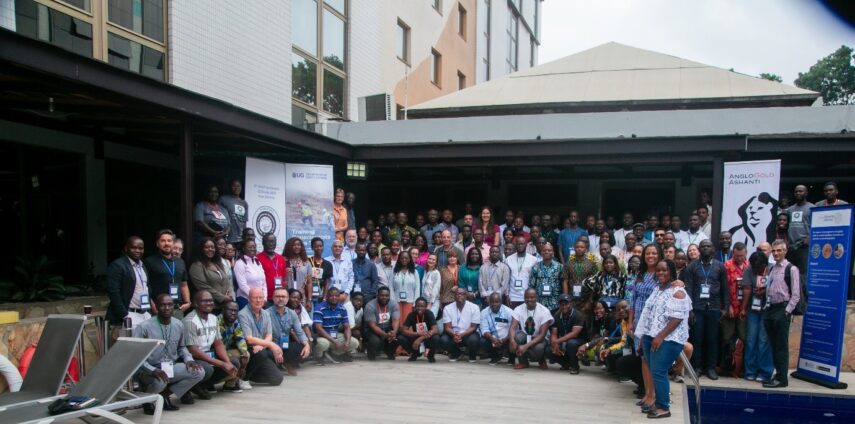
That was the central message from leading earth scientists gathered in Accra for the International Association for Structural Geology and Tectonics (IASGT) conference, Department of Earth Science-University of Ghana, The Centre for exploration targeting-University of Western Australia and Agate Project, Australia where researchers from across the world urged African governments to invest more aggressively in geological research, scientific training and modern exploration technologies.
Their argument goes beyond academic curiosity. Better geological knowledge, they say, can improve mineral exploration, reduce mining risks, strengthen environmental management and position Ghana as a regional centre for geoscience research at a time when demand for critical minerals is reshaping the global economy.
Bringing world-class science to developing countries
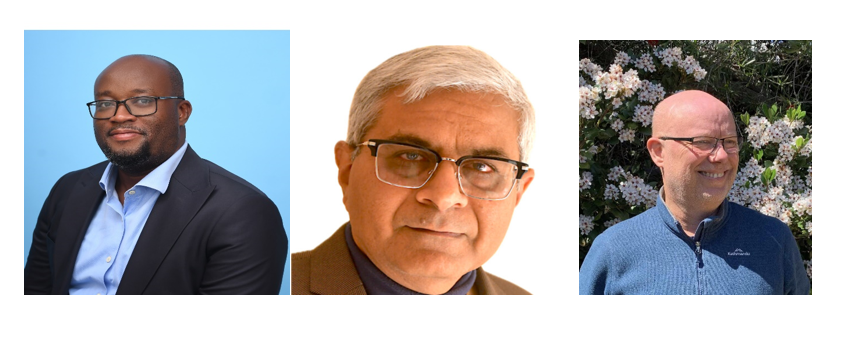
For Prof. Manish Mamtani of the Indian Institute of Technology (IIT) Kharagpur, one of IASGT's priorities is to close the gap between developed and developing countries in structural geology research.
"IASGT brings together people interested in structural geology and tectonics from all over the world. One of our major objectives is to promote structural geology research, particularly in developing countries."
He noted that many international scientific meetings have historically been concentrated in Europe and North America, limiting participation from researchers in Africa, South America and parts of Asia.
"Our observation has been that participation from Africa, India, South America and many developing countries has been relatively low. IASGT is consciously addressing that by bringing internationally recognised scientists together in developing countries so that local scientific communities also benefit."
The strategy reflects a broader shift in global science towards building research capacity where many of the world's future mineral discoveries are expected to occur.
Why structural geology matters
Although artificial intelligence and machine learning are transforming mineral exploration, Prof. Mamtani cautioned that technology cannot replace a solid understanding of geological processes.
"Fieldwork remains extremely important. At the same time, there is increasing use of artificial intelligence and machine learning across geology, including structural geology."
His point resonates strongly with Africa's mining industry. While advanced algorithms can process enormous geological datasets, they still depend on accurate field observations and geological interpretation. In mineral exploration, AI is only as effective as the quality of the underlying science.
Ghana's opportunity
For the University of Ghana's Head of the Department of Earth Science, Prof. Prince Ofori Amponsah, hosting the IASGT conference represents far more than an academic gathering.
It is, he argues, an opportunity to strengthen Ghana's scientific capacity and deepen collaboration between universities, industry and international research institutions.
"As I took over as Head of Department, aligning with the University's Strategic Goal Two on impactful research, I thought this was one of the most important events we could bring to Ghana."
Established in 2022, IASGT is regarded as one of the world's leading platforms for structural geology and tectonics research.
"Having this conference in Ghana is quite significant because it brings together great minds in structural geology from across the world."
For a country whose economy remains heavily dependent on mining, the conference arrives at a critical time. Ghana continues to expand gold production while positioning itself to exploit emerging critical minerals such as lithium.
According to Prof. Amponsah, structural geology sits at the centre of that ambition.
"Structural geology underpins virtually every natural resource we have—whether gold, base metals or oil. Understanding rock deformation and geological structures is fundamental for geologists, geoscientists and engineers because it helps explain how these resources are formed and trapped."
He believes strengthening expertise in structural geology will improve exploration, resource development and the long-term sustainability of Ghana's mining sector.
"This conference is about capacity building. It is opening minds not only within academia but also across industry."
Industry backs scientific research
One notable feature of the conference was the strong participation of Ghana's mining industry.
Companies including Asante Gold Corporation, AngloGold Ashanti's Obuasi Mine and Turaco Gold supported the event, reflecting growing recognition that scientific research increasingly drives exploration success.
The collaboration also highlights a wider industry trend. As easily accessible mineral deposits become scarcer, mining companies are relying more heavily on advanced geological models, structural analysis and data science to identify concealed ore bodies.
Positioning Ghana as a regional research hub
Prof. Ofori Amponsah said partnerships with institutions such as the Centre for Exploration Targeting at the University of Western Australia demonstrate the department's growing international profile.
His ambition is to position Ghana as one of Africa's leading centres for geoscience research.
"We want the world to know that if they want to understand geoscience, how commodities are formed and how mineral systems work, they should look to the Department of Earth Science."
If sustained, such collaborations could help reverse the long-standing trend of African scientists seeking specialized training abroad by bringing world-class research networks directly to Ghana. Among the conference speakers was Prof. Mark Jessell of the University of Western Australia, who explained why structural geology remains fundamental to mineral exploration and geological research.
Reading the rocks beneath Africa
Among the conference speakers was Prof. Mark Jessell of the University of Western Australia, who explained why structural geology remains fundamental to mineral exploration.
"Structural geology helps us understand why the rocks we see at the surface are there today."
He explained that Earth's rocks have been deformed over geological time, exposing formations that were once buried deep beneath the surface.
In West Africa, those geological structures are particularly important because they control how mineral-rich fluids move through the Earth's crust.
"In many parts of West Africa, and especially in Ghana, these faults provide pathways for fluids rising from deep within the Earth. Those fluids transport gold, lithium and other critical minerals."
Understanding these structures, he said, allows geologists to predict where economically valuable mineral deposits are most likely to occur.
Beyond exploration, structural geology also improves mine design, groundwater management and environmental planning by helping engineers understand hidden faults and rock stability.
The future lies at the intersection of geology and AI
Prof. Jessell believes the next transformation in mining will come from closer collaboration between geologists, computer scientists and industry.
"Collaboration with industry is important, but collaboration between geologists and computer scientists is equally important."
While computer scientists possess expertise in artificial intelligence, geologists contribute the geological understanding required to interpret complex Earth systems.
"Expanding partnerships between universities, industry, geologists and computer scientists is very much the future of the discipline. That collaboration will strengthen mining and help develop the next generation of industry leaders."
For Ghana, which is increasingly investing in digital mining technologies, this convergence could improve exploration efficiency while helping universities produce graduates equipped for a rapidly evolving industry.
Beyond mining: protecting people and infrastructure
The conference also highlighted the broader societal value of Earth science.
Prof. Tolulope Olugboji of the University of Rochester argued that geophysics is essential not only for mineral exploration but also for disaster preparedness and infrastructure planning.
"The value of science, the value of geophysics and the value of Earth sciences is that they help answer important questions."
Although Ghana experiences fewer earthquakes than East Africa or other tectonically active regions, it lies close to important fault systems and has experienced damaging earthquakes in the past.
"Geophysicists like myself try to understand the structure of the Earth and how the Earth moves. Fundamentally, the Earth moves and slips in ways that can become dangerous when tectonic plates interact, creating earthquakes."
He called on governments to invest more in scientific instruments, monitoring networks and research capacity—not only to improve hazard preparedness but also to support mineral exploration and national development.
A chance for Africa to lead
For conference participants, the discussions reflected a wider shift taking place across Africa's mining sector.
Daniel Apau of Asante Gold described the gathering as an important platform for knowledge exchange.
"This is one of the conferences bringing strong minds together in the industry, not just in Ghana but globally. We have had good discussions on cutting-edge technologies being used in structural analysis. For me, it is excellent capacity building, and what I have witnessed so far has been very insightful."
He believes the continent still has enormous exploration potential.
"The more you explore using knowledge, the more you find. In our sub-region there is a good opportunity for us to continue exploring, discover more and build our countries through stronger mineral reserves."
The bigger picture
The conference comes at a pivotal moment for Ghana and Africa.
As governments seek to capture greater value from their mineral wealth rather than simply exporting raw materials, investment in geological science is emerging as a strategic economic asset. Better mapping of the subsurface can reduce exploration risk, attract investment, improve environmental stewardship and strengthen domestic technical expertise.
For Ghana, already Africa's leading gold producer and an emerging player in critical minerals, becoming a regional centre for geoscience research could prove as valuable as the resources beneath its ground. The consensus from Accra was clear: Africa's mining future will depend not only on what lies underground, but on the scientific knowledge developed above it.
Latest Stories
-
Hawa Koomson pledges experienced and mature leadership of NPP women’s wing
11 minutes -
Young woman found dead at Kasoa Peace Town
44 minutes -
Livestream: The Law examines lawful arrest in Ghana
1 hour -
Mahama urges African governments to treat healthcare as an investment, not budget cost
2 hours -
Bawumia congratulates John Boadu and new NPP executives, pledges support ahead of 2028
2 hours -
‘No talent should be left out’ – Bawumia pledges inclusive NPP campaign for 2028
2 hours -
Prof. Mike Oquaye recounts how he blocked Special Prosecutor’s attempt to arrest Bawku Central MP
2 hours -
Make health sovereignty a priority for Africa – Mahama
2 hours -
Dorimon Naa, Wa West DCE lead massive clean-up exercise; threaten sanctions against recalcitrant residents
3 hours -
Photos from Adom FM Y2K Jam
3 hours -
Praye Tiatia steals the show at Adom FM Y2K Jam [Watch]
3 hours -
Boakye Agyarko congratulates John Boadu, pledges support for NPP leadership
3 hours -
Antwi HiMight thrills fans with Antwi ne Antwi hits at Adom FM’s Y2K Jam [Video]
3 hours -
Amb. Edward Boateng congratulates Boadu, Kodua on election wins
4 hours -
John Boadu pledges to rebuild NPP from grassroots and restore ‘winning machinery’
4 hours