

Audio By Carbonatix
A few weeks ago, the President of Ghana, Nana Akufo-Addo met with leaders of the Trades Union Congress (TUC) and expressed a very tangible concern.
These were the early days of the Covid-19 outbreak in Ghana and there was a call by a large section of Ghanaians for a lockdown.
He mentioned that there were a lot of factors to consider before taking such a decision, and until all boxes are checked, it will be difficult, almost impossible to carry out such an action.
He highlighted how the vulnerable in the society would be his focus and what mitigating efforts needed to be put in place before proceeding.
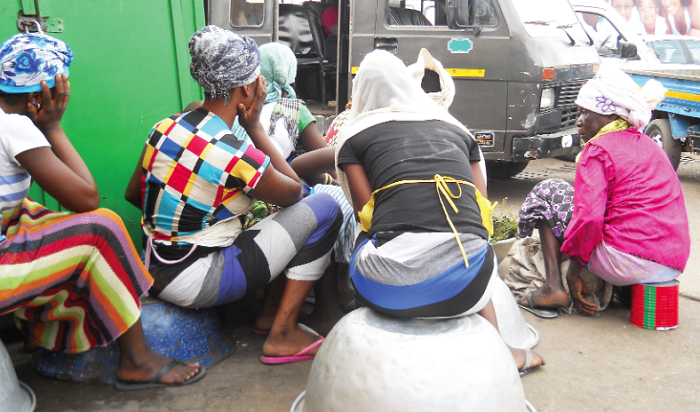
Fast forward, a partial lockdown was put in place, and government, through the Ministry of Gender, Children and Social Protection announced the measures taken for head porters in various parts of the capital to survive during the lockdown period.
Although we have chalked some successes with this, in this era where social distancing is the new order of survival, one can clearly observe that more needs to be done so we do not expose the head porters to harm in the process of helping them.
In a discussion with a friend, this issue came up, and there were some interesting opinions shared.
Currently, all schools are on vacation. Is it, therefore, possible to house them in the boarding houses of some schools?
In such an environment, the facilitators can actually enforce social distancing when sharing beds and the bath houses and washrooms are by far better than the conditions on the streets.
If the above is implemented, feeding becomes easier and more coordinated. The dining halls of these schools will be opened, and those housed will be fed in shifts.
The empty classrooms can be used for classes so these young girls can be trained in basket weaving, pottery, bead making, basic English and arithmetic.
Again, government agencies will be available to help them set up in their home towns when all this is over, and get them a ready market for the skills taught.
Some of the schools are also close to markets and so for those who prefer to go and work, they have the convenience to do so, still report back before bed time and check in regularly.
The Ministry of Health with support from the Ghana Health Service can also set up a health tent that will do random tests and monitor those in the camps.
Hopefully, by the time everything returns to normal, they would have learnt a skill and will be ready to relocate to their home regions and work with these skills, using their contacts in government to market their products and reduce the number of people on the streets.
Then, finally, these schools can be fumigated and students will be back on campus.
Business as usual!
Latest Stories
-
Kwaku Azar writes: A-G vs OSP
9 minutes -
Mfantsipim–Adisadel rivalry built excellence, not division – Sam Jonah
34 minutes -
Vice President launches Mfantsipim’s 150 years of shaping Ghana’s greatest mind
51 minutes -
I assure Otumfuo, Mahama will join him to commission KNUST Teaching Hospital by end of this year – Haruna Iddrisu
2 hours -
Gov’t to roll out free special education for persons with disabilities from July 1 – Education Minister
2 hours -
“We used it to test our officiating officials’ readiness” – Bawah Fuseini after CAA Athletics event
2 hours -
Volleyball emerges as Ghana’s fastest rising sport
2 hours -
National Sports Fund needs strong leadership from the top – Administrator David Wuaku
3 hours -
JoySports Exclusive: Steve McLaren in talks with GFA after expressing interest in Black Stars job
3 hours -
Fire guts auto parts warehouse at Bubuashie, one fire officer injured
3 hours -
I owe my victory to coach Ofori Asare – Allotey after winning WBA Africa Gold Super Flyweight belt
3 hours -
Church of Pentecost supports over 2,000 BECE candidates in Obuasi with career guidance seminar
5 hours -
Brandon Asante and Coventry all but promoted to Premier League despite Sheffield Wednesday draw
5 hours -
GPL 2025/26: Late Kwartemaa strike downs Hearts in Tema
5 hours -
Ghana Faces Sierra Leone Moment as Prosecutorial Powers come under strain
5 hours