


Audio By Carbonatix
The Volta Regional Minister, James Gunu, has called on media professionals, technology stakeholders, and the government to collaborate in ensuring that the rapid advancement of Artificial Intelligence (AI) strengthens rather than undermines press freedom and democratic values in Ghana.
Delivering the keynote address as Guest of Honour at the World Press Freedom Day 2025 commemoration held at the Ho Press Centre, Mr. Gunu underscored the critical importance of regulating AI’s integration into journalism with transparency, ethical responsibility, and accountability at its core.
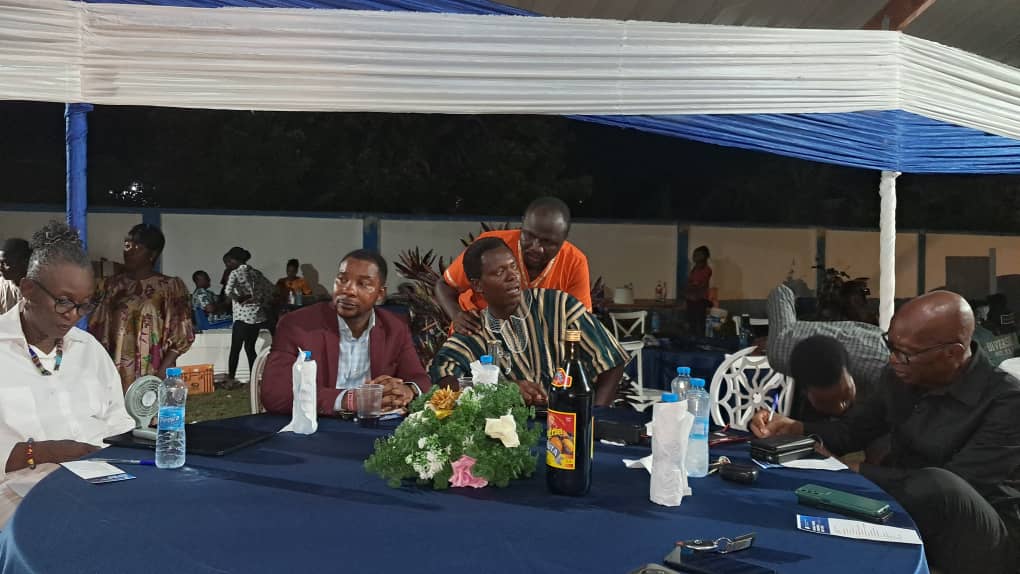
The event, organised by the Ghana Journalists Association (GJA), Volta/Oti Chapter, brought together media practitioners, government officials, civil society actors, and journalism students.
This year’s global theme, “Reporting in the Brave New World: The Impact of Artificial Intelligence on Press Freedom and the Media”, inspired deep reflection on the opportunities and challenges presented by technological innovation in the media space.
AI: A double-edged sword for journalism
In his address, Mr. Gunu commended the GJA for its unwavering dedication to media excellence and recognised the indispensable role of journalists in upholding democracy.
“It is both an honour and a privilege to stand before you today,” he stated. “Your steadfast commitment to press freedom in our region is admirable.”
He acknowledged that AI has introduced transformational capabilities to the media landscape. From analysing vast datasets to identifying misinformation, he highlighted how AI can enhance investigative journalism, democratise access to information, and give voice to the voiceless.
However, he also cautioned against the dangers of misused AI. He cited risks such as deepfakes, algorithmic bias, and over-automation in content moderation as potential threats to editorial independence and public trust.
“In this brave new world, press freedom faces dual threats — not only the traditional challenges of censorship but also the subtle, insidious dangers posed by unchecked technology,” he warned. “If unregulated, AI could be wielded to suppress rather than empower and to obscure rather than enlighten.”

A three-pronged framework for responsible AI integration
To address these evolving threats, Mr. Gunu proposed a three-point framework to guide the ethical incorporation of AI in journalism:
- Transparency – AI tools employed in newsrooms must be subject to scrutiny to ensure they are free from bias and errors.
- Ethical Guidelines – Clear, media-specific ethical standards must be established for the use of AI in content creation and curation.
- Journalist Protection – Legal and institutional mechanisms must be updated to protect media workers from both human and algorithmic threats.
He noted that these priorities align with the government’s wider digital transformation agenda, which is already underway.
Government commitment to digital inclusion in the Media
Outlining tangible efforts, the minister detailed several initiatives spearheaded by the government and its partners:
- Investment in Digital Infrastructure to ensure fair access to digital tools and internet connectivity for journalists in both urban and rural communities.
- Capacity-Building Programmes to equip media practitioners with the skills required to use AI responsibly and effectively.
- Public–Private Partnerships with technology firms to jointly develop tools that combat misinformation while preserving editorial freedom.
- Youth Engagement Initiatives to empower young journalists and tech innovators to champion ethical AI adoption in the media sector.
“These interventions reflect our broader commitment to accountability and social justice,” he affirmed. “As we embrace AI, we must also reinforce mechanisms that hold power to account, tackle corruption, and uplift marginalised voices.”
A rallying call
In his concluding remarks, Mr. Gunu issued a passionate call to action:
“Let us recommit ourselves to ensuring that AI serves as a beacon of truth, not a tool of manipulation. Let us celebrate the bravery of journalists who, even in the age of algorithms, continue to be the guardians of democracy.”
The event provided a timely platform to contemplate the evolving function of the media and the urgent need to protect its freedom in an era increasingly defined by automation and digital transformation.
Latest Stories
-
Ghana is tackling cybercrime head-on, not becoming a hub for it – CSA
55 seconds -
We’ll deliver without fear or favour – New EC Deputy Chairpersons assure Mahama
1 minute -
Six Ukrainian energy sites hit by Russia since Trump announced ceasefire, Zelensky says
20 minutes -
Government directs GTEC to prepare public universities for weekend reopening as it intensifies efforts to end GAUA strike
20 minutes -
Multimedia Group’s Raymond Nii Doodo Larbie called to the Ghana Bar, seeks to combine HR practice with law
24 minutes -
Credible elections are the cornerstone of democracy – New Deputy EC Chairperson
26 minutes -
Mahama charges new EC deputies to put national interest above political loyalties
31 minutes -
Mahama urges EC to strengthen electoral technology, inclusion and professionalism
32 minutes -
Fridges in French supermarkets hit by cyber attack
32 minutes -
Evangelism or collection in God’s name? The plight of Ghana’s captive passengers
36 minutes -
‘I don’t expect preferential treatment for me, my party or gov’t’ – Mahama to new EC deputies
53 minutes -
Mahama tasks new EC Deputy Chairpersons to protect electoral integrity
54 minutes -
Police arrest officer after shooting injures 2 at Ritz Junction
55 minutes -
‘Delete, retract, apologise’ – Agyinasare urges Ghanaians to take responsibility for misinformation
55 minutes -
Saudi minister vows ‘serious response’ to Houthi attacks on airports
1 hour