

Audio By Carbonatix
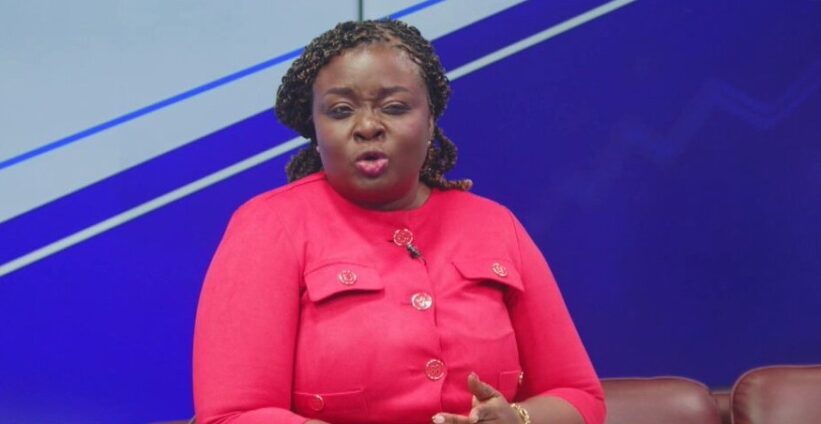
An economist at the University of Ghana Business School (UGBS), Professor Agyapomaa Gyeke-Dako, has called on the government to use the 2026 Mid-Year Budget Review to build on Ghana's recent macroeconomic gains by investing more in agriculture, local manufacturing and other productive sectors that can create jobs.
Speaking on Joy FM's Super Morning Show on Wednesday, July 23, Prof Gyeke-Dako said the country's key economic indicators suggest that the government's economic reset is beginning to yield results.
"It appears to me that there has been a deliberate reset and the macro-critical variables are working," she said.
According to her, Ghana's economy grew by 6.4 per cent in the first quarter of 2026, up from 6.2 per cent during the same period last year, demonstrating resilience despite global economic pressures.
"You look at growth; the economy has expanded by 6.4% in quarter one, and that shows a clear sign of resilience, especially if you compare it to the 6.2% of last year," she noted.
Prof Gyeke-Dako said the growth was not driven solely by the oil sector, pointing out that non-oil growth had also improved.
"I believe this would not just be an oil story because if you look at non-oil growth, that has expanded as well, and this momentum obviously positions the country to meet its full-year growth projections, if not really exceed that," she said.
She attributed the strong performance to growth in manufacturing, the extractive industry and the services sector, particularly information and communication technology (ICT).
The economist also expressed confidence in the country's inflation outlook, noting that inflation remains below the Bank of Ghana's medium-term target range of 6 to 10 per cent.
She observed that although inflation had risen slightly from earlier levels to about 5.8 per cent, it remains manageable.
READ ALSO: Finance Minister to present 2026 Mid-Year Budget Review today
"We are seeing an uptick in inflation a bit to about 5.8%, still below the target, so that's not too bad," she said.
Prof Gyeke-Dako commended the Bank of Ghana for maintaining a tight monetary policy, saying the decision to keep the policy rate unchanged would help anchor inflation expectations.
"I see the central bank carrying out its aggressive policies. Even yesterday, we saw that they had maintained the policy rate just to ensure that inflationary expectations are held low."
She acknowledged that geopolitical tensions in the Middle East could increase oil prices and place upward pressure on transport costs and inflation but said Ghana remains in a relatively comfortable position.
"We do have some pressures coming from the demand side, especially because of the Middle East conflicts... but I think we can comfort ourselves by saying that we are below the medium-run target of 6 to 10%," she added.
On the fiscal front, Prof. Gyeke-Dako said the government had made significant progress in restoring stability through prudent fiscal management.
"You look at the fiscal side... we've managed to consolidate nicely. We are on target."
She said the government's commitment to maintaining a primary surplus had helped improve the country's fiscal position, while debt levels had declined substantially from previous highs.
The economist also noted that Ghana had strengthened its foreign reserves despite recent pressures on the exchange rate and the energy sector.
"So we are not doing badly, if you ask me. We are not doing badly," she said.
Despite the positive outlook, Prof. Gyeke-Dako urged the government to move beyond stabilisation and focus on policies that will drive sustainable economic expansion.
"What we need to do is to move from the baseline stabilisation that we are experiencing into some sustainable economic expansion."
She called on the government to channel more capital expenditure into sectors capable of generating employment and boosting productivity.
"Our focus would have to be on directing the remaining capital expenditure into high-yielding productive sectors."
She identified agriculture as one of the priority areas, noting that the sector had underperformed during the first half of the year.
"We should focus our attention on the agriculture sector because we have seen that for the first half of the year, agriculture hasn't performed so well."
Prof Gyeke-Dako also advocated increased investment in value addition and local manufacturing, arguing that these labour-intensive sectors offer the greatest potential for job creation.
"If we want to create jobs, then these are more labour-intensive sectors, and if we focus our attention on these sectors, growth would translate into jobs."
Looking ahead to the Mid-Year Budget Review, the economist said she expects the finance minister to provide updated economic projections reflecting the country's improved performance during the first half of the year.
"I expect that the finance minister would formally update the key targets and let us know whether we are on target or we are even going to be exceeding our targets."
She also wants the government to review its GDP and non-oil growth projections if current trends continue.
Beyond updating the outlook, Prof. Gyeke-Dako expects the government to maintain fiscal discipline while protecting businesses from additional tax burdens.
"I expect that the government would reaffirm its commitment to no new tax rates so that there will be some stability for the business community."
However, she said that maintaining the no-new-tax policy should be accompanied by stronger domestic revenue mobilisation.
"We should focus on aggressive domestic revenue assurance. We should try and meet our revenue target so that even if we have to spend more, we would still be within the fiscal deficit targets that we have set for ourselves."
Latest Stories
-
Trump says he is considering firing US ambassador to Greece
4 hours -
Man City bananas ‘brought fun back’, says Varadi
4 hours -
Meta releases Muse Wonder AI models to challenge Anthropic and OpenAI
5 hours -
Daily Insight for CEOs: The CEO as Chief Decision Maker
5 hours -
Burnham had formal meeting with Man City chair while mayor
5 hours -
Is Ghana producing too many lawyers? What is the best lawyer-to-citizen ratio?
5 hours -
NDC sinking Ghana’s democracy with Emelia Agbenyo’s appointment – Miracles Aboagye
5 hours -
Seedorf back in football as Corinthians head coach
5 hours -
Hincapié and Zubimendi injured in post-match training session
5 hours -
Fridges in French supermarkets hit by cyberattack
5 hours -
Qantas flight grounded after bedbug outbreak
6 hours -
Reality Zone with Vicky Wireko: International Day of the Girl, shaping today’s girl for tomorrow’s future – ZONTA Clubs lead the way
6 hours -
Global health must be led by countries, not designed for them – Mintah Akandoh
7 hours -
Mahama honoured at 2026 World Health Summit in Berlin for global health leadership
7 hours -
Breast cancer is not a death sentence – Besease Kontire Obaapanin, Magmina Foundation lead awareness campaign
7 hours