

Audio By Carbonatix
Presidential Advisor on the 24-Hour Economy policy, Goosie Tanoh, has provided a comprehensive insight into 'Grow 24', a cornerstone of Ghana’s ambitious eight-pronged 24-Hour Economy strategy aimed at modernising and expanding the nation’s agricultural sector.
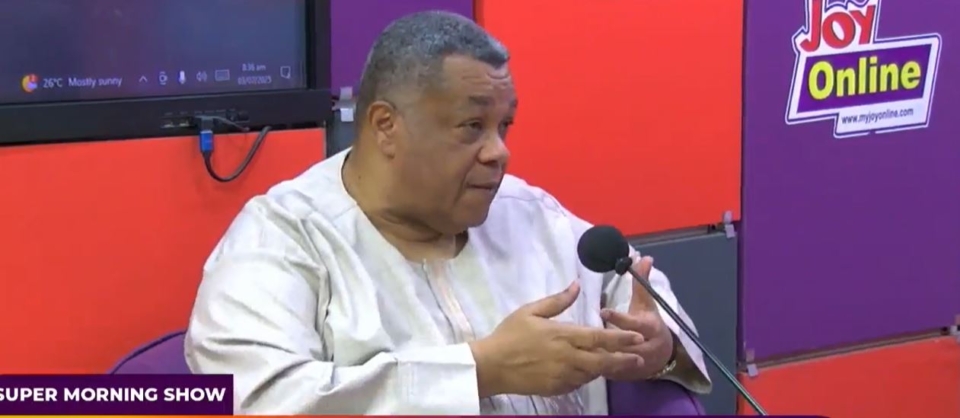
Speaking on Joy FM's Super Morning Show today, Mr Tanoh explained that 'Grow 24' seeks to spearhead agricultural transformation through the application of advanced technology, climate-smart practices, and enhanced infrastructure, thereby enabling continuous, round-the-clock production and value addition.
“Farmers face numerous challenges — limited access to fertiliser, mechanisation shortfalls, poor farm maintenance, and insufficient extension services,” he noted. "'Grow 24' is designed to overcome these barriers."
Following extensive consultations with farmers, industrial stakeholders, the private sector, and government agencies, it became clear that certain foundational issues must be addressed to ensure agriculture thrives and attracts long-term investment.
“Farmers made it clear: they require secure land titles, dependable irrigation to facilitate year-round cultivation — particularly of vegetables and cereals — digital connectivity for seamless access to extension services, and quality road networks to transport produce efficiently to markets,” Mr Tanoh emphasised.
He underscored the importance of logistical improvements in reducing post-harvest losses and transport costs, stressing that these are vital to de-risking agriculture and attracting private investment.
"Grow24 is built around three pivotal pillars: transforming production through modern techniques to increase yields; enhancing supply chain and market efficiency via improved transport, logistics, and storage; and developing human capital by ensuring farmers and workers are highly skilled, disciplined, and work-ready," he said.
“Without discipline and a robust work ethic, we cannot compete with dynamic Asian economies. Therefore, skills training and mindset development are paramount,” Mr Tanoh stated.
To entice greater participation, particularly among the youth, he highlighted essential incentives such as tax relief, targeted investment support for specific value chains, affordable credit, equity financing, and access to skilled labour.
Addressing the needs of industrial farmers, Mr Tanoh said, “What do I seek as a farmer? Lower tax burdens, incentives to invest in promising value chains, affordable loans, equity injections to expand my enterprise, and long-term financing. Additionally, I require skilled, capable workers alongside reliable infrastructure — land, energy, and water.”
Central to 'Grow 24'’s rollout is the Volta Lake corridor, described as the prime corridor for agricultural expansion and transformation. “On either side of the lake stretches approximately 10 kilometres, covering 8 million hectares multiplied by 2.4, it's about 20 million acres of land. After accounting for forest reserves, about 4 million hectares of arable land remain — a vast opportunity for agricultural development.”
The strategy involves collaborating with existing farmers to establish agro-ecological parks, integrating smallholder farmers into cooperative models anchored by experienced large-scale “anchor” farmers. This framework is designed to harness economies of scale, facilitate knowledge exchange, and bolster resilience.
Mr Tanoh outlined a model whereby private-sector farmers operate mechanised farms cultivating diverse crops, supported by investors who provide mechanisation, extension, and technological assistance.
The Ghana Infrastructure Fund (GIF), acting as the special purpose vehicle managing land concessions from the Volta River Authority (VRA), will deliver the essential energy and irrigation infrastructure to underpin this ecosystem.
This innovative private service-centre model reduces capital expenditure for farmers by allowing them to rent machinery and services on equitable terms, thereby lowering investment risks and barriers to entry.
“Anchor farmers will also serve as conduits for input credit to the smaller farmers integrated within their operations,” Mr Tanoh explained. “Smallholders produce 90% of our food and cannot be overlooked. Our objective is to upgrade farming infrastructure and technology. Through anchor farmers, we formalise and integrate smallholders into efficient crop systems, enhance their skills and capacities, and organise them to facilitate easier access to finance.”
Mr Tanoh reiterated that Grow24 transcends being a mere agricultural initiative; it is a transformative economic programme designed to create jobs, ensure food security, boost exports, and raise incomes for both smallholder and commercial farmers.
By aligning infrastructure, finance, and policy, Grow24 will unlock the full potential of Ghana’s agricultural sector and position it to compete confidently on the global stage.
Latest Stories
-
Health professionals urged to translate medical knowledge into practice to save mothers
1 minute -
Conflicts among care providers linked to maternal, neonatal deaths – Expert
2 hours -
GIS marks 10th TIME conference, champions improved teaching practices
2 hours -
BRICS Or Balance? What Ghana’s bid really means
2 hours -
GPRTU wants full TRAFFITECH-GH implementation to start in 2027
2 hours -
Mahama announces plans to import electric wheelchairs for PWDs
3 hours -
KGL U17 Colts 2026: Western beat Prempeh Elite Academy to set up final final with Greater Accra Region
3 hours -
Late Solanke strike salvages 10-man Spurs draw at Man United
3 hours -
Gender Ministry to monitor welfare of Nana Akua Addo’s children amid domestic violence case
3 hours -
Benedict Okyere Yeboah: Ghana’s football problem goes beyond sacking a coach
3 hours -
GPL 2026/27: Darkwah Wiafe’s winner sees All Blacks beat Kotoko
3 hours -
ITF World Tour : Patel Wins Boys’ Singles Final at J100 Accra
4 hours -
Ghana must pursue BRICS partnership if it brings economic benefits – Kpebu
4 hours -
Success and Wright Claims J100 Accra Girls’ Doubles Championship
4 hours -
ITF J100: America’s Wright wins J100 Accra Girls’ Singles Title
4 hours