

Audio By Carbonatix
Over 521,000 traditional and alternative medical practitioners operating in the country are unregistered and unlicensed, the Traditional Medicine Practice Council (TMPC) has revealed.
The figure includes about 321,000 unregistered or unlicenced traditional medicine practitioners and over 200,000 complementary alternative medical practitioners.
The practitioners and institutions who are operating illegally constitute more than 80 per cent of the local traditional and alternative medicine industry.
The industry comprises health shops that trade in traditional and alternative medicines, spas, wellness centres such as gyms, massage parlours, healing camps, psychic healers, herbalists, medical herbalists, training institutes, homoeopathic clinics, chiropractic clinics, acupuncture clinics and centres, Ayurvedic clinics, naturopathic clinics organic shops etc as regulated by section 38 of Act 575 of the Traditional Medicine Practice Act 2000 as per ministerial policy and administrative guidelines in the regulations of complementary/alternative medicine in 2010.
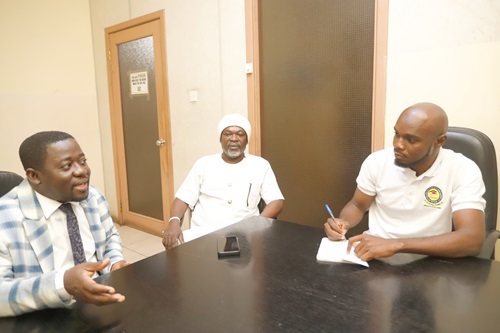
The Registrar and Chief Executive Officer of the TMPC, Dr Michael Kyeremateng, indicated to the
Daily Graphic in an exclusive interview in Accra last Friday that out of about 95,000 traditional and alternative medicine practitioners and institutions captured in the council’s database, just about 15 to 20 per cent of them were registered, licensed and in good standing to operate in the country.
The council was birthed by the Traditional Medicine Practice Act, of 2000 (Act 575) to regulate the practice of traditional medicine, to register practitioners and license practices, to regulate the preparation and sale of herbal medicines and to provide for related matters.
It was set up in 2010, the year the Act became operational.
Section 9(1) of Act 575 states that: “A person shall not operate or own premises as a practitioner or produce herbal medicine for sale unless that person is registered in accordance with this Act”.
The council has since been the sole regulator of traditional and alternative medical practice in the country.
Its scope of authority stretches across naturopathy, a system of alternative medicine based on the theory that diseases can be successfully treated or prevented without the use of drugs; homoeopathy, a medical system based on the belief that the body can cure itself; cardiopathy, which involves diagnosing and treating musculoskeletal issues through spinal adjustments; acupuncture, a traditional Chinese medical practice most commonly used to treat pain; psychic healers; traditional birth attendants, among others.
The regulatory authority of the council includes the power to certify herbal medicine, license gym operators and instructors, and license the various treatment centres.
Dr Kyeremateng said the alarming rate at which unauthorised practitioners flooded the airwaves in particular to advertise their institutions and products was even more concerning.
“Currently, in Ghana, we know that we have over 60 to 70 per cent of our population accessing traditional and alternative medical centres for primary health care. Issues escalate before they move on to any other allopathic centres for emergencies.
You realise that the life of the average Ghanaian is at risk because of so many mushroom clinics and hospitals, and practitioners occupying our airwaves without the requisite licence and certification,” he said.
Dr Kyeremateng added that the uncontrolled springing up of unlicensed practitioners posed “a national security threat because it puts the lives of the many Ghanaians who seek medical care from these mushroom premises and practitioners at risk”.
The Registrar said the council had started a national campaign to clamp down on unauthorised operators.
Over the past two weeks alone, he said, the council had clamped down on 75 operators within the Greater Accra and Eastern regions for non-compliance with regulatory requirements.
He said the council would begin to publish the list of institutions and practitioners in good standing in the dailies and on its website as part of measures to alert the public about safe practising individuals and institutions in the traditional and alternative industries.
Advocacy, arrests
Dr Kyeremateng said the TMPC had commenced an advocacy campaign to sanitise the system, and to streamline the services in collaboration with the media for the public to be aware of the dangers of seeking medical attention at unregistered centres.
“We have taken steps to do the monthly publication of all certified practitioners and their premises on our website and in major newspapers to inform Ghanaians so that before they buy any product or enter any facility, they should make reference to www.tmpcghana.com or the newspapers that will be doing the publication of these certified practitioners and their premises,” he said.
He said a recent random enforcement exercise conducted by the council revealed that more than 1,000 of them were operating in the Greater Accra Region alone without licensing from the Ministry of Health and the TMPC.
He added that the menace was actually rife in all 16 regions of the country.
Dr Kyeremateng indicated that the council had since 2020 arrested 121 unregistered practitioners across the country, and had over 50 cases currently pending in court within the same period.
He added that the council would also introduce a special identity digital licence and QR code for the public as part of measures to help the public identify the certified operators and practitioners.
Dr Kyeremateng explained that “all practitioners, all attendants are not eligible to practise as medical herbalists, medical homoeopaths, medical chiropractors without a certified licence from the Ministry of Health and the TMPC”.
Latest Stories
-
Oil prices climb as traders weigh Saudi supply risk, Russian diesel flow
14 minutes -
Zimbabwean author denies using AI to write award-winning story
23 minutes -
Bank of America hit with $1.2bn fine for money laundering failings
32 minutes -
Robot seized by German police after allegedly groping teenage girl
43 minutes -
Subject EC appointment to ‘Akufo-Addo test’ – Kwapong
53 minutes -
English football’s independent regulator would quit over Man City interference
1 hour -
Anthropic seeks rehearing of case over Pentagon’s security risk branding
1 hour -
Torrential rains in Libya’s Tripoli kill two
2 hours -
Guinea-Bissau says it has not approved hepatitis B vaccine trial in newborns
2 hours -
NDC Deputy National Organizer Aspirant Hamza Umar targets grassroots mobilisation
2 hours -
Partisan appointment cycle will persist without meaningful reforms – Osae-Kwapong
3 hours -
‘This cycle is not going to be broken any soon’ – Osae-Kwapong on partisan appointments
3 hours -
Partisan appointments won’t help restore trust in EC – Osae-Kwapong
4 hours -
Villarreal fight back to beat Napoli and end losing run
4 hours -
Tresoldi nets hat-trick as Club Brugge win Inter thriller
4 hours