

Audio By Carbonatix
The General Agricultural Workers' Union (GAWU) wants government to implement the Obaatanpa policy surgically, to the target group and on time in order to achieve its full objectives.
One of the cardinal focus of the policy is to attract educated youth into agriculture. GAWU says though the policy is a brilliant one, the agriculture sector can only benefit if a market is created for food production, whilst challenges minimized drastically.
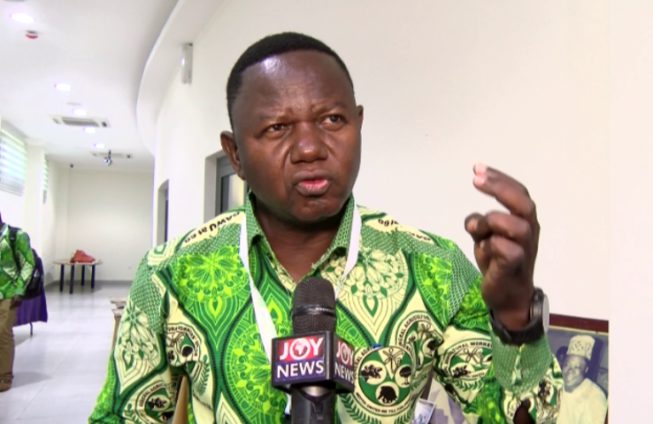
Edward Kareweh, the General Secretary holds that there should be some arrangements to move the produce from the farm to the consumer.
“We must build strong linkages between the production and the market which should not be the concern of the youth, the young men and women who would be in agriculture that should not be their concern. Their concern should be to produce.
When you produce there is an arrangement that will allow your produce to be taken off your farm without you now going to look for a marketer to come and take it from you and that will be a good inducement,” he said.
According to him, this is to assure farmers of their money.
“This can guarantee that they will not lose their capital at the end of production and their effort and the denial and the discomfort that they will go through will not come to waste at the end of production when they fail to get market.” he added.
About Obaatanpa Programme
The Ghana CARES (Obaatan pa) programme is an unprecedented, bold and audacious GHȻ100 billion post COVID programme to stabilize, revitalize and transform Ghana’s economy to create jobs and prosperity for Ghanaians over a three-year period.
It is sequenced in two phases: a Stabilization Phase that is running from July to the end of the year (2020); and a medium-term Revitalization Phase from 2021-2023.
The first phase of the programme builds on the actions already taken by Government under the Coronavirus Alleviation Programme, including stabilization of the economy, ensuring food security, support businesses and workers, strengthening the health system and passage of legislations to facilitate quick economic recovery.
The second phase aims at revitalizing and transforming the economy from 2021-2023 will focus on supporting commercial farming and attracting educated youth into agriculture, building Ghana’s light manufacturing sector, developing engineering/machine tools and ICT/digital economy, developing Ghana’s housing and construction industry, reviewing and optimizing the implementation of Government flagships and key programmes among others.
Latest Stories
-
Woman killed, 14 injured after vehicles collide on Accra–Kumasi highway
9 minutes -
Regulatory burden threatens SME growth, job creation – ILAPI study
10 minutes -
22-year-old man sentenced to 10 years for robbery in Kumasi
13 minutes -
EOCO inaugurates new audit committee to strengthen financial oversight
16 minutes -
Mahama pledges to expand STEM education, complete stalled UTAS laboratory
18 minutes -
Mahama urges Ghanaians to embrace home visits under Free Primary Healthcare programme
23 minutes -
Stable cedi, falling inflation creating room for stronger credit growth – BoG Governor
27 minutes -
Tourism Minister orders removal of illegal structures around forts and castles
31 minutes -
Education Committee probes financial, procurement practices in Colleges of Education
37 minutes -
Today’s Front pages: Friday, August 14, 2026
1 hour -
Why ‘Black Box’ AI models fail governance standards in banking
3 hours -
Academic City and partners issue white paper for stronger digital accountability as Ghana loses GH¢19.3m to cybercrime
3 hours -
Blank passports, visa stickers found in office of Ghana Embassy IT officer accused of concealing digital records
3 hours -
Africa’s youth are looking for jobs: The food system may hold the answer
3 hours -
Fidelity Bank advocates stronger systems to unlock Ghana’s trade and enterprise potential
4 hours