

Audio By Carbonatix
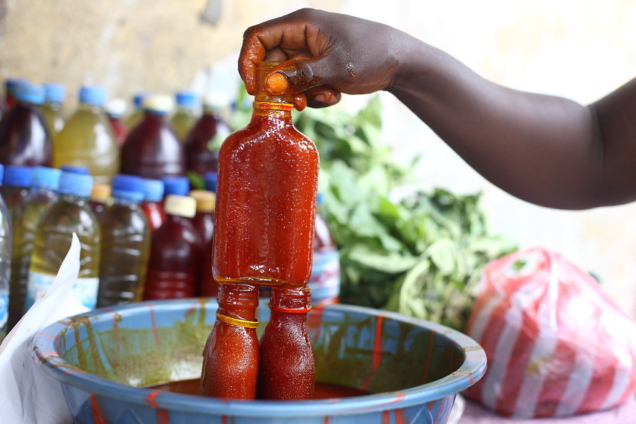
Government is set to arrest and prosecute unlicensed and illegal artisanal palm oil producers and processors in the Country by next year.
The move is to drive away bad operators from producing unclean and unhealthy palm oil for consumption, which is causing a lot of illnesses, such as cancer.
The effort is expected to enhance market access for workers in the palm oil value chain in the producing districts and ensure that finished products meet both local and international market standards to generate income and taxes for development.
Paul Amaning, the National President of the Artisanal Palm Oil Millers and Outgrowers Association of Ghana, gave the hint during a product packaging training for palm oil producers at Twifo Hemang.
He noted, that a substantial part of Ghana's palm oil imports could be sourced locally from artisanal palm oil producers if they met the quality requirements of both industrial users and palm oil exporters.
Mr Amaning said the government was ready to support the millers with portable machines for palm oil processing at a convenient process within a shorter period of time.
He urged the artisanal mill owners to adapt to change and also work together as a team in advancing and digitalising the Palm oil business.
Mr Amaning, further charged the participants to register their businesses to meet the requisite standards to enhance trading and also provide jobs to reduce unemployment and increase the living standards in the Country.
John Odai Tettey, the Regional Manager of the Food and Drugs Authority (FDA) schooled participants on the requirements of business registration for them to be able to operate without interference.
He added that food hygiene and safety should be the core element of all food preparation processes, including palm oil, hence the need for processors to obtain and regularly update their knowledge in food safety and good manufacturing practices.
Mr Tettey advised consumers to stop demanding palm oil with a redder hue, explaining that such market preferences made some unscrupulous palm oil producers add substances to the product to change its natural colour, which could compromise food safety.
He urged the participants to be committed to ensuring the safety of their products to safeguard public health.
The Regional Manager advised the mill owners to follow the right procedures and measures to produce the best and quality product for the market.
Latest Stories
-
Journalism must prioritise public interest over attention — Kwesi Pratt
34 minutes -
Ghana Mineworkers Union demand suspension of contract mining directive, threaten industrial action
59 minutes -
ADB Ghana Medicals constructing and equipping new Cardiothoracic Centre at Komfo Anokye
1 hour -
AFREIKH Summer School challenges Africa to harness critical minerals
1 hour -
Government plans 2,000-acre pharmaceutical innovation park in Osudoku to boost local drug production
1 hour -
Partey undergoes medical ahead of Al Shabab move in Saudi Arabia
1 hour -
Today’s front pages: Friday, August 21, 2026
2 hours -
Power outages could drive up cost of digital services — NITA
2 hours -
Patients face basic sanitation gaps in West African health facilities — WHO / UNICEF
2 hours -
Competence has no age; let’s stop punishing new businesses
2 hours -
JoyNews Republic Bank Habitat Fair 2026 opens today at Achimota Mall
2 hours -
What Is Wrong With Us: The roads that keep counting our dead
2 hours -
MTN condemns recent xenophobic attacks on Ghanaians in South Africa
2 hours -
Philip Nai: What happens at your front desk can make or break your brand
2 hours -
Ghana’s mining deaths fall sharply, but Chamber insists ‘three deaths are too many’
4 hours