

Audio By Carbonatix
Strict economic and monetary sanctions against Mali deserve further scrutiny for the harm they will inflict on Ghana and Africa.
I have been blessed to live mainly in Ghana since 2014, yet have been in Mali since December marking my second visit there. Following is my outsider’s perspective as an American businessman and lawyer who has no association with the United States Government.
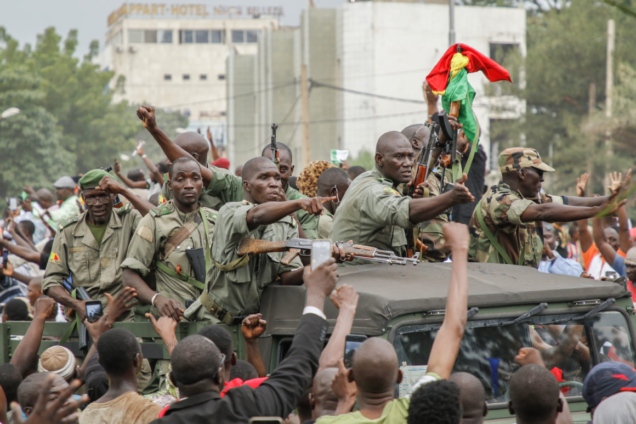
When the military Government of Mali announced it intended to stay in power for five years, the Malian people were aghast. Large protests took place in Bamako, uniting public dismay, the political class, and influential Imam Dicko, whose street demonstrations toppled the elected President Ibrahim Boubacar Keita in 2020.
However, when the Heads of State of ECOWAS announced harsh sanctions a few days later, public and elite opinion in Mali switched overnight.
The calls for President Colonel Assimi Goita to return Mali to civilian rule ended. Everyone rallied in support of the motherland and against the threat the sanctions pose.
For instance, Fitch Ratings, the international credit agency that just down-graded Ghanaian sovereign debt to B- negative, points out that the sanctions will prevent Mali from repaying loans to both ECOWAS’s own Bank for Investment and Development and the West African Development Bank, both based in Togo, thus imperiling their future for all of West Africa.
Europeans and North Americans teach us to favor democracy over other forms of government, even though the either-or choice presented in the typical democratic election is contrary to the African tradition of making decisions by consensus.
In central Mali, jihadists control all of the rural areas and ninety percent of the villages. In the north, ten years of warfare has brought economic life to a standstill, warfare that the Malian, French and European militaries have together been incapable of ending.
While the Malian army is making advances in some areas, it lacks the wherewithal to deliver a nationwide victory. Can safe and fair elections take place in these circumstances?
Kwame Nkrumah told us:
"It is clear that we must find an African Solution to our problems, and this can only be found in African Unity. Divided we are weak. We must unite now or perish, since no single African State is large or powerful enough to stand on its own. United Africa could become one of the greatest forces for good in the world."
Many Malians believe that President Akufo-Ado, the face of the sanctions due to his chairmanship of ECOWAS, is serving French interests in seeking to divide West Africans from each other.
However, the fact that six of ECOWAS’s fifteen member countries are not former French colonies belies this opinion.
France holds among the highest reserves of gold per-capita in the world, yet has no domestic source. Malians accuse France of hiding behind its soldiers to extract gold and other valuable minerals from their soil.
The U.S.-Ghana Defence Treaty gave the USA a military base somewhere in Ghana. Is the USA mining gold there?
We do not know. Is Ghana too small to care? We should care, but we will never know, unless and until Ghana does what Mali’s military Government has done, which is to demand clarity from its relations with its big power, France.
If opposition Parliamentarian Isaac Adongo is to be believed, Ghana is failing to pay its maturing debts when due. Some NPP politicians threaten that free secondary school will end unless Parliament passes E-Levy, a tax of 1.5 percent on mobile money transfers of more than GHS 100. Others say economic stability depends on adoption of this tax.
If Ghana is on the brink of failing to pay its debts, a Government of National Unity would be appropriate. Adongo argues that the Finance Minister who brought Ghana’s finances to their knees needs to go.
If the Foreign Minister is responsible for botching a sanctions regime against brothers and sisters in a poorer country that is struggling mightily with an insurgency, then her seat could go to a newcomer unassociated with divisiveness.
Adongo blames Ghana’s debt on corruption and corruption-related activities. B&FT, 28-7-21, page 12. Therefore, Ghana has the resources to live within its means.
A Government of National Unity would require new Ministers, a Special Prosecutor, and Auditor General untainted by cover-up and unafraid to bring the country an historic dividend from ending corruption.
The recent experience of Roch Kaboré in Burkina Faso may be an example of the maxim: people who live in glass houses should not throw stones.
Is President Akufo-Ado willing to share power and thereby invoke Ghanaians’ strength of acting by consensus?
Latest Stories
-
GAEC must retain nuclear scientists for Ghana’s nuclear ambitions – Minister
1 minute -
Man reportedly mistaken for game and shot by hunter dead in forest
4 minutes -
19-year-old mason jailed 15 years for defiling seven-year-old pupil
8 minutes -
Ghana’s banking sector assets rise 20.47% to GH¢500.2bn – BoG Governor
12 minutes -
22 injured as Sprinter bus overturns at Sege after tyre burst
14 minutes -
UN housing expert urges Ghana to strengthen Rent Control Department amid housing affordability concerns
22 minutes -
Delta-BCI partnership reaches 166,000 people with breast cancer education
32 minutes -
Power restoration fault suspected in Kumasi Central Market fire
6 hours -
The 7-foot giant of Ngleshie Amanfro: Seven-foot Ghanaian Ephraim Saawa dreams of joining the national basketball team
6 hours -
Government promises support for Kumasi Central Market fire victims
6 hours -
Vibes The Movie: Big Ghun’s Ghanaian film earns five nominations at 2026 REFFA
7 hours -
‘I’m a fulfilled man’—Justice Korbieh on missing out on Supreme Court despite two nominations
7 hours -
MamaCare CEO warns unresolved conflicts among health workers could undermine maternal and neonatal care
7 hours -
Health professionals urged to translate medical knowledge into practice to save mothers
7 hours -
Retired judge Justice Francis Korbieh charges 1,568 new lawyers to uphold integrity
9 hours